INDIA FIRST . SATYA DARSHAN . ASHUTOSH
HIGHLIGHTS FIRST:
Understand the consciousness, not just the image
Is the Kali we worship the same as the real Kali?
Kali: Body or Consciousness?
Goddess Kali: Image, Story, and the Real Truth
Introduction: The First and Most Important Question
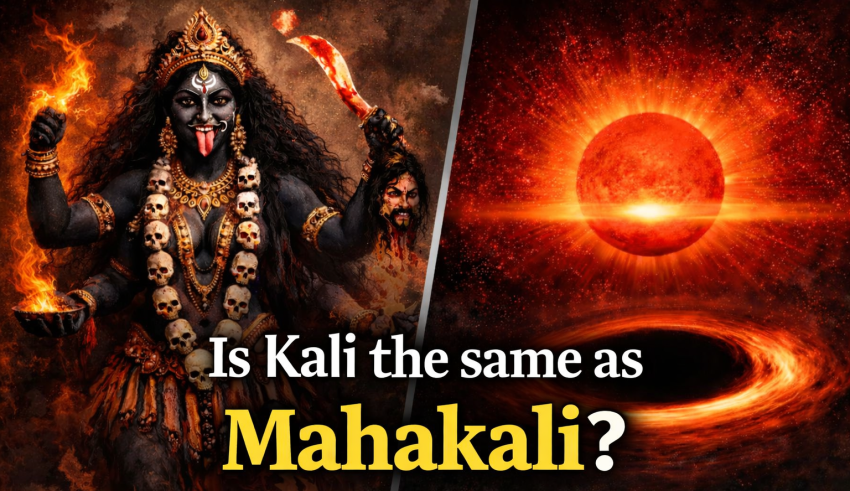
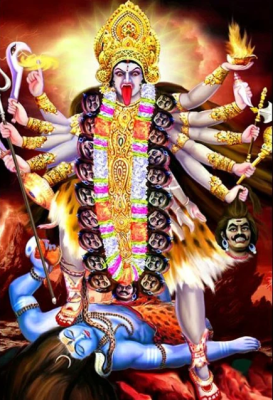
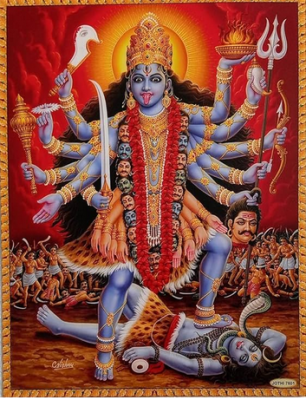
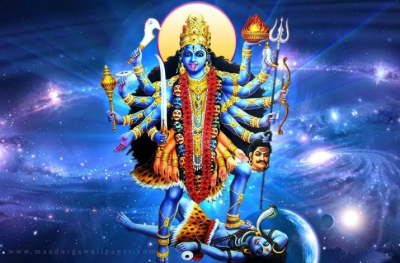
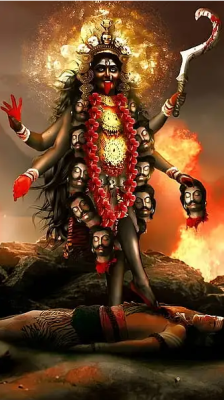
The images and idols of Goddess Kali that are prevalent today—
Is this truly her form?
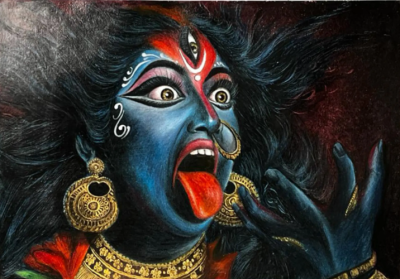
• A dark-skinned body with minimal clothing
• A garland of skulls around her neck
• A long tongue protruding
• A fierce, angry appearance
Is this her original form?
Or is this a symbolic representation that evolved over a certain period, which has come to be accepted as the ultimate truth over time?
The answer to this question will not come from emotions,
but from facts, scriptures, and Tantric philosophy.
The earliest reference to Kali: Was she a female deity?
Rigvedic period (approximately 1500 BCE)
The word “Kali” is found in the Rigveda,
but not as a female goddess.
Here, Kali is—
• One of the seven tongues of the fire god Agni
• A destructive, reddish fire-power
• An energy associated with sacrifice and meditation
Form of worship:
• Fire altar
• Sacrificial offerings
• Invocation of formless power
In this period,
there is no dark-skinned woman, no idol, no physical form.
Upanishadic period: Kali = Kalaratri (formless power)
Mundaka Upanishad (approximately 600–400 BCE)
Here, “Kalaratri” is mentioned—
• The formless power that destroys time
• An element associated with meditation and the realization of Brahman
It is also clear that:
• No female body
• No image
• No idol worship
is present here.
Tantric Tradition: The Original Form of Mahakala and Mahakali
Vijnana Bhairava Tantra (Verses 28–29)
It is from here that the distinct tantric form of Mahakala and Mahakali emerges.
According to Tantra:
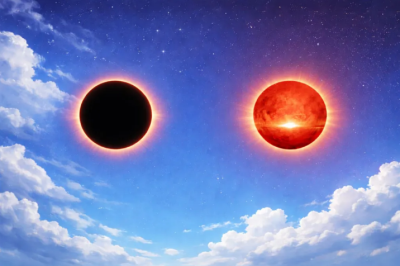
• There is a black point—the point of time (Kala-bindu)
• This is Mahakala
• From this, an upward-rising red fire is awakened—the fire of time (Kalagni)

This fire of time:
• Rises from the big toe of the right foot
• Flows upwards
• Consumes the entire body and the universe
• Establishes the seeker in unwavering peace
This upward-flowing, radiant energy—
is Mahakali.
Here:
• Mahakala = the black sun / the point of time
• Mahakali = the radiant sun that arises from it
This is formless consciousness,
not a description of a female body.
When was Mahakal depicted as a Shiva Lingam?
Historical Facts:
• Archaeological evidence of the Shiva Lingam: 1st-2nd century CE
• Shiva Lingam worship became widespread during the Gupta period (4th-6th century)
Originally:
• The Shiva Lingam was not a “phallus”
• But rather a symbol of the pillar of light / point of time
However, over time:
• The symbol itself was mistaken for the reality
• Rituals replaced meditation
When and how was Kali transformed into a dark-skinned woman?
The first clear scriptural basis:
Devi Mahatmya
(Markandeya Purana, 5th–6th century)
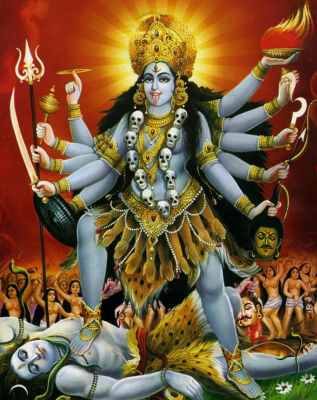
Here, the first concrete depiction of Kali is found:
• Dark complexion
• Protruding tongue
• Garland of skulls
• Scanty clothing
• Warrior goddess
Important fact:
The Devi Mahatmya itself presents this as a narrative,
not as the ultimate truth of meditative vision.
How did this depiction become established?
8th–12th century
• Kali sculptures in Nalanda and Eastern India
• Kali’s female form becomes popular in the Bengali Shakta tradition
Kalika Purana (11th century)
• Detailed description of Kali’s physical form
• Narrative expansion for popular devotion
The objective here was:
• To simplify formless meditation
• To create an emotional connection with the general public
But the result was:
The focus shifted from meditation to the image and the physical form.
How did the symbols become distorted?
Kali’s black color:
• Original meaning: Time, void
• Popular meaning: Fear and ferocity
Tongue protruding:
• Original meaning: Energy control and preventing blood loss
• Popular meaning: Only anger
Garland of skulls:
• Original meaning: Destruction of ego and falsehood
• Popular meaning: Symbol of violence
Minimal clothing:
• Original meaning: Unbound consciousness
• Popular meaning: Body-centered perspective
Instead of explaining the symbols,
pictures were shown.
When did rituals and sacrifices become associated with it?
After the 15th century:
• Folk Shakta tradition in the Bengal region
• Introduction of fear and expectation of results
• Animal sacrifice and external ostentation
This was not the original form of Tantra,
but an expansion of the popular mindset.
How did this obscure the truth?
When:
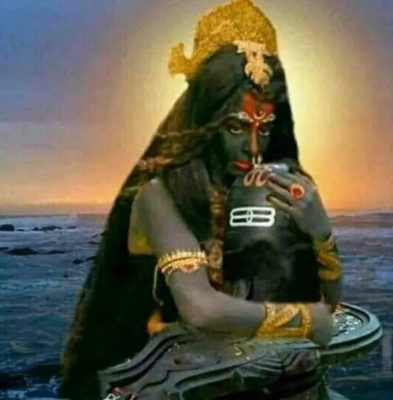
• Mahakala was understood only as a Shiva lingam
• Mahakali was understood only as a dark-skinned woman
• And rituals were mistaken for spiritual practice
So:
• Attention was lost
• Discernment weakened
• The question of consciousness ceased to exist
What are the consequences today?
Hindus themselves cannot give a clear answer—
Who is Kali?

External Perspective:
• Questions and ridicule regarding anthropomorphic depictions
Society:
• 9 avatars have already appeared
• Awaiting the 10th
• But consciousness is gradually diminishing
Factual Conclusion: What is the true form?
Truth is one.
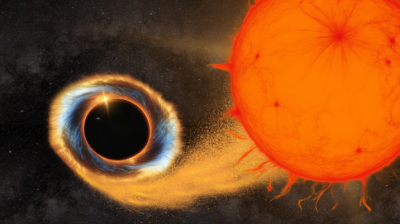
• Mahakala = Point of Time, Black Sun
• Mahakali = The rising redness, the upward-reaching fire, emanating from it
External Perspective:
• Questions and ridicule regarding anthropomorphic depictions
Society:
• 9 avatars have already appeared
• Awaiting the 10th
• But consciousness is gradually diminishing
Factual Conclusion: What is the true form?
Truth is one.
• Mahakala = Point of Time, Black Sun
• Mahakali = The rising redness, the upward-reaching fire, emanating from it
INDIAFIRST.ONLINE