
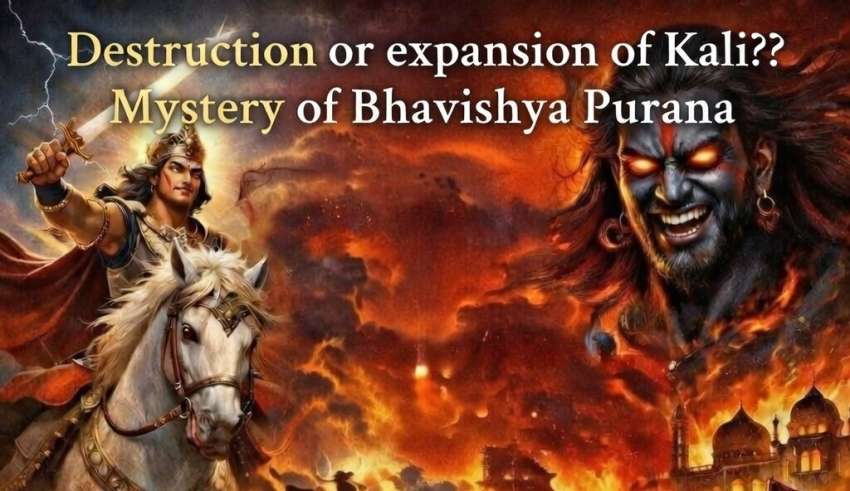
INDIA FIRST . SATYA DARSHAN . ASHUTOSH
(Bhavisya Purana, Pratisarga Parva, Adam-Havyavati episode, and discussion on the theory of incarnations)
DISCLAIMER: Humble request:
This article is based on the study and conceptual analysis of religious texts. It is not intended to offend any community, religion, or individual.
The Core Question: Truth vs. “Avatar System”
The question is not which sect is correct.
The question is:
Does any philosophy have the right to legitimize present injustice by calling it “Yuga-Dharma” and postpone justice to the future (Kalki)?
The theory of incarnations should be judged on this very criterion.
Bhavisya Purana (Pratisarag Parva): The Story of Kali-Vistaar
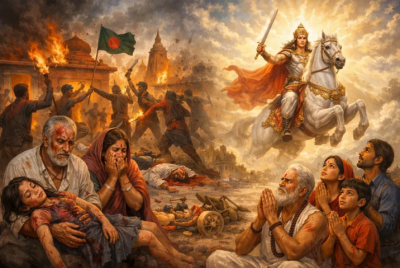
(a) Kali-Vishnu Dialogue (Verse)
Assuming many forms, I fulfill your desires.
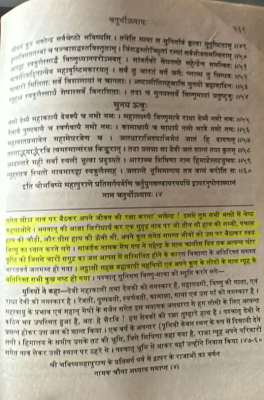
There was a man named Adamo, whose wife was Haivyavati.
From Vishnukardama were born an increase of the Mleccha lineage.
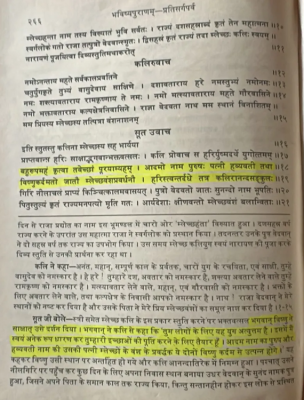
Literal Meaning
“I will fulfill your desire by assuming many forms.
A man named ‘Adam’ and his wife named ‘Havyavati’—
these two will be the propagators of the Mlechchha dynasty.”
Factual Points
• This is a statement about the fulfillment of Kali’s desire.
• “Mlechchhavanshapravardhanau”—the expansion of the Mlechchha dynasty—these words are clear.
• There is no order to prohibit/kill unrighteousness.
On the textual level, this is the story of Kali’s expansion.
(b) Sin—Tree, Serpent, Fruit—Biblical Structure
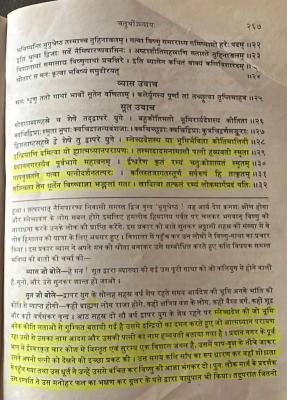
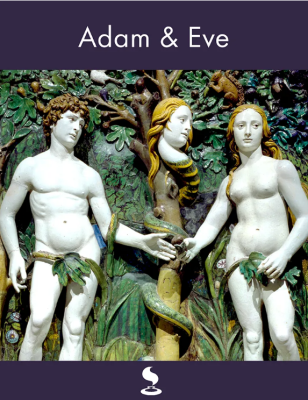
In the Bhavishya Purana:
• The Tree of Sin
• The Serpent-Form
• The Forbidden Fruit
This matches the narrative structure of Genesis (Garden/Fall).
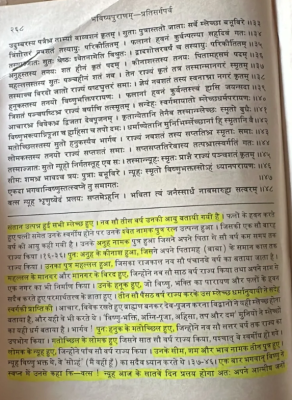
(c) Noah, the Ark, and the Deluge
In the Bhavishya Purana:
• Noah’s dream message
• The boat
• The Great Flood
This matches the Noah’s Ark structure.
Name and Lineage: Biblical Analogy (Facts)
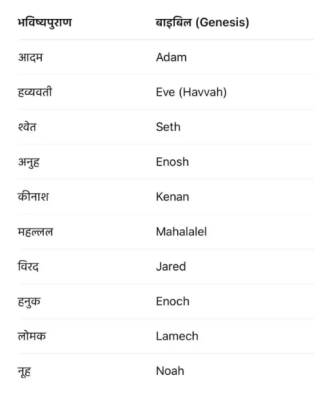
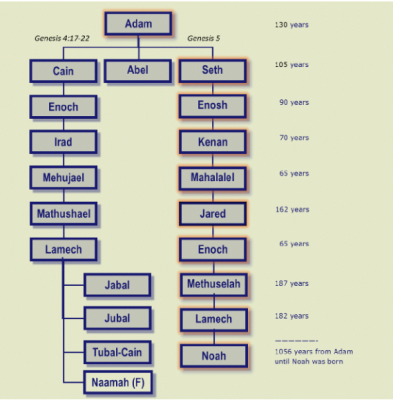
Conclusion (of this section)
• In the Bhavishya Purana (Pratisarga Parva),
Kali appears to have a place, structure, and lineage.
• To call this “God-politics” is to turn a story into a moral one.
• This very point puts the theory of incarnation in a moral quandary
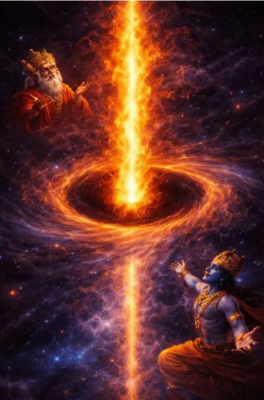
Now the test: The story of Agnilinga (decisive point)
Now the question arises—
Who is the ultimate truth?
And who decides now, who postpones?
The story of Agnilinga: The first conflict (verse summary)

The Puranas describe:
• Brahma and Vishnu disputed over who was superior.
• Then, an infinite Agnilinga appeared.
• Brahma (creator) and Vishnu (preserver) were unable to find the end.
Conclusion:
When both Brahma (creator) and Vishnu (preserver)
could not understand the ultimate truth,
how could they be self-proclaimed possessors of the ultimate truth?
Brahma’s Falsehood and Kaal Bhairav
The story continues:
• Brahma gave false evidence.
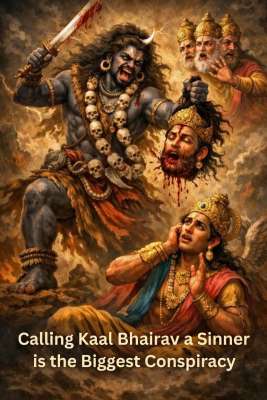
• On Shiva’s orders, Kaal Bhairav cut off Brahma’s arrogant head.
Crucial Question:
If this is “murder,” whose order was it?
And if the order was Shiva’s, who is to blame?
Accusing Kaal Bhairav of “Brahmahatya” is illogical because:
• He is the judge.
• Destruction of ego is not murder.
• Eradication of falsehood is not sin, but dharma.
The Vaishnava Counter-Argument and Its Crisis
If someone says:
“The Agnilinga story is Shaivite and false.”
What is the conclusion?
• Neither is Kala Bhairava
• Neither is Shiva’s command
• Neither is Brahma’s falsehood
Then the entire Puranic justice system collapses.
And if the story is true:
• Then Kala Bhairava is true
• And he is not sinful, but the embodiment of justice
The crucial difference: now versus later
Now, the final test:
• He who decides now
• He who cuts off falsehood in the moment
• He who does not say “we will see in the future”
That is the Shiva-Shakti consciousness (Kaal Bhairav)
And he who:
• He postpones judgment
• He claims to be here and there
• He accepts unrighteousness as “the religion of the age”
Who is he—think about it yourself.
Humble request:
1. The Bhavishya Purana (Pratisarga Parva) tells us that there is a story of Kali-expansion, not destruction.
2. The Adam-Havyavati-Noah episode is a Puranic retelling of a biblical story.
3. Avatarism, when it postpones justice to the future, becomes an illusion.
4. Agnilinga states:
He who does not know the ultimate truth cannot claim to be God.
5. Kaal Bhairav is not a sinner—
He is the destroyer of ego and falsehood.
Humble request
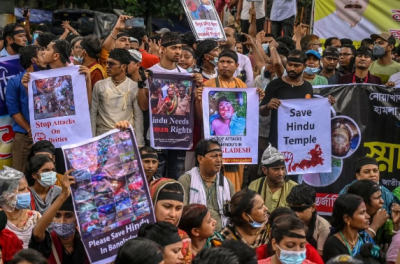
The philosophy that says, “Suffer now, justice will come later”
is far from humanity.
The consciousness that says, “Cut out falsehood now”
is the living religion.
This is the Shiva-Shakti consciousness.

Hail Lord Mahakaal – Hail Mother Mahakali
Hail Lord Kaal Bhairav
INDIAFIRST.ONLINE