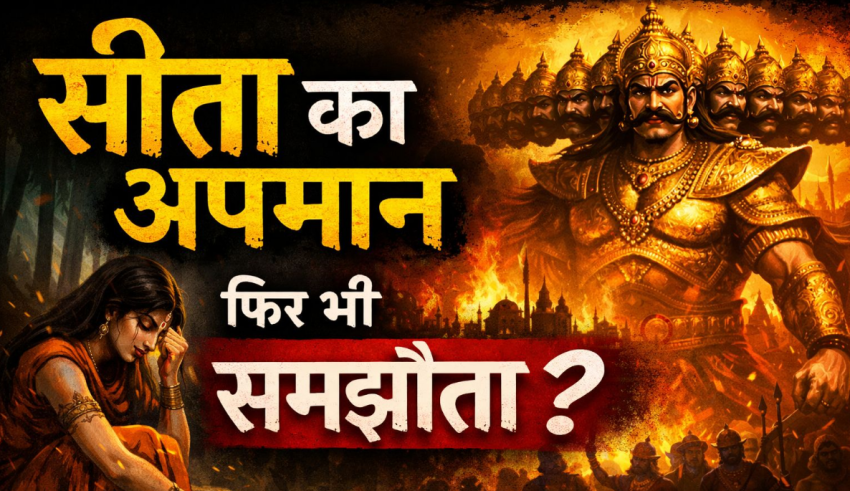
INDIA FIRST . SATYA DARSHAN . ASHUTOSH

Analysis: Where the victim was expected to show restraint and the perpetrator to reach a compromise!!
This is not merely a question of faith,
it is a question of justice, morality, and social conditioning.
The abduction of Sita and her months of captivity
is the central event of the Ramayana.
Yet an uncomfortable question has been suppressed for centuries:
Despite Sita’s abduction and humiliation,
why was it deemed necessary to give Ravana an ‘opportunity’?
The logic of the ‘opportunity’ — and its cost
A messenger was sent.
The message was — “Return Sita, and the war can be averted.”
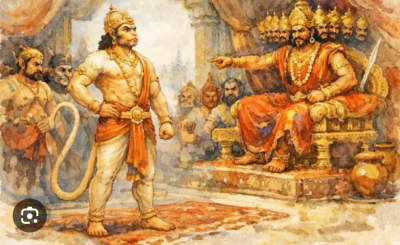
This was the language of political expediency.
But from the perspective of justice for women, this language is unsettling.
Because what would have happened if Ravana had agreed?
• There would have been no war
• Ravana would have remained alive
• Sita would have been returned
But the question is:
What about the insult to Sita?
What about her fear, her captivity, her mental anguish?
Where would the punishment for that crime have been decided?
Here, justice seems to depend not on the crime committed,
but on political compromise.
This is the seed
from which the “justice will ultimately prevail” mentality was born.
The comparison is uncomfortable, but necessary.
Now, there is another episode in the same narrative.
Ravana’s sister, Surpanakha —
her nose and ears were cut off in the presence of two men.
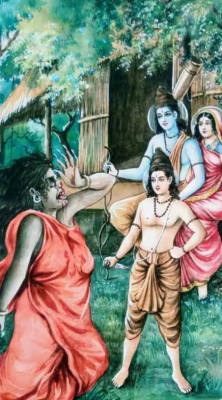
Right or wrong — that’s a separate debate,
but the reaction here was immediate.
Shurpanakha was a woman – but she was punished instantly!
• No messenger
• No political message
• No opportunity
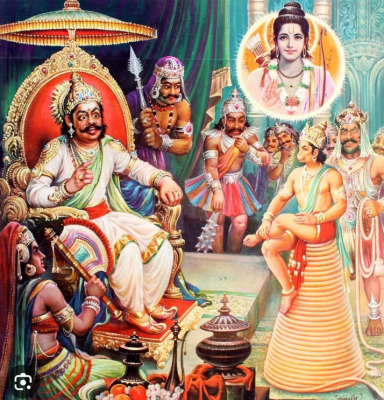
his is where the question arises:
When a man, Ravana, abducted and insulted a woman, Sita, why wasn’t he punished immediately? Why wasn’t the Brahmastra (a powerful divine weapon) used? Why was Angad sent, giving the culprit an “opportunity”?
The opportunity being that if he returned Sita, there would be no war, and he wouldn’t be killed!
And if Ravana had taken advantage of this “opportunity” and complied… then what? Would this have been justice for the insult to a woman, Sita?
This question is not to declare any character a hero or a villain,
but to understand the priority of justice for women.
Sita’s prison—Ashoka Vatika. Another untold fact.
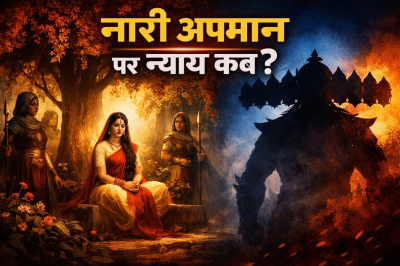
It is also a fact that:
• Sita was not kept in a dark prison.
• She was kept in Ashoka Vatika, with female guards.
The purpose of this was:
To ensure that no moral accusations were leveled against Sita.
See the irony—
• While in Lanka, no one questioned Sita’s honor.
• But in Ayodhya, in Rama’s kingdom,
questions were raised about her.
And the result?
• Leaving the royal palace
• Exile to the forest
• But this time, Rama did not go with her.
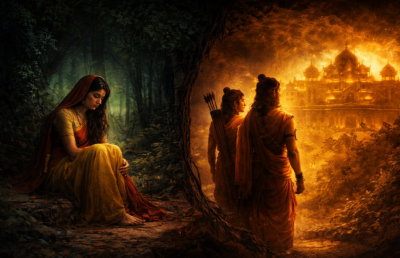
That is:
The woman who accepted exile without committing any crime,
was ultimately left alone.
“Lakshman Rekha” — where does the blame lie?
After the abduction, it was said:
“Why did she cross the Lakshman Rekha?”
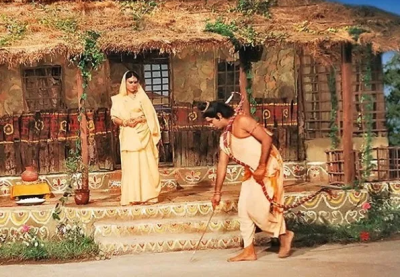
It was not said that:
• The alleged security system failed
• The abduction occurred despite the presence of two armed men
The blame was not placed on the system,
but on the woman’s conduct.
This is the same mentality that still says today:
• Why was she out late at night?
• Why did she go alone?
• What kind of clothes was she wearing?
In other words:
Don’t leave the house — that’s the only safety.
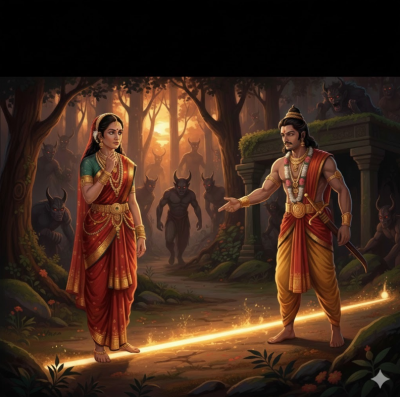
This is where today’s justice system originates.
Today, when a crime occurs:
• The perpetrator gets opportunities:
• Bail
• Parole
• Technical loopholes
• The victim is told:
• Be patient
• Let the process run its course
This is not a system that came into being suddenly.
It is a continuation of a tradition where:
• Insulting a woman was considered serious
• But the punishment was not made immediate and mandatory

Conclusion — Bitter, but necessary
It’s easy to blame the current state of our justice system entirely on the present.
But the truth is:
The ideals we accepted without question
gave rise to the belief that
the perpetrator can be given a chance
and the victim must wait.
Despite being capable, our traditional society
chose waiting over retaliation —
waiting for the government, the system, the next incarnation.
Justice will not be swift
when the next incarnation arrives.
Justice will be swift
when society decides that:
The humiliation of a woman is not a crime
that warrants giving the perpetrator a “second chance.”
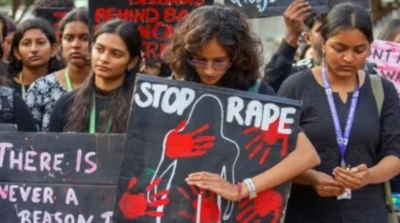
What happened in Kashmir today – what is happening in Bengal and Bangladesh – and in many other places – the rapes and atrocities committed against women, even young girls – has it been stopped even after all these years? Where is the justice system that delivers swift punishment to the perpetrators?
The victim has to wander around seeking justice herself, while the criminal mocks the system with impunity. Even if a sentence is finally handed down years later, there are opportunities for bail and parole!
The suffering of women intensifies upon witnessing and experiencing this.
Just think about it.
INDIAFIRST.ONLINE