INDIA FIRST . SATYA DARSHAN . ASHUTOSH GUPTA
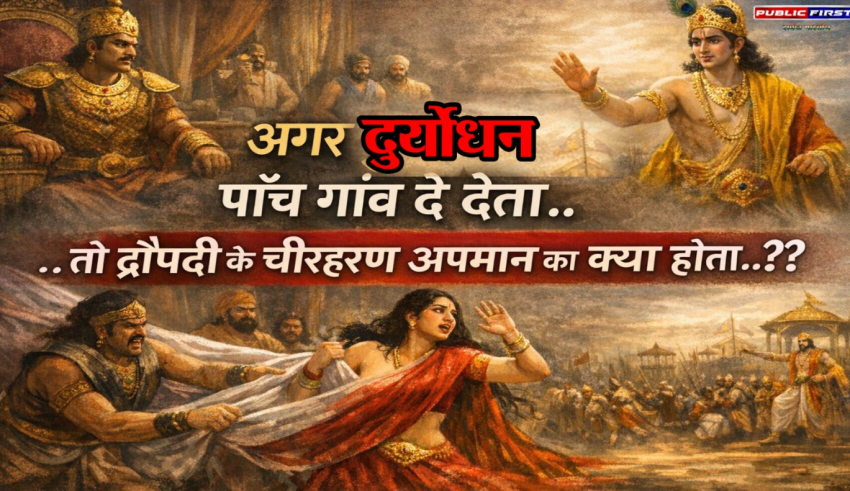
The insult to Draupadi and the offer of five villages in the Mahabharata — a moral question
Introduction
The Mahabharata is often called the epic of a righteous war.
But have we ever seriously considered what the moral basis of that war truly was?
And if the basis was the humiliation of Draupadi, then how was the offer of five villages connected to that humiliation?
This article does not accuse any faith, character, or community.
It simply raises a moral and social question—one that remains equally relevant today.
The Mahabharata Context: Factual Sequence
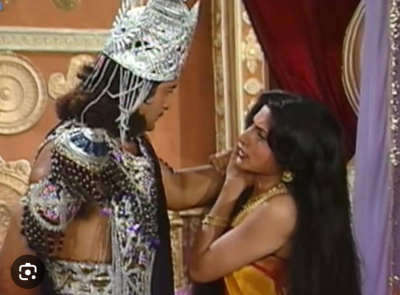
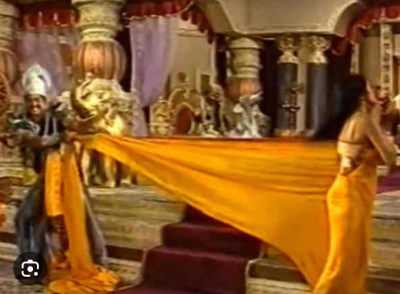
• Draupadi was publicly disrobed in the gambling hall.
This incident is seen in Indian tradition as the deepest affront to a woman’s honor.
• The war did not begin immediately after this humiliation.
The Pandavas accepted fourteen years of exile, including a period of living in disguise.
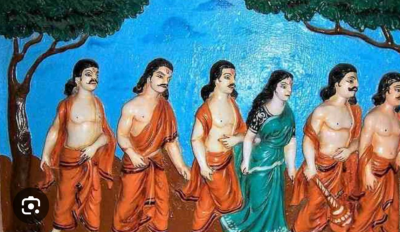
Fourteen years later, when the Pandavas returned to claim their rights, Krishna went to Duryodhana with a message.
• The message was clear:
If you do not wish to give the entire kingdom, then give just five villages.
• Duryodhana’s reply was:
“I will not give even a needlepoint of land.”
• Only after this did the Kurukshetra war take place.
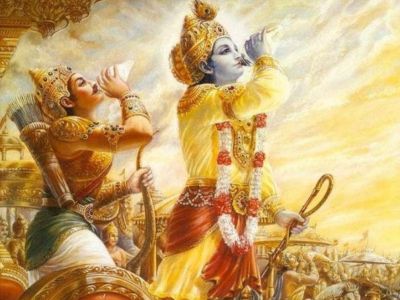
The Fundamental Question: What if Duryodhana had agreed?
Here an uncomfortable but necessary question arises—
If Duryodhana had agreed to give the five villages, what would have happened to the humiliation of Draupadi?
• Would that humiliation have received justice?
• Or would it have been buried in a political compromise?
This question is not about the character of any individual, but about the mindset of the system in which—
• a compromise on land and power was possible,
• but unwavering justice for the humiliation of a woman was not considered mandatory.
The Journey from Justice to Compensation
The injustice done to Draupadi—
• did not become a subject of immediate punishment,
• but instead transformed into an assurance of future justice.
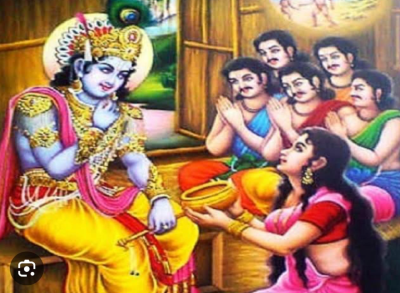
For fourteen years it was said that—
“Justice will be served when the time comes.”
But when the time came, the form of justice transformed into a proposal for land distribution.
Here the question arises—
• Can the value of a woman’s honor be equated to five villages?
• And if a compromise had been reached, would Draupadi’s pain have been reduced to merely a footnote in history?
Politics and Women’s Honor
This entire episode sends a harsh but clear message—
• In the politics of that time, women’s honor served as a moral basis,
• but the decisive factors remained power and land.
It would not be wrong to say that—
• the retribution for the insult did not come immediately,
• but only after a political failure.
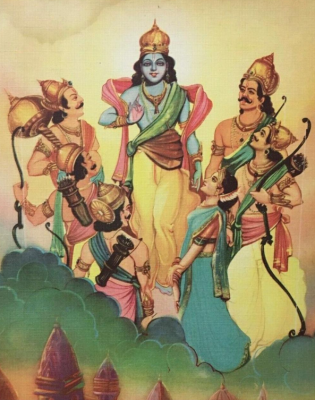
If the agreement had succeeded, it’s possible that—
• there would have been no war,
• but Draupadi’s humiliation would have remained an unresolved injustice.
Please consider:
The Mahabharata is not just a story of the past.
It also serves as a warning to today’s society—
• When a woman’s honor is made a condition for a compromise,
justice becomes hollow.
• When the victim is told—
“Wait a little, everything will be alright”—
her pain is often suppressed by political priorities.
• True justice is that which is—
• immediate,
• clear,
• and not dependent on any bargaining.
Conclusion
This episode from the Mahabharata forces us to consider—
• Is Dharma (righteousness) only remembered during times of war?
• And is a woman’s honor only important when a compromise fails?
This article does not disrespect any faith.
It merely reminds us that—
If society makes a woman’s humiliation a “negotiable matter,”
then justice can never be complete.
This is the deepest and still relevant warning of the Mahabharata.
Public Note
This article is a socio-ethical interpretation of the events of the Mahabharata.
It is not against any individual, religion, or community,
but focuses on the universal concept of women’s honor and justice.
INDIAFIRST.ONLINE