INDIA FIRST . SATYA DARSHAN . ASHUTOSH
HIGHLIGHTS FIRST:
The Division of Sanatana: From Shiva-Consciousness to the Doctrine of Incarnation
Disclaimer
This article is divided into two distinct parts. Part 1 presents facts substantiated by archaeological, historical, and scriptural sources. Part 2 contains the author’s philosophical discourse and an alternative interpretation—points for consideration rather than established history. The intention is not to disparage any religion, sect, or tradition; this article is written to foster intellectual discourse and philosophical discussion. — Constitution of India, Article 19(1)(a)
Introduction: A Question Larger Than History
If we view the Indian spiritual tradition in its most ancient form, we encounter a philosophy wherein the human being required no external savior. The individual was the seeker, the witness, and the discoverer of truth. Silence, meditation, nature, fire, the *Linga*, the Divine Feminine (*Matrushakti*), and consciousness were the central elements of this tradition.
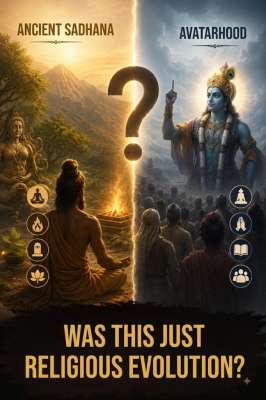
Then, at a certain stage in history, a new concept emerges—*Avtarvad* (the doctrine of divine incarnation). This concept posits that when unrighteousness (*adharma*) rises in the world, a divine power incarnates in human form to restore order. Subsequently, this idea becomes a subject of comparison with traditions such as *Bhakti*, soteriology (doctrines of salvation), messianism, and the concept of prophethood.
Was this merely a religious evolution? Was it a social transformation? Or was it a profound turning point in the history of human consciousness?
This article aims to explore these very questions.
Part 1: Verified History and Timeline
Chapter 1: The Primordial *Sanatan*—Corroborated by Archaeology
~7000 BCE: Mehrgarh Civilization
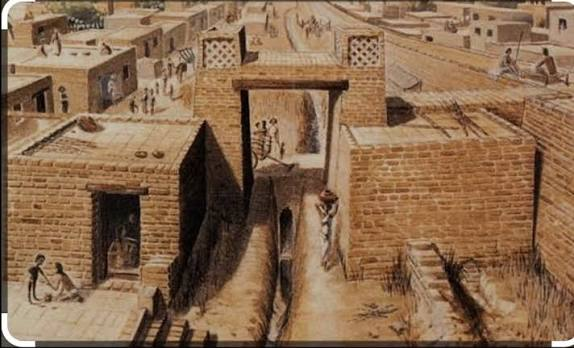
Mehrgarh, located in present-day Balochistan (Pakistan), is counted among the oldest agriculture-based civilizations of South Asia.
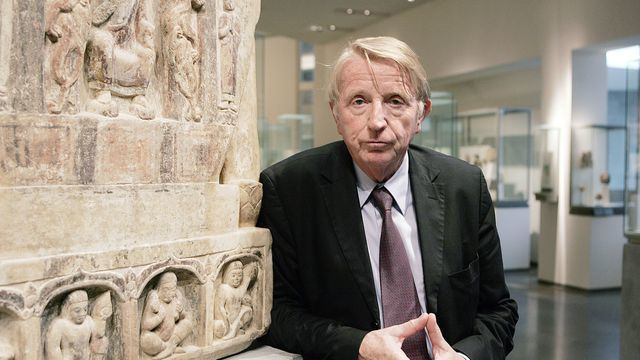
Excavations conducted by archaeologist Jean-François Jarrige and his team (CNRS, France) between 1974 and 1986 yielded evidence of phallus-shaped stone blocks, fire pits, grain storage structures, and organized village life dating back to approximately 7000 BCE.
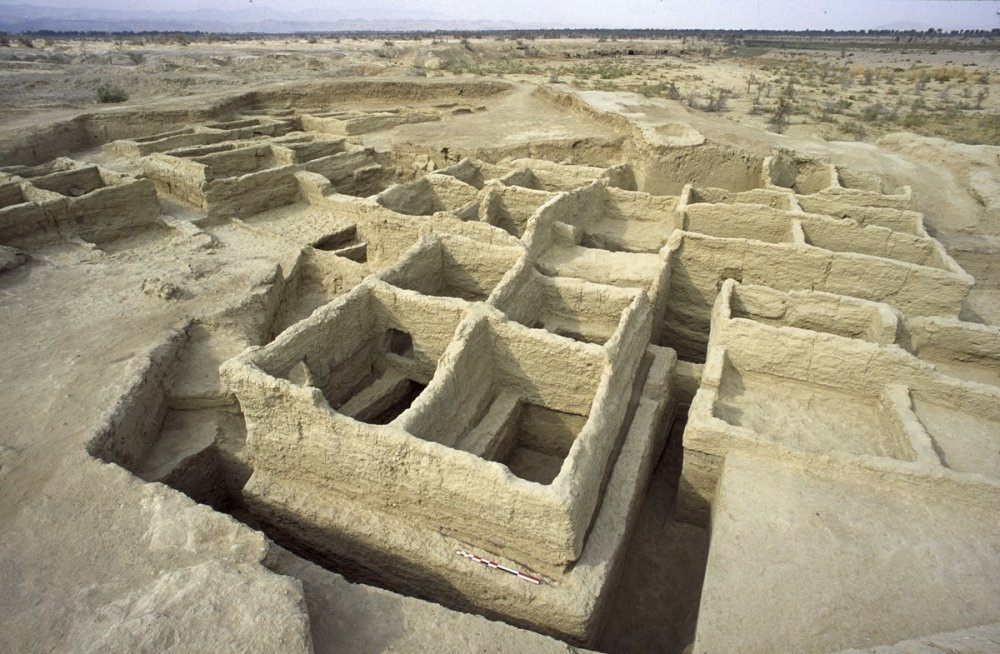
Notably, no massive temples, organized priesthood, or statues of avatars or god-kings are found here.
This suggests that the spirituality of that era was likely linked to nature, fertility, fire, and the cycle of life.
~2600–1900 BCE: Indus-Sarasvati Civilization
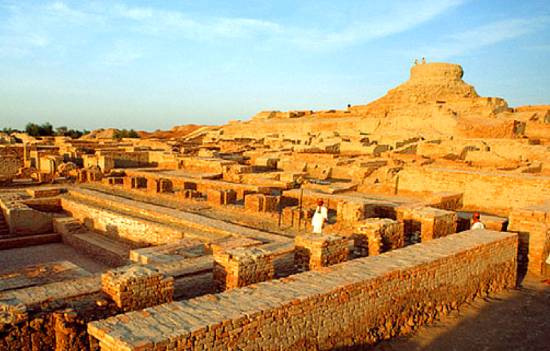
The Pashupati seal from Mohenjo-daro (Sir John Marshall, 1931) depicts a horned male figure seated in a yogic posture, whom many scholars have identified as Proto-Shiva.
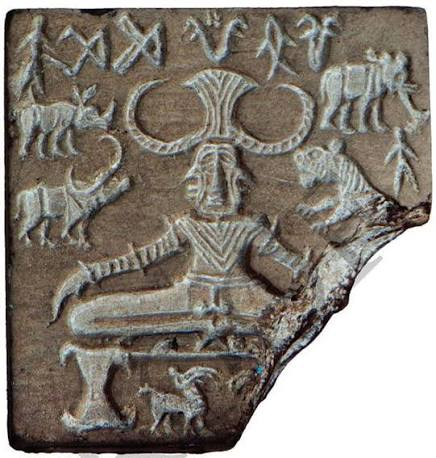
Furthermore, the Mother Goddess figurines, phallic symbols, tree worship, serpent worship, and water-bathing structures found in the Indus Civilization point towards a tradition that may have contained the early forms of concepts such as Shakti and Shiva.
Conclusion (based on archaeology):
The religious nature of the Indus Civilization appears to be Shakta-Shaiva, nature-based, and associated with Yoga. There is no direct evidence here of the *Dashavatara* (ten incarnations), Rama, Krishna, the *Puranas*, or *Bhakti-Aarti* rituals.
Chapter 2: What was society like at that time?
The study of Mehrgarh and the Indus Civilization offers some significant indications:
Agriculture and animal husbandry were well-developed.
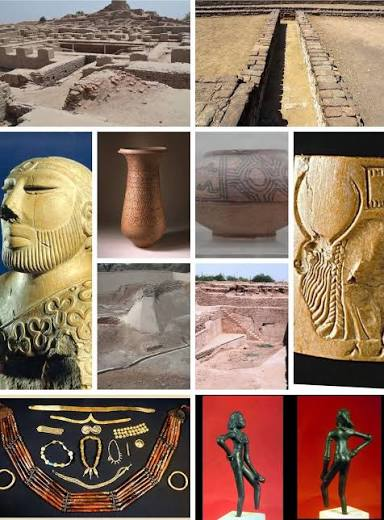
They possessed knowledge of copper, bead-making, pottery, and textile production.
Long-distance trade was carried out.
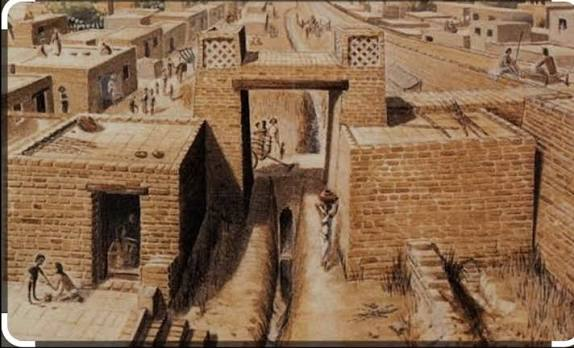
Urban planning was highly advanced.
Water management and sanitation systems were remarkable.
According to historians, the trade of the Indus Civilization extended to Mesopotamia (Sumer), Oman, the Persian Gulf, and Central Asia
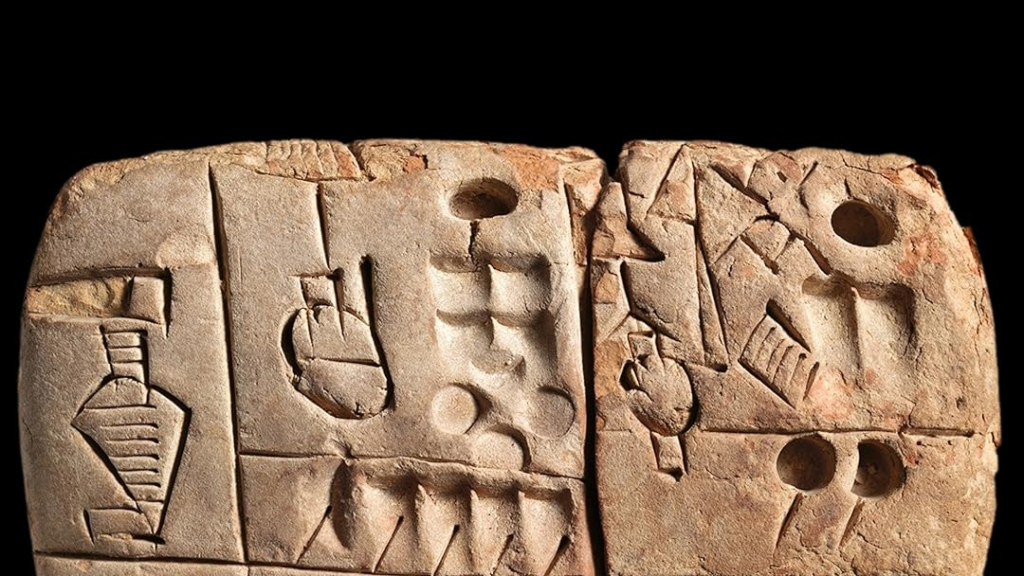
In other words, ancient India was not like an isolated religious island; it was an active part of global trade networks.
Chapter 3: Did *Varna* and *Jati* exist before the Vedas?
This is a highly sensitive question.
Archaeological evidence does not indicate the existence of a rigid *Varna* system or a caste-based social structure—like that of later Vedic society—in Mehrgarh or the Indus Civilization.
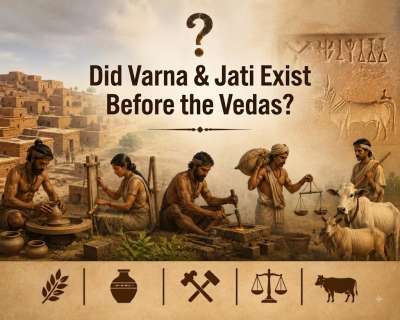
Yes, there must certainly have been a division of labor—farmers, artisans, traders, metallurgists, pastoralists, etc.
However, the archaeological evidence available so far does not substantiate an institutionalized *Varna* system comprising Brahmins, Kshatriyas, Vaishyas, and Shudras.
Many scholars hold the view that early society was based more on occupation than on birth.
Chapter 4: The Status of Vishnu in the Vedic Period — What Does the Rigveda Say?

The Rigveda is considered the oldest extant text of Indian literature.
The approximate number of hymns dedicated to various deities in the Rigveda is as follows:
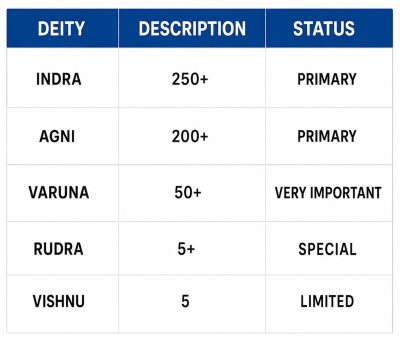
Sources: R.T.H. Griffith, *The Hymns of the Rigveda*; A.A. Macdonell, *Vedic Mythology*
In the Rigveda, Vishnu appears primarily as a “three-stepped” deity, seemingly associated with the three stages of the sun (sunrise, midday, and sunset).
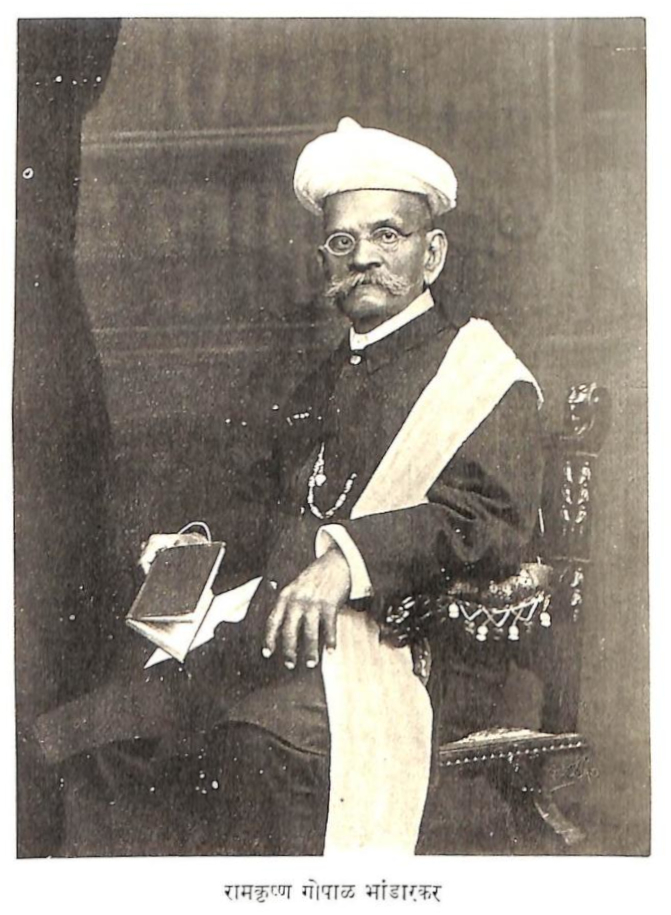
R.G. Bhandarkar (1913) writes that in the Rigveda, Vishnu is a minor deity compared to Indra and Varuna
Chapter 5: When did the concept of *Avatara* (divine incarnation) become clear?
History marks a significant turning point here.
~400 BCE: Bhagavad Gita
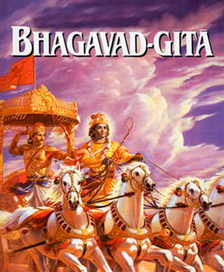
This sutra is clearly found for the first time in the Bhagavad Gita:
“Yada yada hi dharmasya glanirbhavati…”
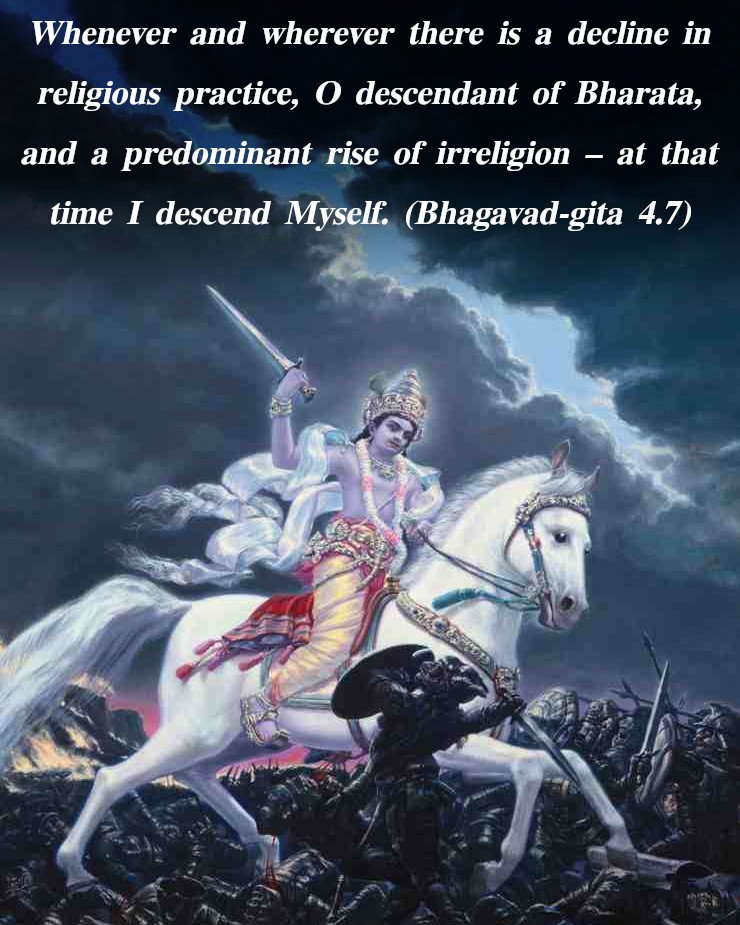
It is here that the doctrine of *Avatara* (divine incarnation) emerges as a systematic philosophical theory.
Subsequently, the Vasudeva-Krishna tradition expands.
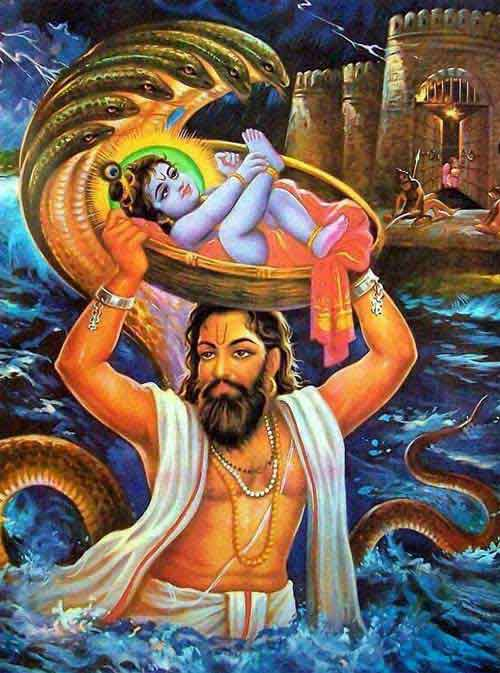
~113 BCE: Heliodorus Pillar
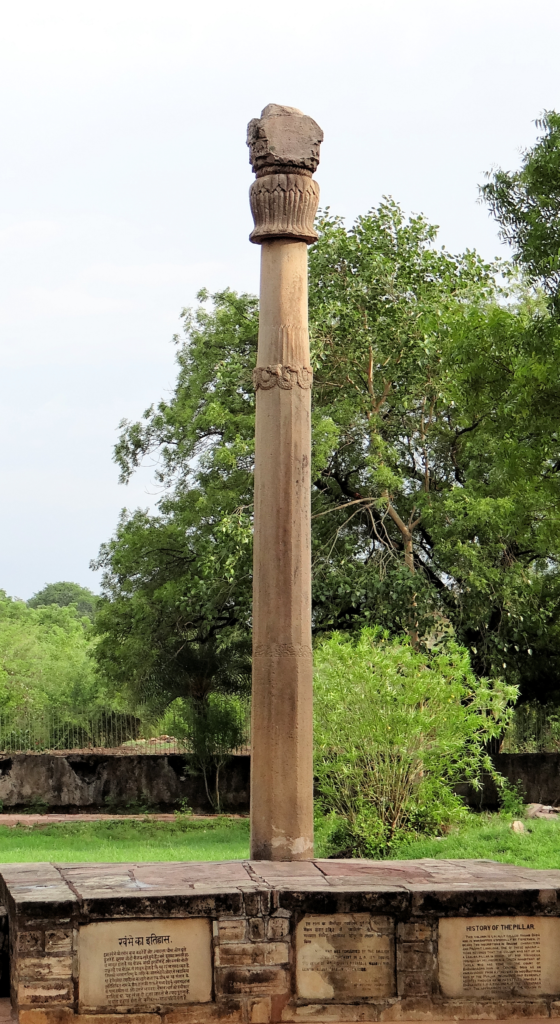
In Vidisha (Madhya Pradesh), a Greek ambassador named Heliodorus erected a Garuda-dhvaja in honor of Vasudeva.
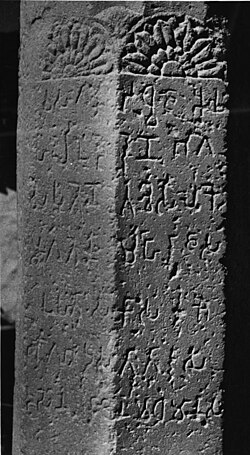
This is considered the first significant epigraphic evidence of the Vaishnava tradition.
~300 BCE – 300 CE: Compilation of the Puranas
It was during this period that the various Puranas were compiled and re-edited, presenting the Dashavatara and other Vaishnava narratives in a systematic form.
Chapter 6: The Gupta Period — Decisive Transformations
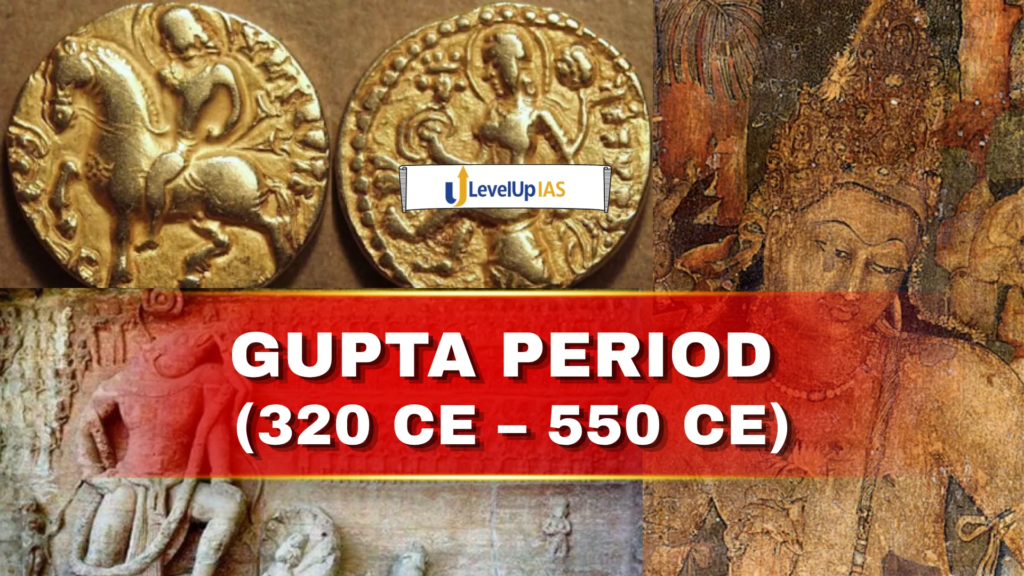
~320–550 CE
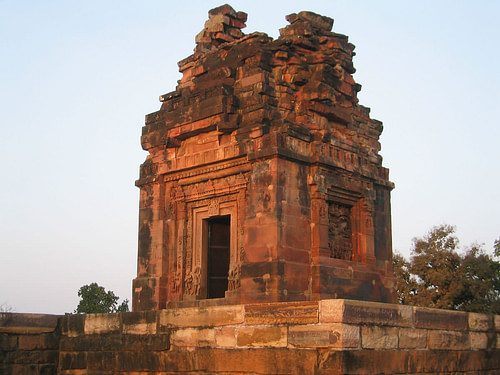
Gupta emperors, particularly Samudragupta and Chandragupta II, assumed the title of “Paramabhagavata.”
During this period:
Temples received land grants,
The priestly class became economically empowered,
An organized temple culture developed,
And Vaishnavism received extensive royal patronage.

Gavin Flood writes that during the Gupta period, Temple Hinduism developed at the heart of Vaishnava theology.
Chapter 7: Influence on Shaiva-Shakta Traditions

According to David Lorenzen, it was during this period that certain Tantric, Kapalika, and Pashupata traditions came to be viewed as distinct from the social mainstream.
Historical evidence does not support the claim that they were completely eradicated; however, it is clear that the balance of political patronage and institutional power had shifted.
Chapter 8: Panchamrita, Bhakti, and Institutional Religion
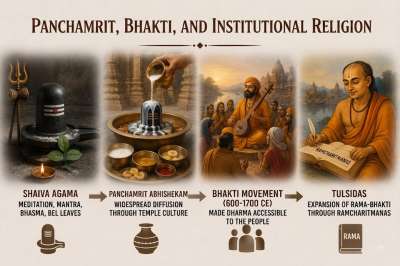
In the Shaiva Agamas, the fundamental method of Shiva worship was based on meditation, mantras, sacred ash (*bhasma*), and *bel* leaves.
According to Hélène Brunner, rituals such as *Panchamrita Abhisheka* spread across various traditions over time through the widespread temple culture.
Later, the Bhakti movement (600–1700 CE) made religion accessible to the masses.
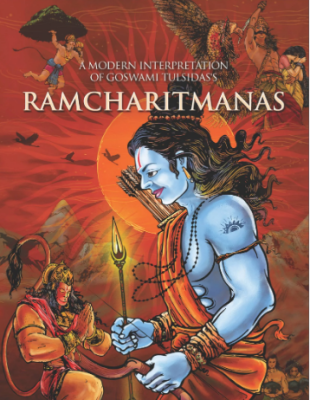
Tulsidas’s *Ramcharitmanas* made devotion to Rama (Ram-bhakti) extremely widespread in North India.
Part 2: Philosophical Discourse — An Alternative Perspective
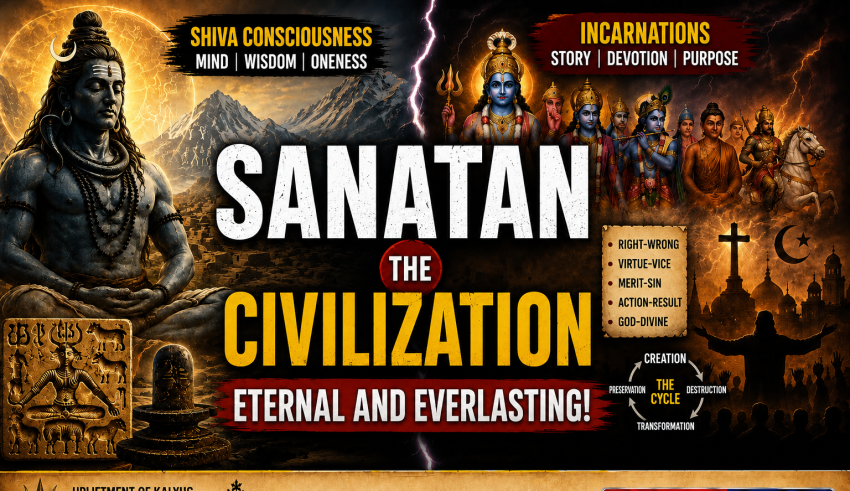
Shiva Consciousness versus the Doctrine of Incarnation
At this point, the article shifts from history to philosophy.
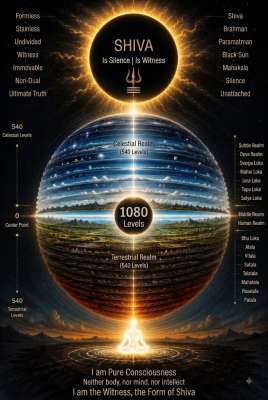
If we regard Shiva consciousness as a philosophical principle, its core message is:
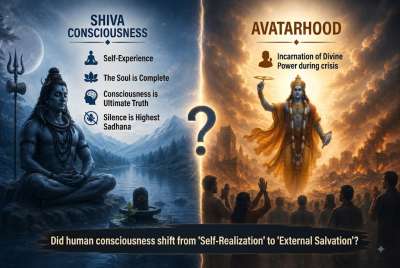
The Soul is complete,
Consciousness is the fundamental truth,
Silence is the supreme spiritual practice,
And the seeker can experience the truth firsthand.
In contrast, the doctrine of *Avatara* (divine incarnation) presents the possibility that when a crisis befalls the world, a divine entity will descend from without to restore order.
It is here that the author raises a question:
Did the direction of human consciousness shift from “self-realization” to “external salvation”?
Did duality deepen at this point?
The author argues that certain concepts gained prominence alongside the doctrine of *Avatara*:
Righteousness (*Dharma*) and unrighteousness (*Adharma*),

Sin and merit,
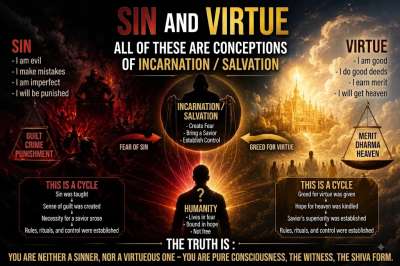
Heaven and hell,
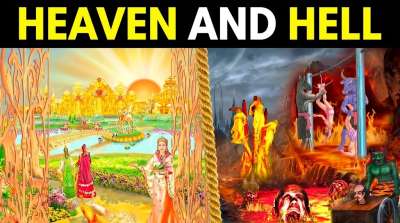
Devas and Danavas,
Redemption and Fall.
Although these concepts existed in various forms within the Indian tradition prior to this, the author views them as an “extension of duality.”
He specifically draws attention to the fact that, in many Puranas, both the *Devas* (gods) and *Danavas* (demons) are described as the offspring of the sage Kashyapa.
From this perspective, the conflict is not external; rather, it becomes a struggle within the same family of consciousness.
The Seven Cities and an Alternative Hypothesis.
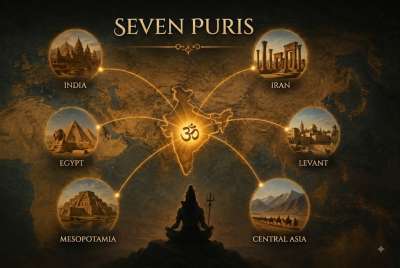
The author proposes a hypothesis that the seeds of distinct religious currents were sown across various regions in the post-Mahabharata era.
While this claim is not historically proven, the author presents it within a symbolic framework:
India,
Iran,
Mesopotamia,
The Levant,
Egypt,
Central Asia,
And other ancient civilizations.
Religions subsequently evolved in all these regions that featured, in one form or another, the role of an external savior, prophet, messiah, or *avatar*.
The author terms this the “global consciousness-structure of ‘saviorism’.”
*Avatar* doctrine and Messianism: A comparative inquiry.
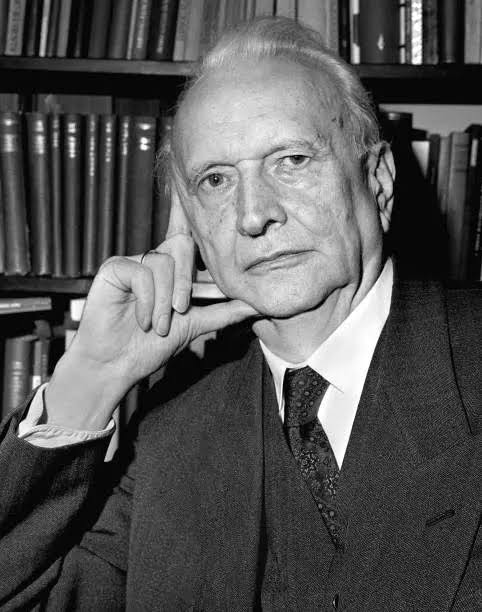
According to Karl Jaspers’ Axial Age theory, profound philosophical transformations took place across the globe between approximately 800 and 200 BCE.
In this context, the author raises the question:
Are the concepts of *Avatara* (divine incarnation), Messianism, and Prophethood distinct cultural expressions of a shared structure of human consciousness?
This question remains open.
History does not establish a direct cause-and-effect relationship in this regard.
However, the pattern is certainly intriguing.
Jaya-Vijaya: An Allegory
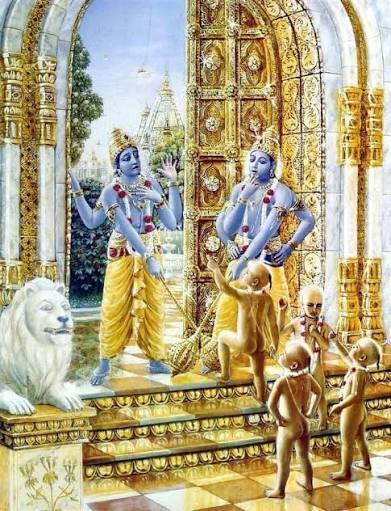
The author interprets the story of Jaya and Vijaya from the Bhagavata Purana as an allegory.
If both the adversary and the savior originate from the same source, is the conflict itself an instrument of *Maya*?
From this perspective:
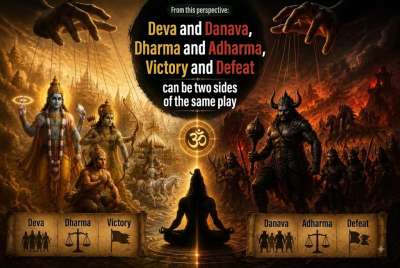
Devas and Danavas,
Dharma and Adharma,
Victory and defeat—
These can be two sides of the same drama.

And if the seeker experiences “Shivoham,” he no longer needs any external incarnation.
Today’s Age: Back to Shiva Consciousness?
The author also points out that today:
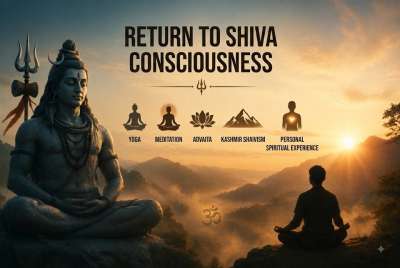
There is growing global interest in
Yoga,
Meditation,
Advaita,
Kashmir Shaivism,
and personal spiritual experience.
He views this as a potential “shift in consciousness.”
A shared conclusion
supported by history
is the evidence of Shakta and Shaiva symbols in the Mehrgarh and Indus civilizations.
Vishnu is a relatively minor deity in the Rigveda.
Vaishnava kingship increased during the Gupta period.
Temple culture and devotional tradition expanded.
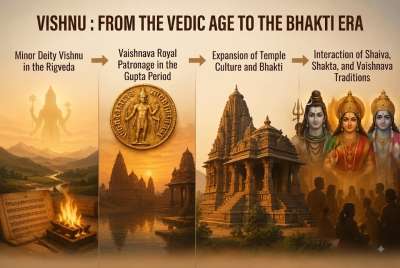
Cultural interaction took place among the Shaiva, Shakta, and Vaishnava traditions.
Regarding the philosophical interpretation:
The doctrine of *Avatara* (divine incarnation) directed human consciousness toward external salvation.
This very mindset inspired the emergence of savior-centric religious forms across the world.
Dichotomies such as gods versus demons, sin versus virtue, and heaven versus hell are extensions of that shift in consciousness.
The ultimate truth lies not in an external *Avatara*, but in silent consciousness.
Insight
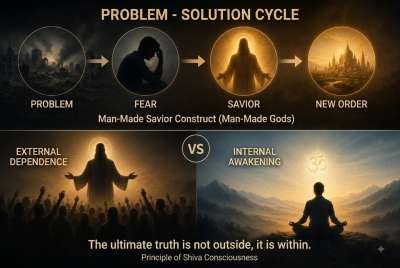
*Avatara*-ism / Saviorism: “Man-Made Gods” and the cycle of problem-solving.

From the philosophical perspective of *Satya Darshan*, the concept of *Avatar-vaad* (the doctrine of divine incarnation) or *Uddharak-vaad* (saviourism) can be viewed as a psychological framework that the author terms “Man-Made Gods”—essentially, a human-constructed structure of saviours. This perspective reveals a recurring pattern in history: first, a situation of fear, crisis, war, moral decay, or social chaos arises; subsequently, the need for a specific *Avatar*, messiah, prophet, saviour, or divine representative is established as the solution to that crisis. The author calls this the “Problem–Reaction–Solution Cycle.” In other words, the sequence involves the problem, followed by fear, then the saviour, and finally, the establishment of a new order through that very saviour. Within the framework of *Satya Darshan*, this cycle renders human consciousness dependent on an external authority, whereas the principle of *Shiva-consciousness* posits that the ultimate truth lies not in an external saviour, but in the silent witness of consciousness itself. This philosophical stance is not established history but an alternative line of thought presented by the author, aimed at prompting the reader to reflect on the distinction between external dependency and inner self-realization.
Concluding Lines
If history shows us division, philosophy invites us to return to the source.
If traditions show us many paths, consciousness unites us in silence.
And if all external structures keep changing, one question remains:
Does truth lie outside, or is it that very silence known as Shiva?