
INDIA FIRST . SATYA DARSHAN . ASHUTOSH .
HIGHLIGHTS FIRST :
What is the real purpose of satellite constellations?
“Whose web is spread across the sky?”
SATELLITE • AI • SURVEILLANCE
From internet connectivity to warfare networks—how are LEO Satellite Constellations changing the world?
INTRODUCTION : THE SKY IS NO LONGER JUST THE SKY
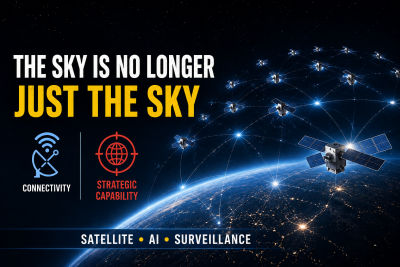
The continuously increasing lights in the night sky are not merely a story of technological achievement.
Over the past few years, thousands of small satellites have been sent into Low Earth Orbit, or LEO. They are being used for high-speed internet, mobile connectivity, Earth observation, disaster management, and connecting remote regions.
But there is another side to this technology—
Military communications, missile tracking, Earth observation, target identification, and real-time data on the battlefield.
This does not emerge from any secret document. In many cases, the companies and governments concerned openly describe these capabilities themselves. For example, the U.S. Space Development Agency’s Proliferated Warfighter Space Architecture is explicitly being developed for military communications, missile warning/tracking, and targeting capabilities.
Therefore, the real question is not—
“Can satellite constellations conduct surveillance?”
The real question is—
When thousands of connected satellites, ground stations, AI, and data-processing systems form a network around the Earth, what impact will this have on civilian life, national security, and data sovereignty?
WHAT EXACTLY IS A SATELLITE CONSTELLATION?
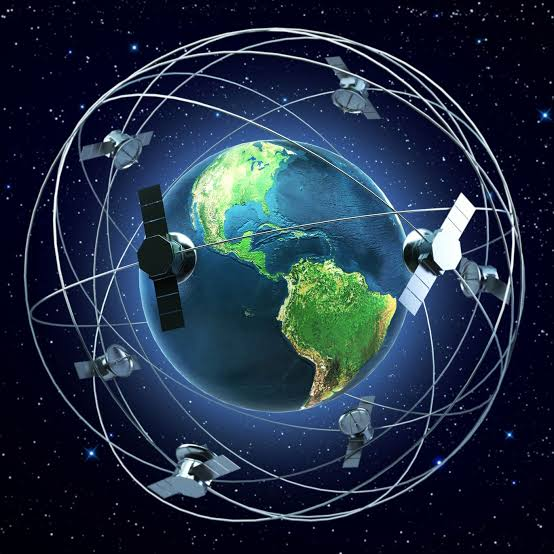
A satellite constellation means—
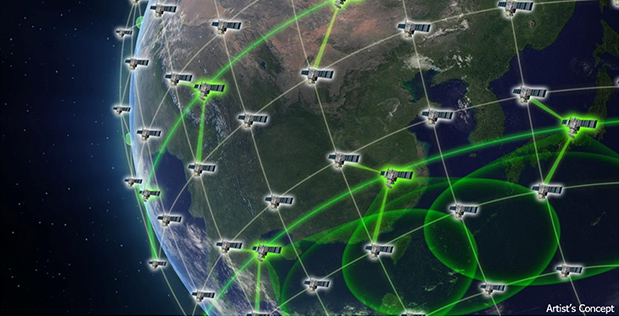
An organized group of multiple satellites working together for the same purpose or network.
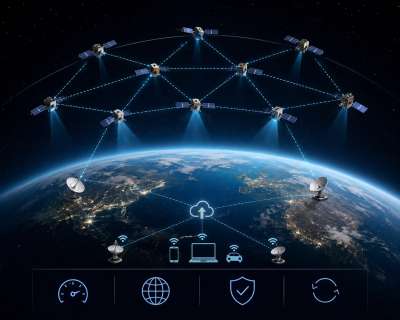
In earlier times, one communication satellite covered a very large area.
Today, in LEO architecture:
Hundreds/thousands of small satellites + ground stations + optical links + software + user terminals
Together form a network.
The advantages are:
Lower latency
Greater coverage
Redundancy
Faster data transfer
The network does not completely shut down if a single satellite fails
The U.S. SDA itself explains that proliferated LEO architecture can involve hundreds or thousands of satellites and is designed to increase resilience and continuous connectivity.
That means—
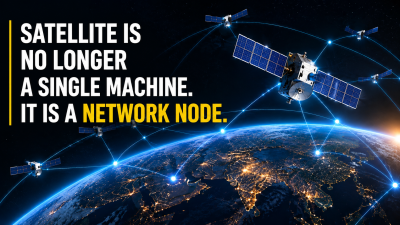
A satellite is no longer just a standalone machine. It is a network node.
STARLINK : THE BIGGEST EXAMPLE
SpaceX’s Starlink is currently the biggest commercial example of this transformation.
Starlink’s stated purpose is clear:
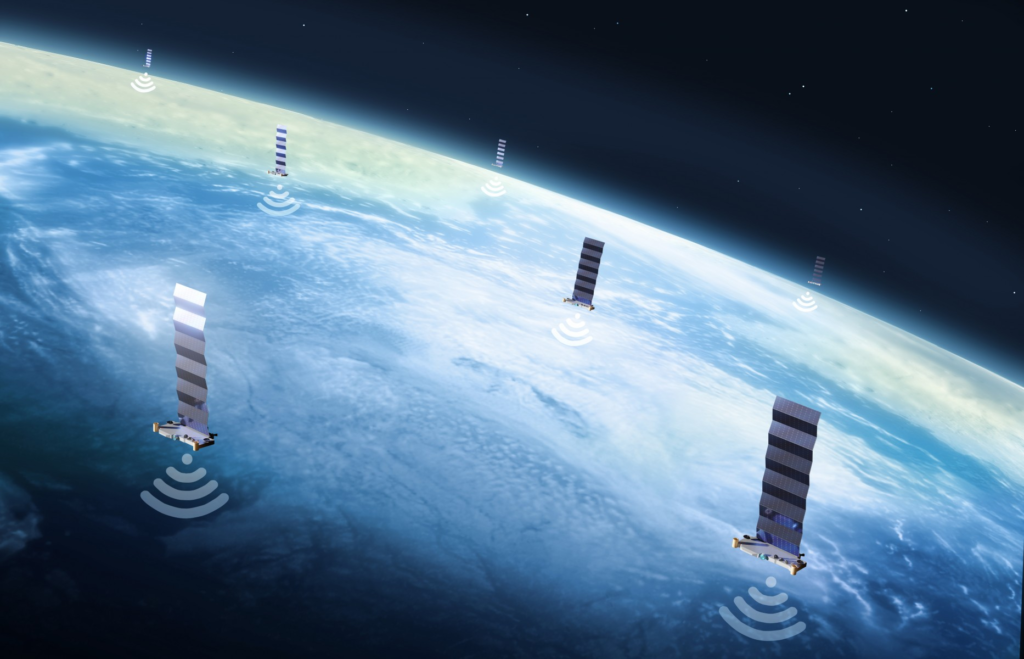
To provide high-speed, low-latency broadband to areas around the world where traditional connectivity is difficult or expensive.
The company itself describes Starlink as a satellite internet provider and says that its network provides broadband connectivity to millions of users.
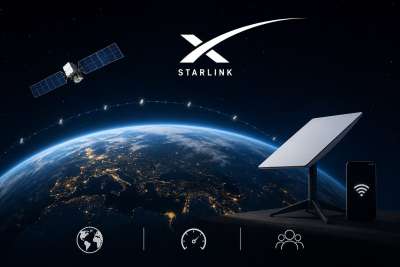
In 2025, Starlink stated that more than 7,800 satellites were in orbit in its network; during 2025, it also reported adding more than 2,300 satellites.
This means—
Satellite internet is no longer an experimental technology.
It is becoming rapidly expanding global communications infrastructure.
BUT STARLINK IS NOT LIMITED TO CONSUMER INTERNET
This is where the second chapter of the story begins.
SpaceX’s separate service, Starshield, has been specifically created for government and national-security applications.
According to SpaceX, Starshield has three major mission areas:
Earth Observation
Collecting data from Earth through satellites equipped with sensors.
Secure Communications

Secure global communications for government users.
Hosted Payloads
Integrating government or other mission-specific payloads onto satellite platforms.
Therefore, an important distinction needs to be understood here:
Starlink = primarily commercial connectivity
Whereas
Starshield = national-security architecture
However, both rely on some common technologies, manufacturing, and launch infrastructure.
WAR HAS SHOWN THE STRATEGIC POWER OF SATELLITE INTERNET
The Ukraine war has become one of the biggest real-world examples of this transformation.
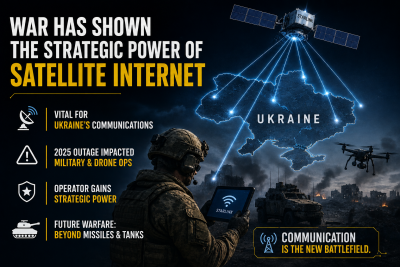
Starlink has played an important role in both civilian and military communications in Ukraine.
During a global Starlink outage in 2025, Ukrainian military communications were affected, and drone operations and battlefield reconnaissance were also impacted. Reuters reported that more than 50,000 Starlink terminals were operational in Ukraine.
A very important lesson emerged from this event:
When a communication network becomes part of a war effort, its operator also gains strategic importance.
This means that in future warfare:
Missiles and tanks will not be the only things that matter.
Communication architecture itself will become strategic power.
ONEWEB : ANOTHER MAJOR DIRECTION
Eutelsat’s OneWeb is also a major example of LEO constellation architecture.
The British government holds a significant stake in OneWeb; at the end of 2025, the UK government’s stake in Eutelsat Group was reported at 10.89%, while special-share rights in OneWeb Holdings also remained in place.
And now Eutelsat itself openly talks about using OneWeb for defence and government connectivity.
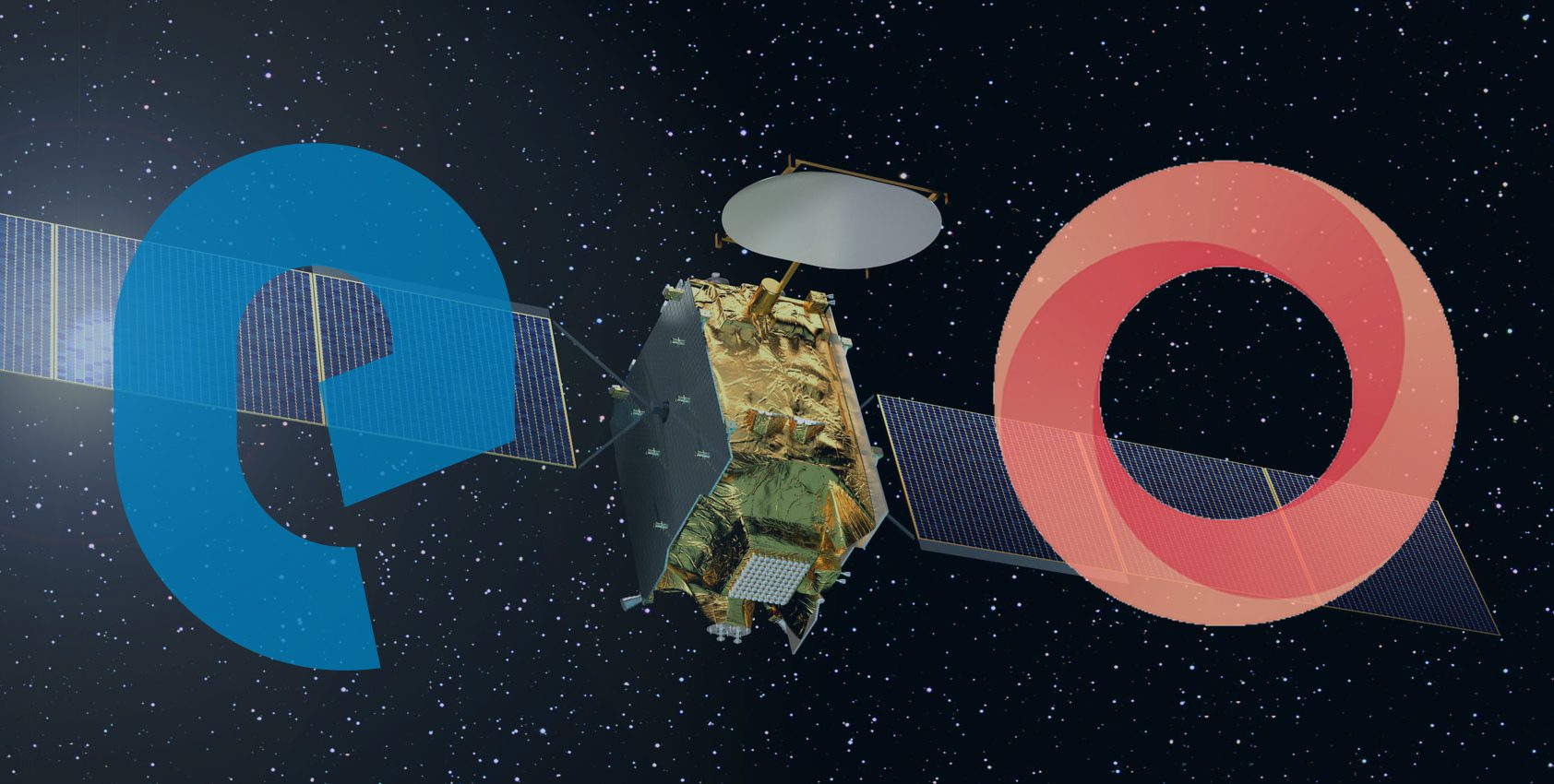
The company markets secure, resilient, and low-latency connectivity for military operations and describes applications across land, sea, and air domains.
Again, there is no mystery here.
The boundary between commercial satellite networks and national-security infrastructure is becoming increasingly interconnected.
AMAZON LEO : THE THIRD MAJOR NETWORK
Amazon’s Project Kuiper is now known as Amazon Leo.

Amazon’s stated objective is also global broadband connectivity—particularly bringing internet access to communities that remain outside traditional networks.
Amazon’s original plan consisted of 3,236 satellites. By 2026, deployment had accelerated, and in July 2026 Amazon reported that more than 375 satellites were in orbit.
Amazon Leo does not want to remain limited to satellite broadband.
The company has also announced plans for a Globalstar acquisition for direct-to-device connectivity, which could eventually allow satellites to provide connectivity directly to mobile devices.
This means—
In the future, in certain situations, the traditional ground tower may become less necessary between a satellite and a smartphone.
NOW COMES THE MOST IMPORTANT PART—OBSERVING THE EARTH
A satellite constellation is not only about internet.
There is another category—
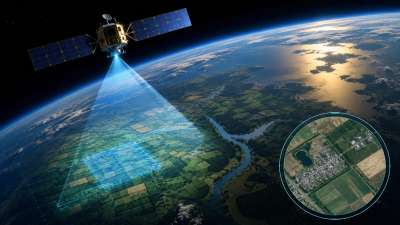
Earth Observation Constellations
Here, satellites continuously collect images and sensor data from Earth.
Planet Labs is a major example.

According to Planet, its hundreds of satellites image Earth’s landmass daily, and its constellation completes a polar orbit approximately every 90 minutes.
The company describes the use of this data in areas such as agriculture, forestry, infrastructure, energy, insurance, government, and environmental monitoring.
The benefits are enormous:
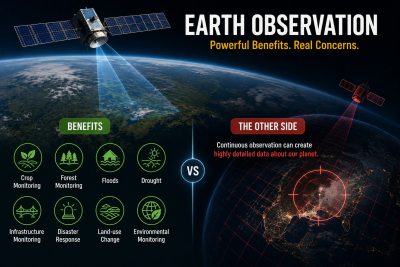
Crop monitoring
Forest monitoring
Floods
Drought
Infrastructure monitoring
Disaster response
Land-use change
Environmental monitoring
But the other side is also clear:
Those who can continuously observe the Earth can also create extremely detailed data about changes taking place across the planet.
MILITARY SATELLITE CONSTELLATIONS : THIS GOES BEYOND SURVEILLANCE

The U.S. Proliferated Warfighter Space Architecture (PWSA) is one of the clearest documented examples of this technological shift.
It has different layers:
Transport Layer
Military data and communications.
Tracking Layer
Detecting and tracking missile threats.
Custody Layer
Continuously tracking time-sensitive targets.
Battle Management Layer
Data processing, command, and control.
The SDA itself states that the Tracking Layer is intended to provide global indications, warning, tracking, and targeting against advanced and hypersonic missile threats.
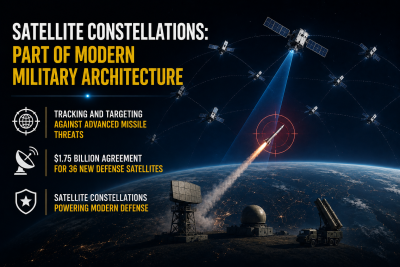
And in July 2026, the SDA announced agreements worth approximately $1.75 billion for an additional 36 missile-warning, missile-tracking, and missile-defense satellites.
This shows that satellite constellations are no longer merely communication technology.
They have become part of modern military architecture.
WHY IS LEO IMPORTANT?
Low Earth Orbit is located at a relatively low altitude above Earth.
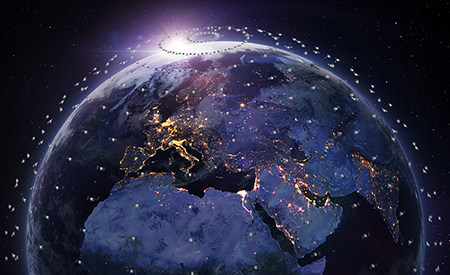
The advantages include:
Lower latency + better communication + better observation geometry.
The SDA also lists lower latency and better viewing geometries for Earth observation among the advantages of LEO.
This is why both commercial and military sectors are moving toward LEO constellations.
THE BIGGEST TRANSFORMATION : SATELLITE + AI + DATA
This is where the real story of the future begins.
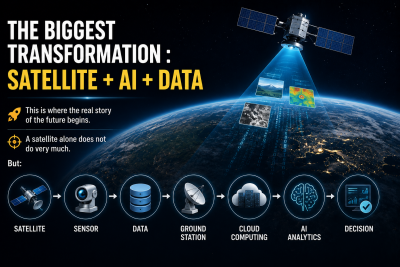
A satellite alone does not do very much.
But:
Satellite
↓
Sensor
↓
Data
↓
Ground station
↓
Cloud computing
↓
AI analytics
↓
Decision
Then the power of the entire system increases many times over.
For example:
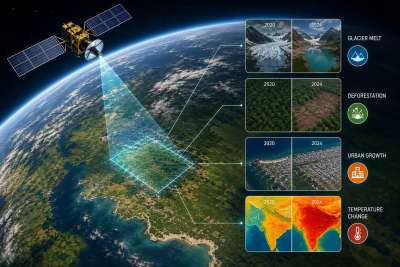
A satellite captures an image of an area.
AI compares it with previous data.
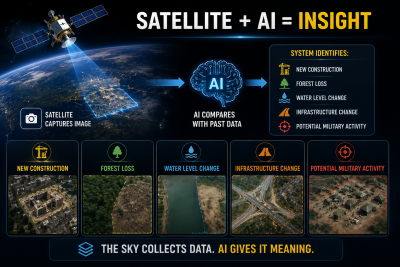
Then the system can identify:
Where new construction has taken place
Where forests have decreased
Where water levels have changed
Where infrastructure has changed
Where patterns resembling military activity may be visible
In other words:
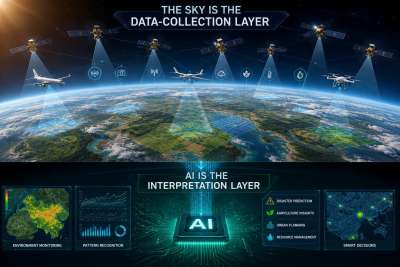
The sky is becoming the data-collection layer, while AI is becoming its interpretation layer.
DOES THIS MEAN THAT “THE SATELLITE IS WATCHING EVERY HUMAN”?
No.
This distinction is very important.
Satellite imagery has different resolutions, revisit times, sensor capabilities, and legal/technical limitations.
Therefore, saying:
“Every activity of every person is continuously being watched by satellites”
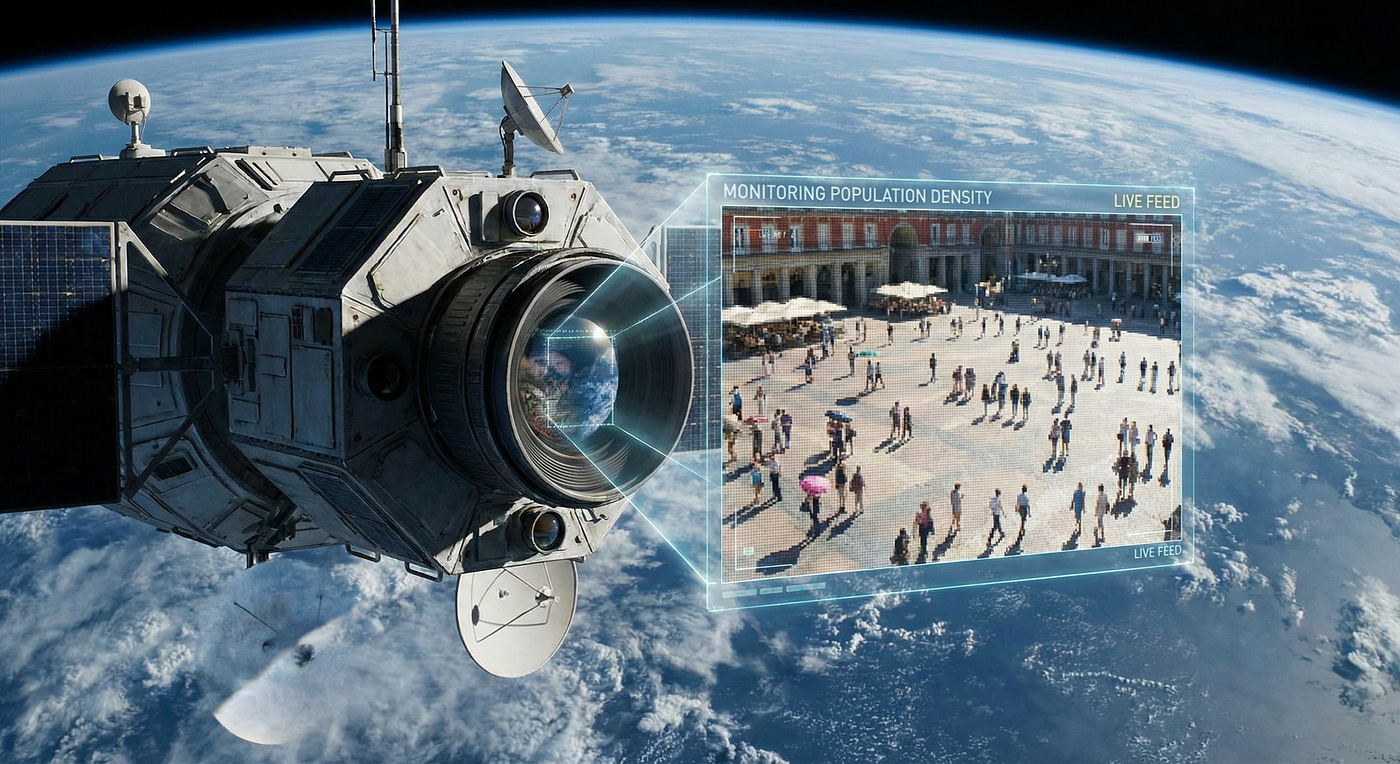
would be an exaggeration.
But it is factually accurate to say that:
Continuous and increasingly frequent Earth observation across large parts of the planet is now possible.
Planet’s daily global landmass imagery is a commercial example.
THE REAL CONCERN : DATA SOVEREIGNTY
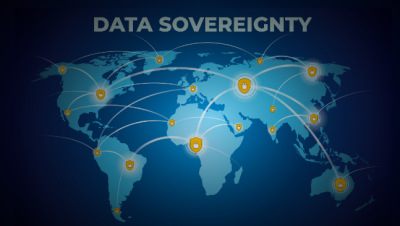
Now the question becomes more important for countries like India.
If a country’s:
Internet connectivity
Satellite communication
Earth observation
Cloud infrastructure
and
AI processing
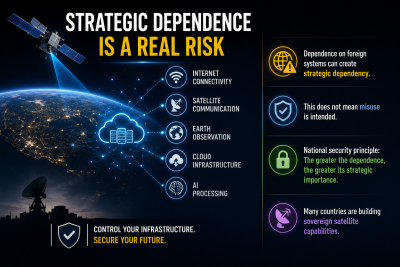
become heavily dependent on foreign companies,
then strategic dependency can emerge.
This does not necessarily mean that any company will misuse the system.
But the national-security principle is simple:
The greater the dependence on an infrastructure, the greater its strategic importance.
That is why many countries around the world are developing sovereign satellite capabilities.
THE SECOND QUESTION : CAN AN OPERATOR SHUT DOWN CONNECTIVITY?
Within the technical architecture, the operator controls access to the network.
The Ukraine experience shows that the availability or unavailability of satellite connectivity can create battlefield consequences. The global outage in 2025 made this dependency particularly clear.
Therefore, in the future:
Connectivity itself can become strategic power.
This is not merely a question of censorship.
It is a question of national resilience.
If terrestrial networks collapse and satellite networks become the primary communication alternative—
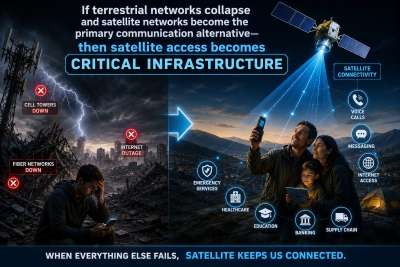
then satellite access becomes critical infrastructure.
ANOTHER PROBLEM IN SPACE : SPACE JUNK
The more satellites are launched,
the greater the challenge of orbital management becomes.

Collision risks may increase.
Astronomy may be affected.
And the natural appearance of the night sky may change.
The International Astronomical Union has expressed concerns about growing satellite constellations and has emphasized the need for international cooperation to protect dark and radio-quiet skies.
Amazon also says that it is working with astronomers to reduce satellite visibility and interference with astronomical research.
Therefore, this is not merely a problem for scientists.
It is also a question for future generations:
Will the night sky itself become commercial infrastructure?
IS THE PURPOSE OF SATELLITE CONSTELLATIONS TO “CONTROL HUMANITY”?
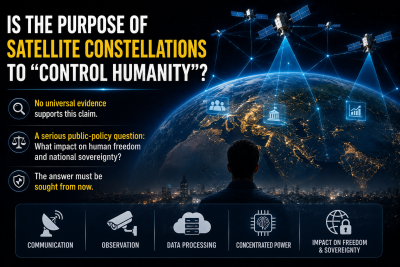
There is no universal evidence available to support this.
Therefore, it would not be appropriate to present such a claim as fact.
But the question of Satya Darshan can be different and more serious:
If communication, observation, and data-processing infrastructure becomes increasingly concentrated in the hands of a limited number of companies and governments, what impact will this have on human freedom and national sovereignty?
This is a legitimate public-policy question.
And its answer should be sought from now.
SATYA DARSHAN’S PERSPECTIVE : “A WEB IN THE SKY” OR THE NEW INFRASTRUCTURE OF HUMANITY?
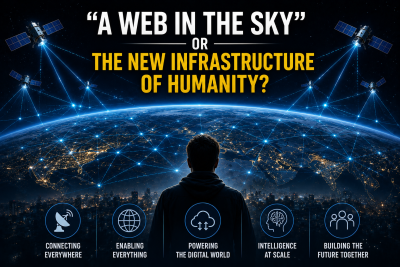
From the perspective of Satya Darshan, simply calling a satellite constellation “Maya” is not enough.
Because it also has real benefits.
Internet can reach remote villages.
Communication can be preserved during disasters.
Farmers can receive satellite imagery.
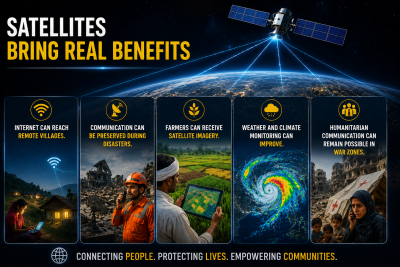
Weather and climate monitoring can improve.
Humanitarian communication can remain possible in war zones.
But the same infrastructure can also be used for:
Military surveillance
Missile tracking
Strategic communications
and
Massive data architectures
Therefore, technology itself is neither a god nor a demon.
The question is—who controls it, and how much human agency remains in the decisions made through it?
THE REAL QUESTION OF SATYA DARSHAN
Today we are asking about algorithms:
“Are you watching, or are you being shown something?”
Tomorrow, the same question may be asked about satellite networks:
“You are connected—but to whose infrastructure?”
And an even bigger question:
“Where is your data going?”
And ultimately:
“Who is deciding what conclusions will be drawn from this data?”
A satellite is only the eye.
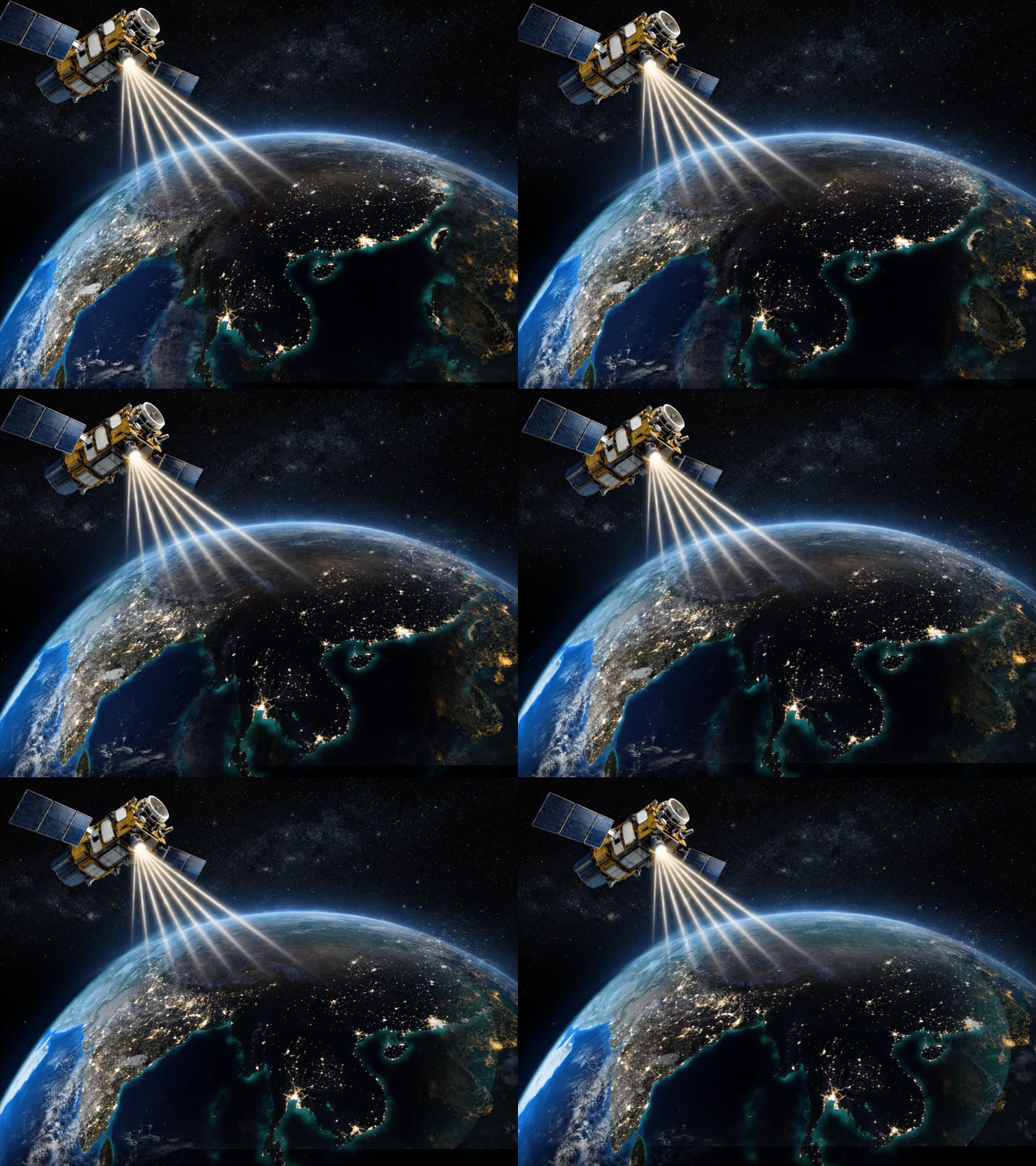
AI is the interpretation.
The cloud is the memory.

And the network can function like a nervous system.
When all four come together, an extremely powerful technological architecture emerges.
WHAT DOES INDIA NEED?
India does not need to fear satellite technology; it needs to strengthen its own capabilities and sovereignty.
At the policy level, important priorities could include:
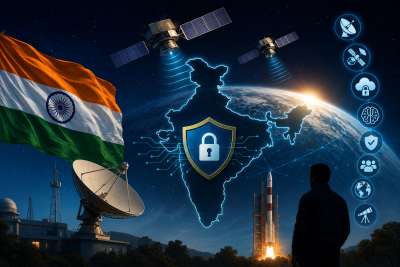
Indian satellite connectivity
Indian Earth-observation capability
Sovereign data infrastructure
Indian ground stations and networks
Domestic AI processing
Redundancy for critical communications
Resilience of defence and civilian networks
Satellite/data privacy rights for citizens
Orbital-debris regulation
Astronomy and dark-sky protection
In other words—
Not disconnecting from the world—controlling dependence.
ARE STARLINK, ONEWEB AND AMAZON LEO ENEMIES?
No.
That would also be factually incorrect.
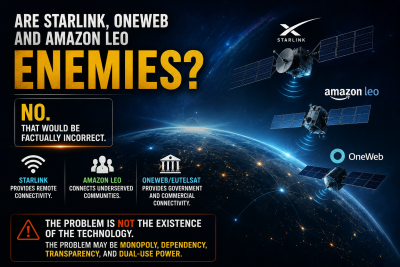
These networks provide real and important civilian benefits.
Starlink provides remote connectivity.
Amazon Leo is designed to connect underserved communities.
OneWeb/Eutelsat provides government and commercial connectivity.
The problem is not the existence of the technology.
The problem may be monopoly, dependency, transparency, and dual-use power.
CONCLUSION : WHAT IS THE REAL “SATELLITE REVOLUTION”?
A new technological layer is being built around the Earth today.
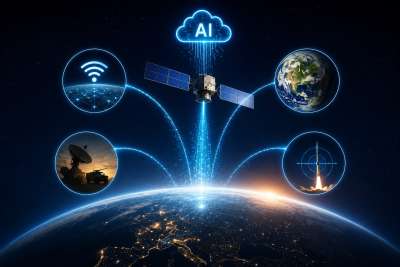
On one side—
Internet
On the other—
Earth Observation
The third—
Military Communications
The fourth—
Missile Tracking
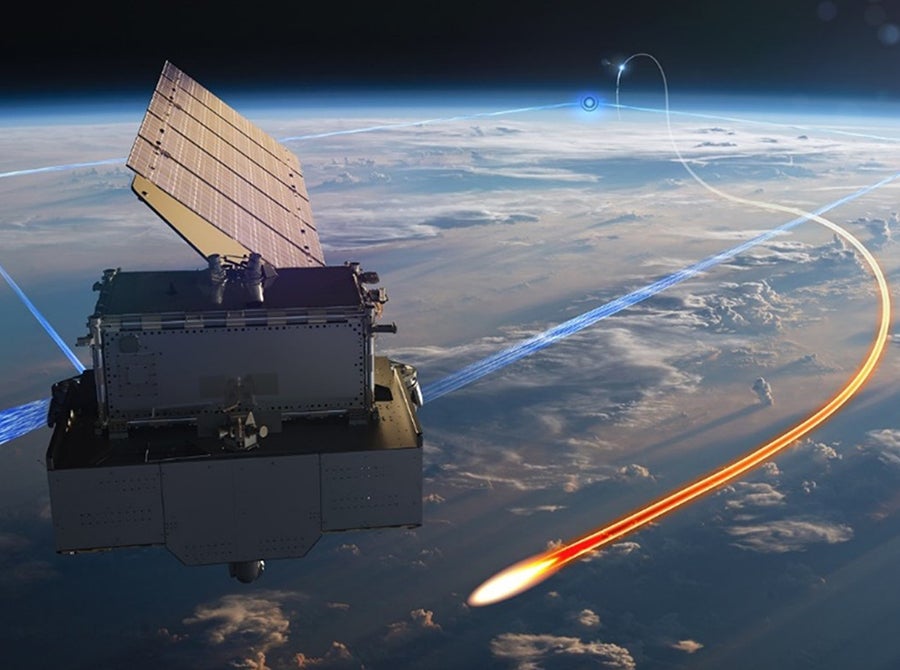
And above all of these—
AI + Cloud + Data Analytics
This is the strategic infrastructure race of the coming decades.
Therefore, understanding satellite constellations merely as—
“Internet satellites orbiting in the sky”
would be a very limited perspective.
They are actually part of a much larger infrastructure transformation.
A web of connectivity is being built around the Earth.
The question is not whether this web is good or bad.
The question is—
Who will hold the key to this web?
And an even bigger question—
Will citizens, nations, and humanity use this technology—or gradually become dependent on the technology?
This is the point where technological development and human freedom come face to face.
HOW CAN WE ESCAPE THIS ILLUSORY WEB??
If governments, large companies, and technological institutions possess satellites, cloud systems, AI, and massive data infrastructure, what can an ordinary person actually do?

From the perspective of Satya Darshan, the answer is not to “stop the system alone,” but to prevent one’s consciousness from becoming a completely passive consumer of the system.
What is actually in the hands of an ordinary person?
Where to place your attention—it is still in your hands.
A mobile phone can show you options, but you are not required to open every notification. Spending some time every day without a screen may seem like a small thing, but this is the beginning of breaking algorithmic dependence.
What to believe—it is still in your hands.
AI said it, it is viral, millions of people have seen it—none of these is proof of truth. “Why am I being shown this?” This small question can become a powerful weapon against algorithmic Maya.
Give only as much data as necessary.
Every app does not need access to your location, contacts, microphone, photos, and personal information. Understanding privacy settings and removing unnecessary permissions is real control available to an ordinary person.
Do not always assume that free means free.
If a digital service is not charging money, it is useful to ask—what is its business model? Many digital platforms depend on advertising, behavioural data, and engagement. Therefore, use the convenience, but understand its cost.
Keep your real-world life alive.
Talking to family, meeting friends in person, reading books, spending time in nature, connecting with the local community, learning a skill with your own hands—these are not trivial things. They prevent human beings from becoming merely screen-mediated existences.
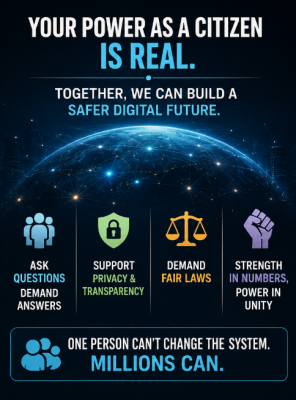
Collective citizen power.
One person cannot change satellite policy. But millions of citizens together can make issues such as privacy laws, consumer protection, AI transparency, competition, and data sovereignty political priorities. In a democracy, a citizen’s power is not limited to voting—it also means asking questions and demanding answers.
And perhaps the most important thing—
An ordinary person does not need to become an expert in every technological subject.
They only need to remember three questions:
What is this showing me?
Why is it showing me this?
Who benefits from this?
And the fourth—
Should I hand over my own decision-making to an algorithm instead of making the decision myself?
This is the point where Satya Darshan’s “consciousness” stops being an abstract or mysterious concept.
Consciousness means—do not completely outsource your attention, your judgment, and your decisions.
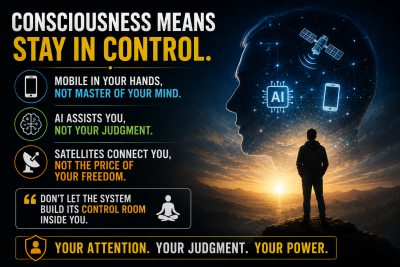
Let the mobile remain in your hands—do not let the mobile become the master of your mind.
Let AI assist you—do not let AI become your judgment.
Let satellites provide connectivity—do not let connectivity become the price of your freedom.
And if you ever feel that the entire system is so enormous that an individual cannot do anything, Satya Darshan’s answer would be:
“Before changing the entire system, make sure that the system does not build its control room inside you.”
This is the greatest power still available to an ordinary human being—your attention and your judgment.
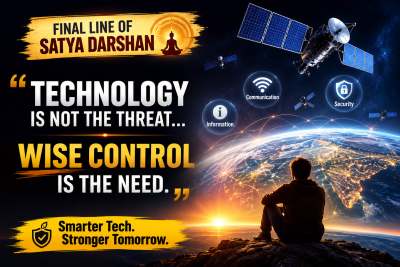
FINAL LINE OF SATYA DARSHAN
“The satellites increasing across the sky are not merely a story of connectivity. They are also the foundation of a future in which information, communication, Earth observation, and warfare decisions can become interconnected within a single digital ecosystem. Therefore, there is no need to fear technology—what is necessary is wise and responsible control over technology.”
SOURCE :
In this article, documented capabilities and potential policy implications have been kept separate. The stated commercial objectives of Starlink, Amazon Leo, and OneWeb, as well as the documented national-security applications of Starshield and the U.S. PWSA, have been presented as facts. Claims of “global surveillance,” “human control,” or any secret global agenda have not been presented as proven facts. The available evidence does show that LEO satellite networks are now playing an important role, alongside civilian connectivity, in Earth observation, secure government communications, missile warning/tracking, and military data networks.
INDIAFIRST.ONLINE