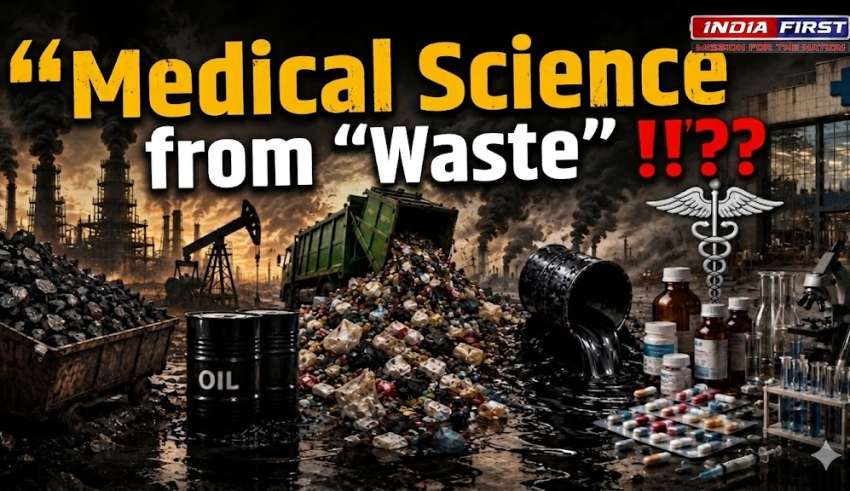
INDIA FIRST . SATYA DARSHAN . ASHUTOSH
“The very knowledge that India gave to the world—its roots were severed, and in its place, a tar-based pill was sold back to India.”
Before we begin—three questions:
First: How many hospitals were there in your grandfather’s village?
Second: Did people not fall ill back then?
Third: So, how did they recover?
You already know the answer.
There was Neem. There was Turmeric. There was the *Vaidya* (traditional healer). And there was an unshakable belief that Nature had already created a cure for every ailment.
This belief was thousands of years old.
And then, within just 150 years—coal waste rendered it “unscientific.”
This is the story of that transformation.
Part One: The World That Was—Where Medicine Was a Religion
3000 BCE — The Indus Valley: Health as a Collective Responsibility
Discovered during the excavations of Mohenjo-daro and Harappa:
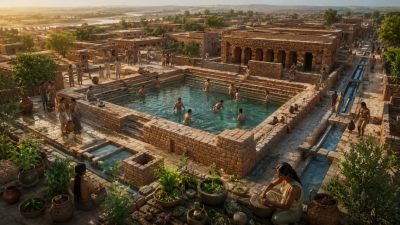
3000 BCE — Indus Valley: Health as a Collective Responsibility
Discovered during excavations at Mohenjo-daro and Harappa:
1500 BCE — Atharvaveda: The World’s First Medical Treatise

Mention of over 700 medicinal plants.
Description of the causes and remedies for diseases.
This is the world’s first written medical document.
Egypt’s Ebers Papyrus—which the West terms the “first”—dates back to 1550 BCE.
The Atharvaveda is older than that.
Source: Atharva Veda, Griffith Translation, 1895.
600 BCE — Takshashila: The world’s first medical university.
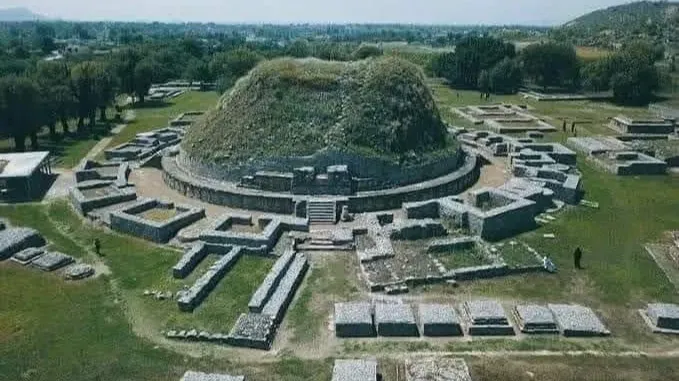
Pakistan, as it stands today.
A seven-year curriculum.
Training in practical surgery.
Students flocked here from across the globe—from China, Arabia, and Greece.
There was no “fee” here that the common man could not afford.
Knowledge was a sacred duty—not a trade.
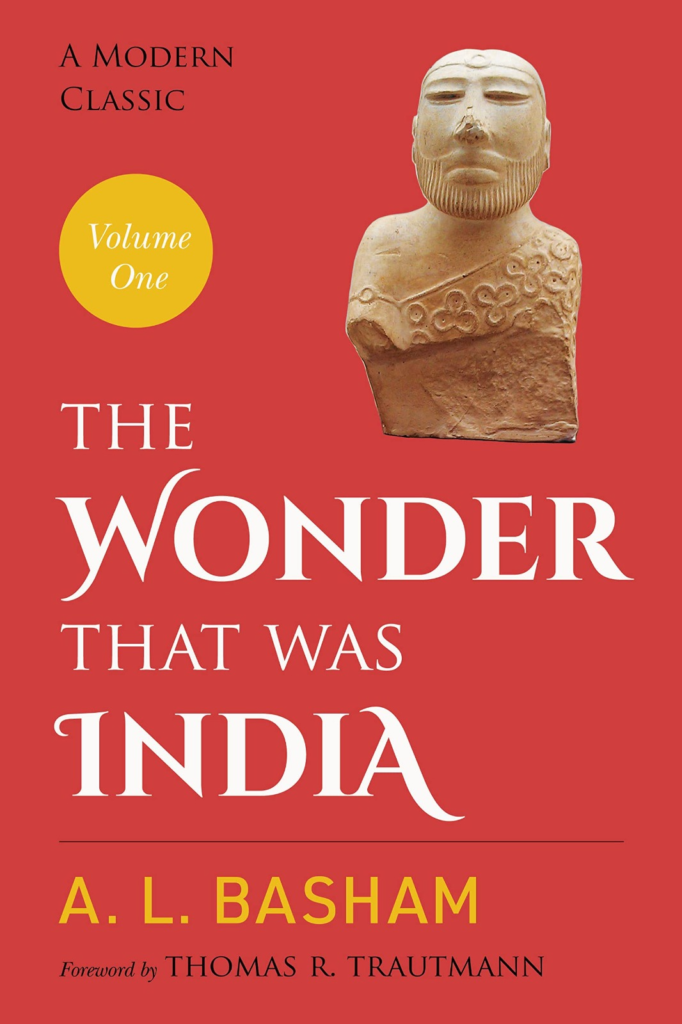
Source: A.L. Basham — The Wonder That Was India, 1954.
500 BCE — Sushruta: The Father of Surgery
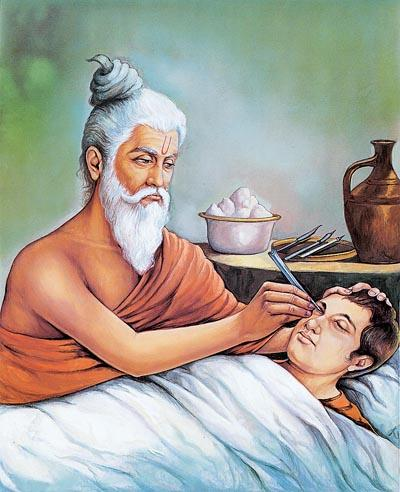
Varanasi.
In the Sushruta Samhita:
120 surgical instruments.
Nose reconstruction — today’s “Rhinoplasty.”
Cataract surgery.
Fracture treatment.
700 medicinal plants.
A historical fact that the West conceals:
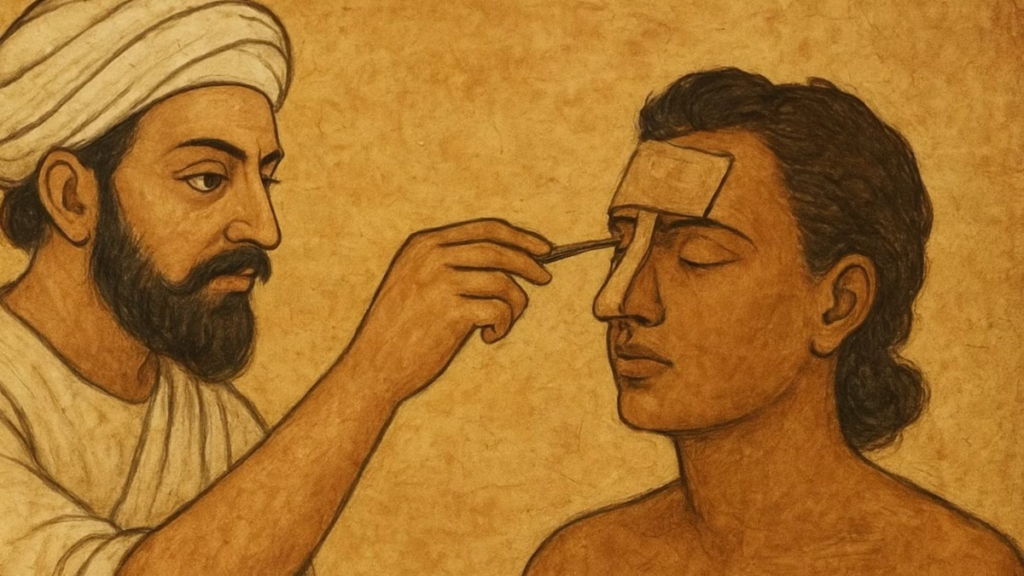
Published in 1794 in the British journal, *Gentleman’s Magazine*:
An Indian physician from Poona performed a nasal reconstruction.
British surgeons observed it. They learned it. And they propagated it in Europe, presenting it as a “new discovery.”
What is known today as “modern plastic surgery” is, in fact, Sushruta’s method.
Source: Gentleman’s Magazine, Vol. 64, October 1794.
400 BCE – 200 CE — *Charaka Samhita*: The Great Treatise of Ayurveda
340 medicinal plants.
Diabetes, heart disease, tuberculosis—all are described therein.
The most significant principle:
“Swasthasya Swasthya Rakshanam”
— First and foremost: the preservation of the health of a healthy individual.
This constitutes the world’s first principle of Preventive Medicine.
The West “discovered” it in the twentieth century.
And in Ayurveda, the *Vaidya’s* (physician’s) sacred duty is defined thus:
“Any physician who prioritizes earning wealth over curing the patient is not a physician, but a sinner.”
— *Charaka Samhita*
This was the fundamental nature of medicine—a sacred duty (*Dharma*).
Source: *Charaka Samhita*, P.V. Sharma Translation.
Part Two: The Global Dissemination of Indian Knowledge—and the Theft of Credit
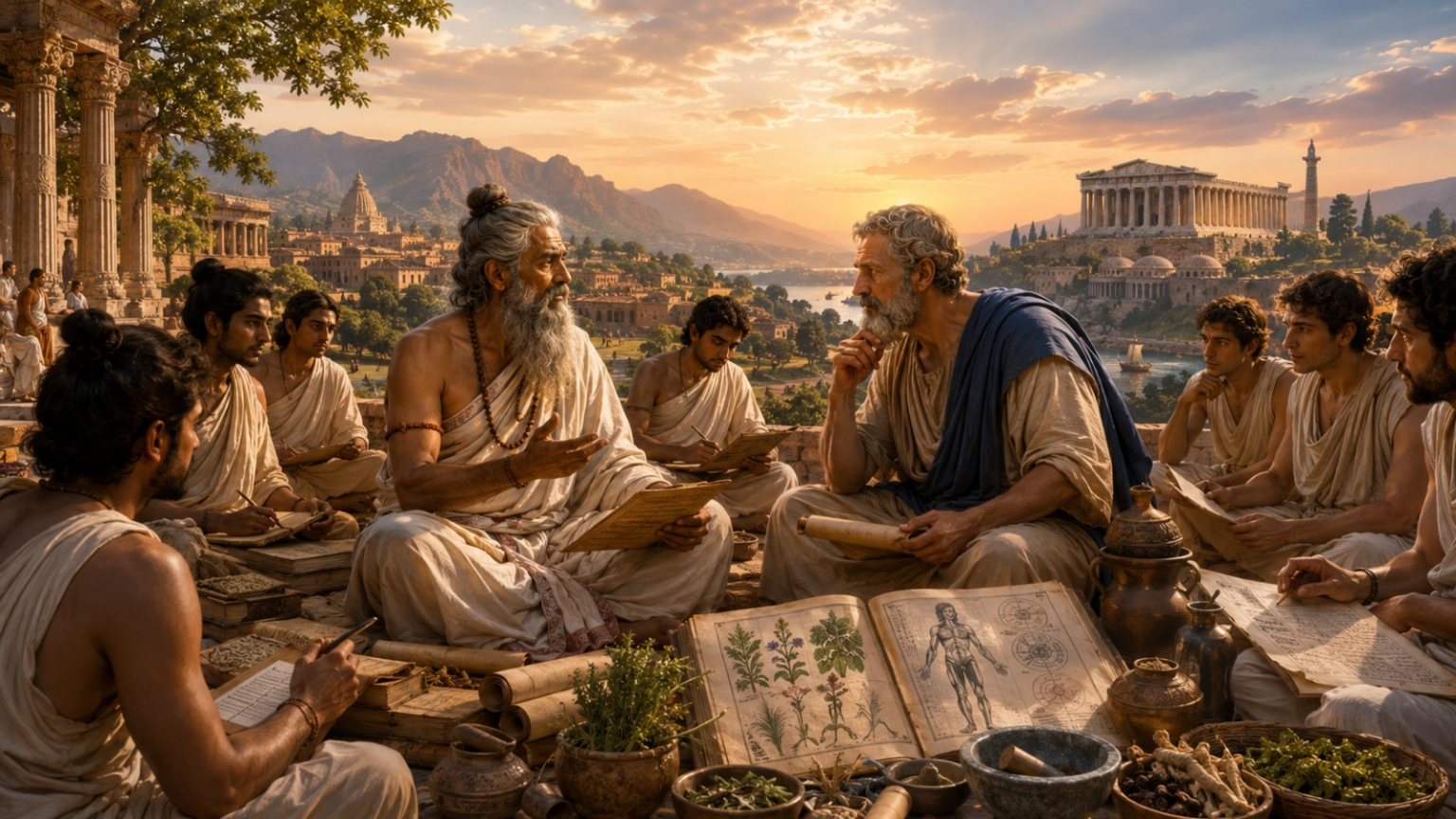
500 BCE — 300 BCE: Indian Knowledge in Greece
Pythagoras — 570 BCE — Visited India.
Hippocrates — 460 BCE — Hailed as the “Father of Modern Medicine.”
His principles bear a resemblance to Ayurveda:
The Four “Humors” — The Greek counterpart to the Ayurvedic *Vata*, *Pitta*, and *Kapha*.
Treating food as medicine — A principle of Charaka.
Greek students studied at Takshashila.
Knowledge flowed from India; the credit went to Greece.
Source: Jean Filliozat — *The Classical Doctrine of Indian Medicine*, 1964.
326 BCE: Alexander’s Arrival in India
Greek physicians accompanied Alexander.
They took back: Indian herbs and medical practices.
Knowledge flowed westward—anonymously.
200 BCE — 500 CE: Ayurveda in China via the Buddhist Path
It traveled from India to China alongside Buddhist monks:
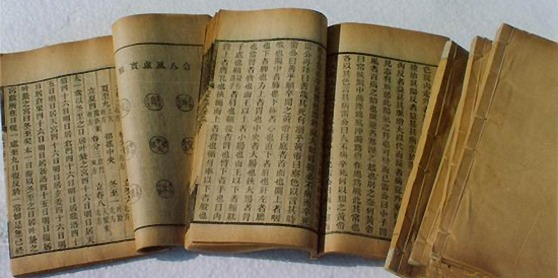
The Use of Triphala — Still Practiced in Chinese Medicine Today.
Acupuncture Points — Resembling the *Marma* Points of Ayurveda.
Classification of Herbs — Inspired by the Ayurvedic Methodology.
The Chinese Text *Shennong Bencao Jing* (c. 200 CE) — Mentions Indian Herbs.
Source: Paul Unschuld — *Medicine in China: A History of Ideas*, 1985.
500 CE – 700 CE: Nalanda — The World’s Largest Center of Knowledge.
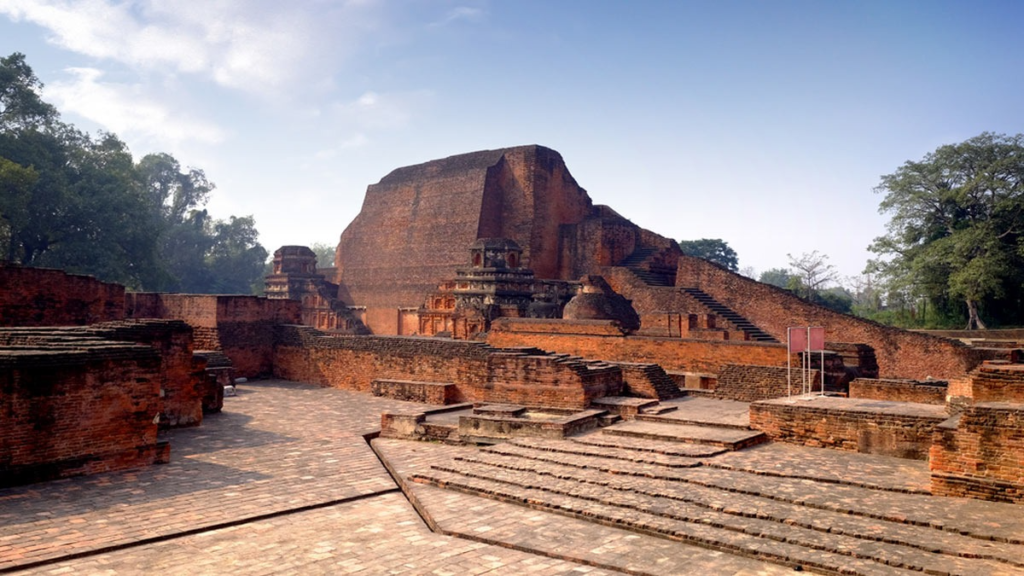
10,000 students. 2,000 teachers.
Students from 7 countries: China, Korea, Japan, Tibet, Mongolia, Turkey, Sri Lanka.
Ayurveda — a compulsory subject.
The Chinese traveler Hiuen Tsang — 630–643 CE — studied here and wrote a detailed account.
What went from Nalanda to China: Knowledge of surgery, medicinal plants, and Yoga.
Source: Hiuen Tsang — *Si-yu-ki: Buddhist Records of the Western World*, Samuel Beal, 1884.
700 CE – 900 CE: Translation of Indian Knowledge in Baghdad
The Abbasid Caliph Harun al-Rashid.
*Bayt al-Hikmah* — “House of Wisdom” — Baghdad.
What was translated:
*Charaka Samhita* — into Arabic as “Sharakiyun.”
*Sushruta Samhita* — into Arabic.
The knowledge belonged to India; the name belonged to the Arabs.
Source: Manfred Ullmann — *Islamic Medicine*, 1978.
980 CE – 1037 CE: Ibn Sina — The Arabic Version of Indian Knowledge
*Al-Qanun fi’l-Tibb* — in 5 volumes.
What it contained that originated from India:
Classification of diseases — Charaka’s methodology.
The Arabic equivalents of *Vata*, *Pitta*, and *Kapha*.
Indian herbs.
Ibn Sina himself wrote: He had studied Indian texts.
It was taught in Europe until the 17th century.
The knowledge belonged to India; the fame belonged to Ibn Sina.
Source: Ibn Sina — *Al-Qanun fi’l-Tibb*.

1000 CE — 1200 CE: Entry into Europe — Via Spain
Translations from Arabic into Latin in Toledo, Spain.
Gerard of Cremona — Latin translations of Ibn Sina’s texts.
In other words:
India → The Arab World → Spain → All of Europe.
This very knowledge formed the foundation of Europe’s “Renaissance.”
Was credit given to India? No.
Source: Charles Burnett — *The Introduction of Arabic Learning into England*, 1997.
1347 CE — 1351 CE: The Plague in Europe — Not in India
One-third of Europe’s population perished.
European “Treatments”:
Bloodletting.
Mercury — highly toxic.
Prayer.
At that very same time in India:
The concept of Ayurvedic quarantine already existed.
“Aturagar” — the isolation of the sick — described in the *Charaka Samhita*.
While Europe was dying amidst the plague, Ayurveda was at work in India.
Part Three: After 1600 CE — A Gradual Descent into Darkness
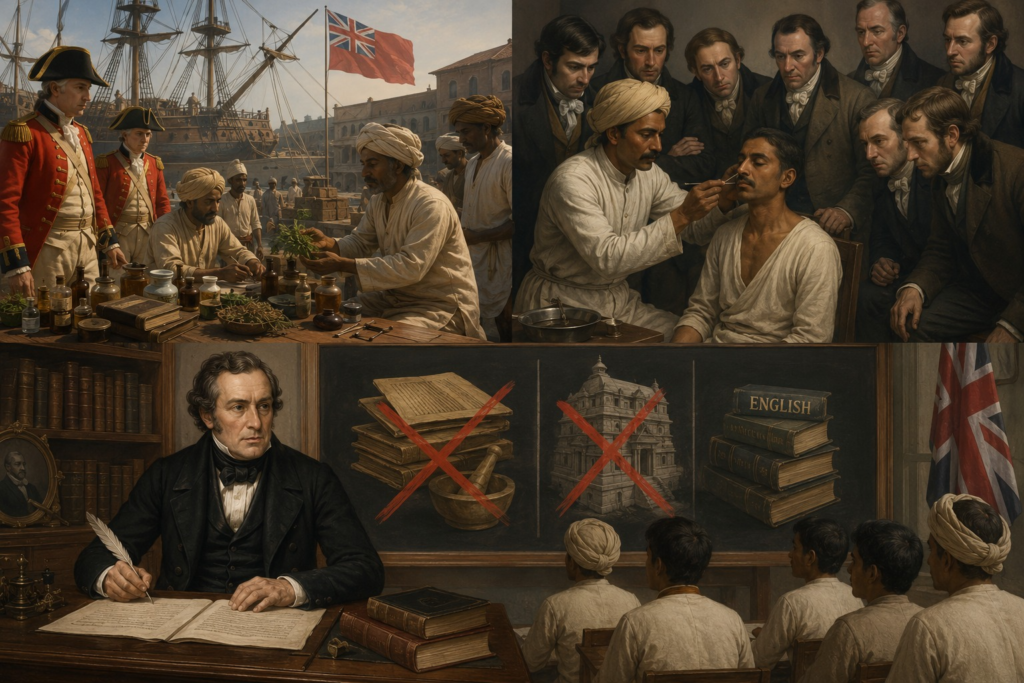
1600 CE: The Arrival of the East India Company
British medicine arrived alongside trade.
Learned from Indian *Vaidyas*: herbs and treatments.
No credit was given.
1794 CE: Nasal Surgery — From India to Europe
*Gentleman’s Magazine*, London, October 1794:
A *Vaidya* from Pune performed nasal reconstruction.
British surgeons observed, learned, and proclaimed it a “new discovery.”
The foundation of “modern plastic surgery” — Sushruta’s method.
1835 CE: Macaulay’s Strike — The Greatest Blow
Thomas Babington Macaulay:
“We must form a class who may be interpreters between us and the millions whom we govern; a class of persons, Indian in blood and colour, but English in tastes, in opinions, in morals, and in intellect.”
The Result:
Medical education in Sanskrit was abolished.
Ayurvedic textbooks were rendered irrelevant.
Ayurveda was not taught through the medium of English.
This was the first institutional blow — struck against Indian medical knowledge.
Source: Macaulay’s Minute on Indian Education, February 2, 1835, British Library.
Part Four: Coal — Oil — Waste — Coal Tar: The Inception of the Business
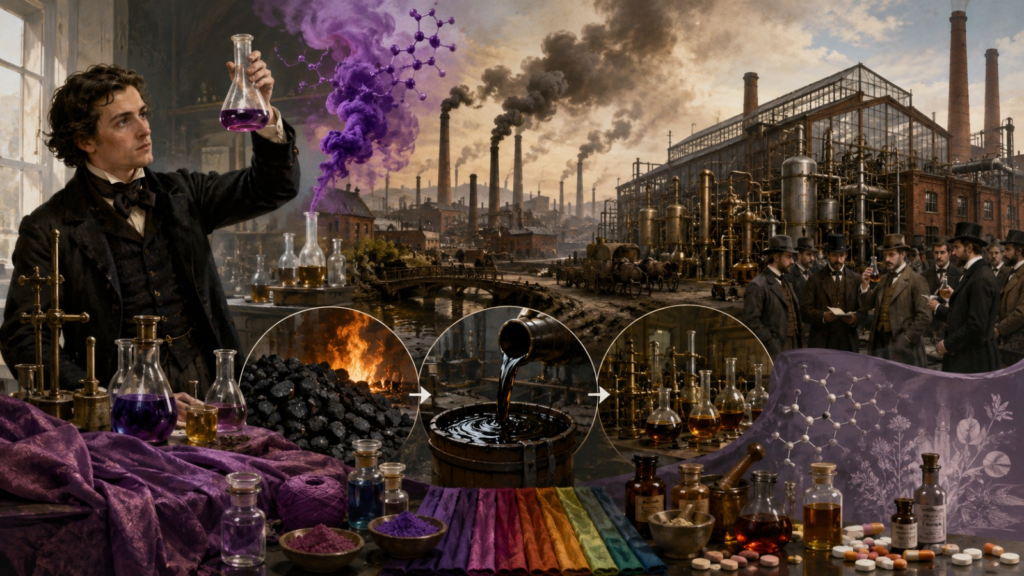
1806 CE: The First Synthetic Dye — An Accident That Changed the World
William Henry Perkin — Britain.
“Mauve” — a shade of purple derived from coal tar.
This moment marked a turning point in history:
It was discovered for the first time that chemical compounds could be created from coal tar.
And that from these compounds, medicines could also be produced.
The era of mimicking nature had begun.
Source: Simon Garfield — *Mauve: How One Man Invented a Colour that Changed the World*, 2000.
1856 CE – 1870 CE: The Rise of German Companies
1863: Bayer, BASF, Hoechst — Germany.
The beginning: Synthetic dyes for textiles.
Soon after: Medicines derived from coal tar.
Understand the mechanism:
Burn coal.
Extract coal tar.
Create chemical compounds.
Patent them.
Sell them.
Generate profit.
This was not medicine. It was business.
1859 CE: Petroleum — The Birth of a New Power
Edwin Drake — Pennsylvania, America.
The first commercial oil well.
Petroleum byproducts included:
Kerosene, gasoline, and — chemical compounds similar to coal tar.
One man recognized its true potential.
His name was: John Davidson Rockefeller.
1870 CE: Rockefeller’s Standard Oil — The Beginning of the Takeover of Medicine
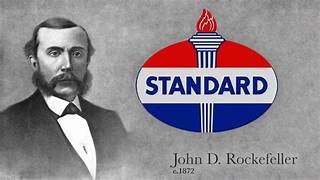
Standard Oil was established in 1870.
By 1880, 90% of America’s oil refining capacity was under the control of a single individual.
Rockefeller saw the opportunity:
Synthetic chemicals derived from coal tar and petroleum byproducts.
Drugs derived from synthetic chemicals.
Patents on those drugs.
Patents meant a monopoly.
A monopoly meant unlimited profits.
However, there was a problem.
People were finding cures through natural remedies like neem and turmeric.
Why would they need synthetic drugs?
The solution: Buy out the entire medical system.
1897 CE: Aspirin — Coal Tar’s First Major Triumph
Bayer, Germany. Salicylic Acid—which occurred naturally in the bark of the Willow tree.
Its synthetic version: Aspirin.
Then: A decoction of Willow bark—free, available in nature.
Now: A pill derived from coal tar—patented, sold commercially.
This was the business model:
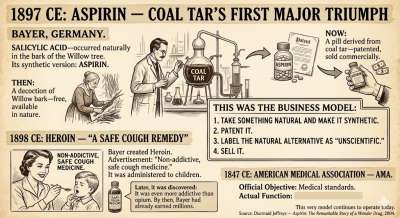
Take something natural and make it synthetic.
Patent it.
Label the natural alternative as “unscientific.”
Sell it.
1898 CE: Heroin — “A Safe Cough Remedy”
Bayer created Heroin.
Advertisement: “Non-addictive, safe cough medicine.”
It was administered to children.
Later, it was discovered: It was even more addictive than opium.
By then, Bayer had already earned millions.
This very model continues to operate today.
Source: Diarmuid Jeffreys — *Aspirin: The Remarkable Story of a Wonder Drug*, 2004.
1847 CE: American Medical Association — AMA
Official Objective: Medical standards.
Actual Function:
Pharmaceutical companies were required to advertise in AMA journals.
Whoever advertised—their drug was deemed “approved.”
Medicine ceased to be a vocation; it became a licensing business.
Part Five: 1910 — The Institutional Murder of Natural Medicine
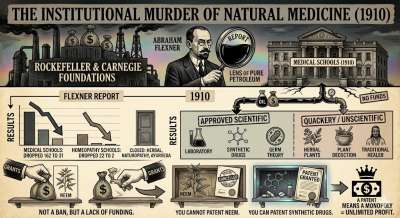
1910 CE: The Flexner Report — History’s Least-Discussed Document
Rockefeller + Carnegie Foundation → Abraham Flexner.
Task: An “inspection” of all medical schools in America and Canada.
Report’s Conclusions:
Only that medicine is “scientific” which:
Is based on coal tar / petroleum-based synthetic drugs.
Is measurable in a laboratory setting.
Adheres to the Germ Theory.
Everything else: “Quackery.” “Unscientific.” “Dangerous.”
The Result — Between 1910 and 1935:
Medical Schools: Dropped from 162 to 31.
Homeopathy Schools: Dropped from 22 to 2.
Herbal Medicine Schools: Shut down completely.
Naturopathy: Shut down.
Ayurveda, Traditional Medicine: Declared “primitive.”
What was the strategy?
They didn’t issue a ban.
The Rockefeller and Carnegie Foundations simply awarded grants worth millions of dollars to the “approved” schools.
The others received nothing.
Lacking funding, they shut down on their own.
This was not a murder committed with a gun—it was a murder committed with money.
The root cause, in a single sentence:
You cannot patent Neem.
You cannot patent Turmeric.
You *can* patent synthetic drugs.
A patent means a monopoly.
A monopoly means unlimited profit.
That is why thousands of years of accumulated knowledge were deemed “unscientific.”
That is why petroleum waste became “Modern Medicine.”
Source: Abraham Flexner — *Medical Education in the United States and Canada*, Carnegie Foundation, 1910.
1913 CE: The Rockefeller Foundation — A Vehicle for Global Control
Establishment of the Rockefeller Foundation.
Declared Objective: Philanthropy.
Actual Function:
To export petroleum-based medicine globally.
To fund the WHO, the UN, and universities.
To shape global health policy.
In that very same year, 1913: The Federal Reserve Act.
Control over the money supply + Control over the medical system — all in a single year.
This was no coincidence.
1913 CE: The Haber-Bosch Process — Synthetic Fertilizers
Synthetic nitrogen fertilizers derived from coal and petroleum. Whatever was put into the fields—that very thing entered the body.
And the very companies that manufactured fertilizers—were the same ones manufacturing medicines.
Today, Bayer is also the world’s largest seed and pesticide company.
Illness stems from petroleum. Medicine stems from petroleum. A single source. Profits on both ends.
1918 CE: The Spanish Flu—The first major “test.”
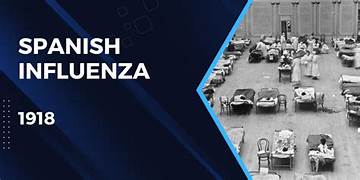
50 to 100 million deaths.
Bayer’s Aspirin was administered on a massive scale.
Research published in the *Journal of Clinical Infectious Diseases* in 2009 revealed:
The dosage of Aspirin administered during that era was toxic.
Many deaths were caused by Aspirin overdose.
The first major pandemic. The first major synthetic drug. The first major profit.
Source: Karen Starko — *Salicylate Toxicity and Pandemic Influenza*, *Clinical Infectious Diseases*, 2009.
1925 CE: IG Farben—The Empire of the Artificial.
Bayer + BASF + Hoechst = IG Farben.
Combined: Medicines + Dyes + Fertilizers + Weapons.
And a secret pact with Standard Oil (Rockefeller):
Divide the market. Share the technology.
1933: IG Farben funded Hitler.
400,000 Reichsmarks.
Documented: Nuremberg Trial Records.
IG Farben’s factory at Auschwitz.
Slave labor.
Zyklon B—Manufactured by an IG Farben subsidiary.
After the Nuremberg Trials:
Fritz ter Meer—Held responsible for the Auschwitz operations.
Sentence: 7 years.
Upon his release: Chairman of Bayer.
The very same Bayer—which, alongside Monsanto, stands today as the world’s largest pharma-seed company.
Source: Nuremberg Trial Records; Anthony Sutton — *Wall Street and the Rise of Hitler*, 1976.
1928 CE: The IMA in India—The Indian Incarnation of the British Model.
The Indian Medical Association.
Established during the British colonial era.
A vehicle for institutionalizing Western medicine within India.
Ayurveda: Relegated to the margins. 1945 CE: Post-WWII — The Global Export of the American Medical Model
America: The sole unaffected power.
With the Marshall Plan: Western drugs.
The Rockefeller-Flexner Model — Exported across the entire world.
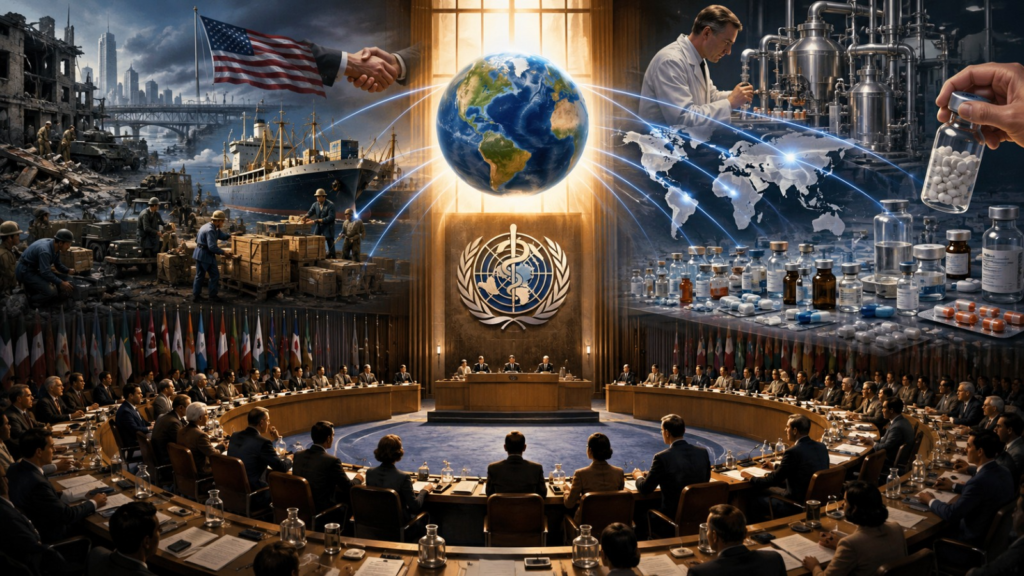
1947 CE: Establishment of the WHO — Global Control
World Health Organization.
Headquarters: Geneva.
Primary Donor: America.
Consequence:
Western Allopathic medicine = The Global Standard.
Ayurveda, TCM, Unani = “Traditional”—meaning, Second Class.
Medicine had now become a global business.
1947 CE: India’s Independence — Yet Medicine Remains Enslaved
Political freedom.
But the Medical System: The British Model.
IMA: The same.
Medical Council of India: The same.
Curriculum: The same.
Independent India adopted the British Medical Model exactly as it was.
1956 CE: AIIMS — A Significant Fact
Technical and financial assistance from the Rockefeller Foundation — documented.
Source: Rockefeller Foundation Annual Report, 1954–56.
India’s premier medical institute — built upon that very Rockefeller model.
The same model that, in 1910, had declared natural medicine to be “unscientific.”
Part Six: New Diseases — New Drugs: The Expansion of Business
1955 CE: Polio Vaccine
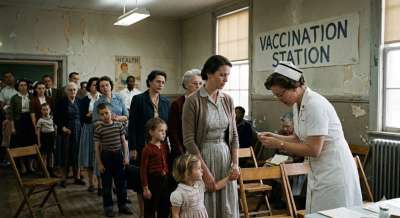
Jonas Salk. Rockefeller-funded institutions.
A documented correlation:
DDT pesticide — used extensively in the 1940s.
DDT attacks the nervous system.
Polio symptoms: Affect the nervous system.
Researcher Jim West documented this correlation in 2000.
Mainstream science did not accept it.
1960 CE: Cholesterol — The Birth of a New “Disease”
“High Cholesterol” — previously, it was not a subject of such widespread discussion.
Statin Drugs:
Lipitor — Pfizer.
$132 billion — over 30 years.
The best-selling drug in history.
Fact:
Many of the experts who established the standards for cholesterol had financial ties to pharmaceutical companies.
Source: BMJ — Conflict of Interest in Cholesterol Guidelines, 2013.
Change the standards → More people become “sick” → More drugs are sold.
1971 CE: India’s Patent Act — A Positive Step
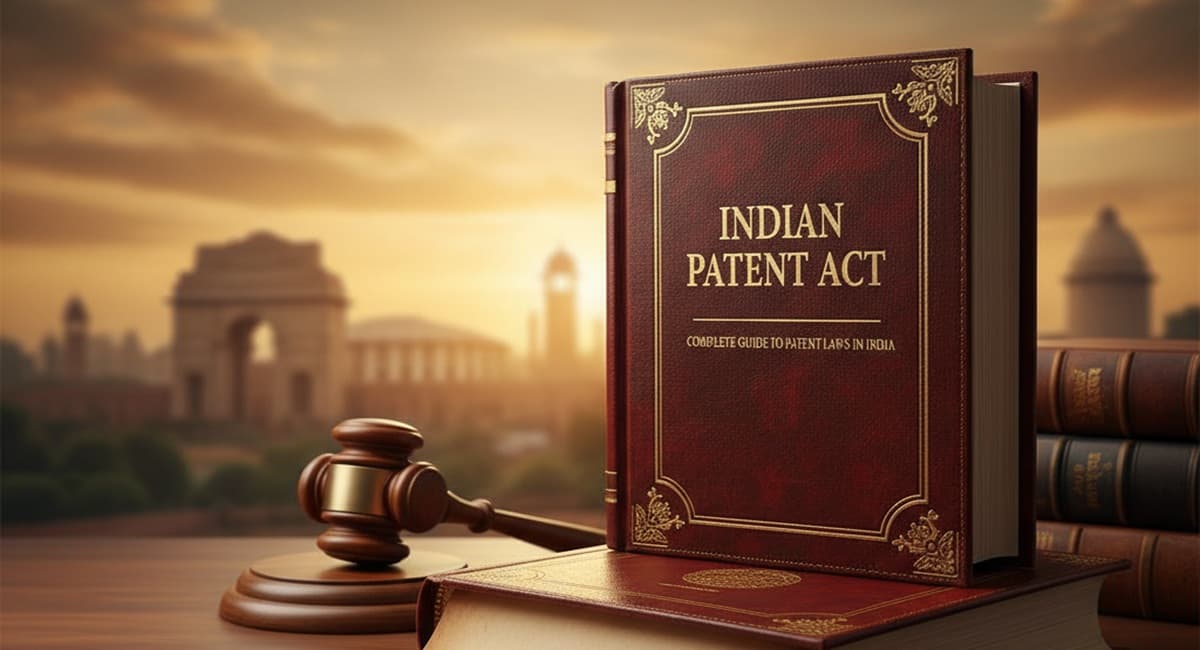
The Indira Gandhi Government.
Product patents abolished.
India’s generic pharmaceutical industry flourished.
India became the “Pharmacy of the World.”
Source: The Patents Act, 1970, Government of India.
1973 CE: The Petrodollar System
Nixon and Kissinger.
Saudi Arabia: Oil sold exclusively in dollars.
Oil = Dollar = American Power.
Oil-derived medicines = American Pharmaceutical Power.
Oil and medicine — two arms of the same empire.
1976 CE: Swine Flu Vaccine — America
40 million people vaccinated.
Deaths caused by the virus: 1.
Guillain-Barré syndrome caused by the vaccine: 450 cases, 25 deaths.
Program halted. Companies received: Full payment.
Source: JAMA, Swine Influenza Vaccine Studies, 1977.
1981 CE: HIV/AIDS and AZT
AZT — Burroughs Wellcome (now GlaxoSmithKline).
Originally developed for cancer — it failed.
Approved for AIDS without full clinical trials.
Annual cost in 1987: $10,000 per patient.
Side effects: Bone marrow destruction.
Anthony Fauci played a role in its fast-track approval — this is documented.
1984 CE: The Bhopal Gas Tragedy
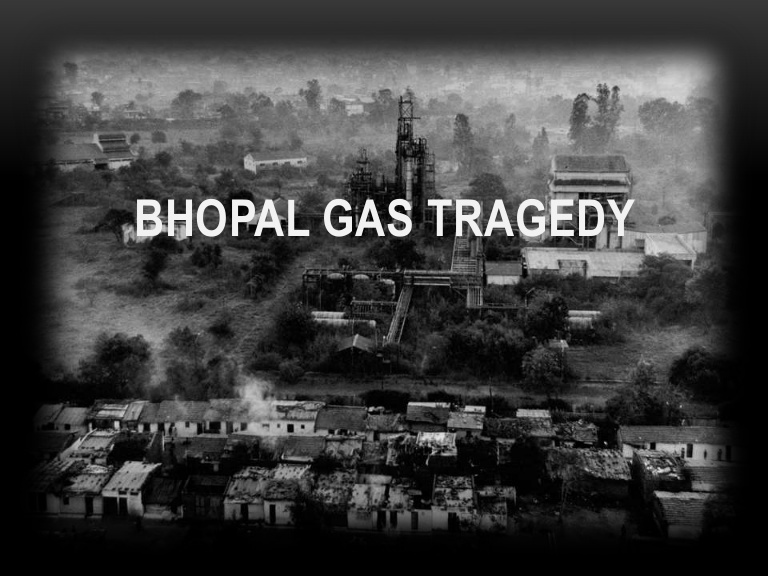
Union Carbide — An American company.
Methyl Isocyanate gas.
First night: 5,000+ deaths.
Long-term impact: 40,000+ deaths; over 300,000 people affected.
CEO Warren Anderson was allowed to leave India.
He was never extradited. The starkest example of the petroleum chemical industry’s complete lack of accountability.
Source: Bhopal Gas Tragedy Relief Department, Government of Madhya Pradesh.
1995 CE: WTO and TRIPS — Global Pharmaceutical Patents
Trade-Related Aspects of Intellectual Property Rights.
Medicines become expensive. Pressure on generic drugs.
Developing countries—including India—are adversely affected.
Source: TRIPS Agreement, WTO, 1995.
2002 CE: Bt Cotton — Monsanto’s Trap in India
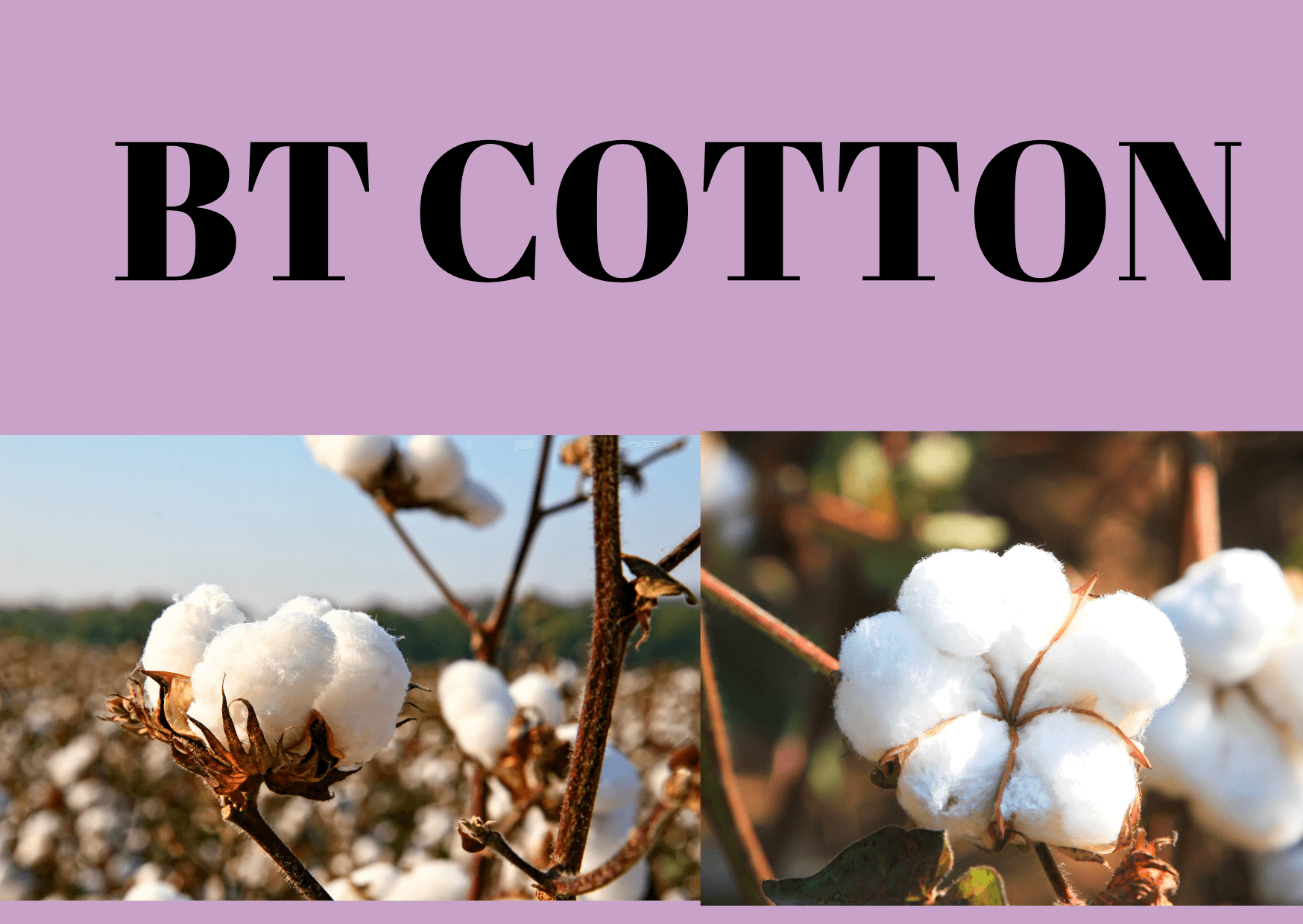
Patents on seeds.
A mandatory requirement to purchase seeds every year.
Consequences:
Post-1991: Over 300,000 farmer suicides.
Source: NCRB Annual Reports.
2005 CE: India’s Patent Act Amended
Under pressure from the WTO.
Product patents were reintroduced.
Generic medicines became more expensive.
A blow to India’s pharmaceutical independence.
Source: The Patents (Amendment) Act, 2005.
2009 CE: Swine Flu “Pandemic”
WHO: Pandemic Level 6 — the highest level.
Tamiflu (Roche): Generated billions in revenue.
European Parliament Investigation (2010):
WHO advisors had financial ties to the pharmaceutical industry.
BMJ (2012):
Roche concealed clinical trial data.
Source: European Parliament Resolution on Swine Flu, 2010; Peter Doshi, BMJ, 2012.
2015 CE: Glyphosate — The WHO’s Own Conclusion
IARC — The WHO’s cancer research agency:
Glyphosate (Monsanto’s Roundup): “Probably carcinogenic to humans.”
Monsanto’s court-ordered documents:
The company knew. They covered it up.
Source: IARC Monograph Vol. 112, 2015; Monsanto Papers, US Federal Court.
2020 CE – 2023 CE: COVID and mRNA — A New Frontier
Pfizer: $36.8 billion — in 2021 alone.
Moderna: $18.4 billion — despite having no previously approved products.
Both were granted: Complete Legal Immunity. Pfizer’s Court-Ordered Documents, 2022:
A list of 1,291 side effects.
The company sought to conceal this information for 75 years.
AstraZeneca, 2024:
Admitted in the UK High Court to: Thrombosis with Thrombocytopenia Syndrome.
mRNA Technology:
For the first time, artificial instructions delivered to human cells.
This represented the next level of petroleum chemistry.
Sources: Pfizer Post-Marketing Adverse Event Report, FDA FOIA Release, 2022; AstraZeneca v. Jamie Scott et al., UK High Court, 2024.
2024 CE: Microplastics — Petroleum Now in the Bloodstream
Nature Medicine, March 2024:
Microplastics found in carotid artery plaque.
Risk of heart attack, stroke, or death: 4.5 times higher.
WHO, 2023:
Microplastics detected in: human blood, breast milk, lungs, liver, and kidneys.
We are eating petroleum-based plastics. Drinking them. Breathing them in.
And subsequently, we take drugs derived from that very same petroleum.
Illness from petroleum. Medication from petroleum.
A single source. Profit on both ends.
Source: Marfella et al. — Microplastics and Nanoplastics in Atheromas, Nature Medicine, March 2024.
Part Seven: How Ayurveda Was Marginalized in India
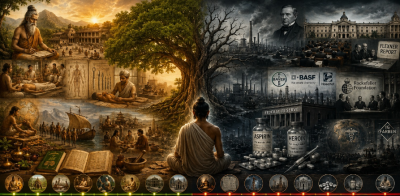
1835: Macaulay — Sanskrit out, English in. Ayurveda deemed irrelevant.
Post-1857: British Medical Service — Official recognition for Ayurvedic *vaidyas* (practitioners) revoked.
1928: IMA — An Indian version of the British model.
Post-1947: The same system, new leaders. AIIMS: The Rockefeller model.
The Reality Today:
Health Ministry budget: Hundreds of billions.
AYUSH budget: Negligible in comparison.
And yet — the WHO’s own conclusion:
“80% of the world’s population still relies on Traditional Medicine.”
Source: WHO Traditional Medicine Strategy 2019-2034.
What was labeled “unscientific” — is precisely what 80% of the world’s people are living by.
A Summary of Three Thousand Years — At a Glance:
3000 BCE: The rise of Ayurveda in India — Medicine as a sacred duty.
600 BCE: Taxila — The world’s first medical university.
500 BCE: Sushruta — The Father of Surgery.
400 BCE: Charaka — The first principles of Preventive Medicine.
326 BCE: Knowledge reaches Greece via Alexander. No credit given.
200 BCE–500 CE: Reaches China via the Buddhist path. No credit given.
700–900 CE: Translated in the Arab world — Ibn Sina. No credit given.
1000–1200 CE: Reaches Europe via Spain. The foundation of the Renaissance. No credit given.
1806 CE: The first synthetic dye from Coal Tar — The dawn of the artificial era.
1835 CE: Macaulay — The first assault on Ayurveda in India.
1859 CE: Petroleum — A new source of power.
1863 CE: Bayer, BASF, Hoechst — Medicines derived from Coal Tar.
1870 CE: Rockefeller — The path from Oil to Pharma.
1897 CE: Aspirin — The first blockbuster drug derived from Coal Tar.
1898 CE: Heroin — The “safe cough remedy.” 1910 CE: Flexner Report — The institutional murder of Natural Medicine.
1913 CE: Rockefeller Foundation + Federal Reserve — Both established in the same year.
1918 CE: Spanish Flu — Deaths caused by Aspirin overdose.
1925 CE: IG Farben — Pharma + Chemicals + Arms consolidated.
1928 CE: IMA — The British medical model introduced in India.
1945 CE: Post-WWII — The American medical model goes global.
1947 CE: WHO — Western medicine established as the global standard.
1947 CE: India gains independence — Yet its medical system remains enslaved.
1956 CE: AIIMS — Modeled after the Rockefeller system.
1973 CE: Petrodollar — Oil = Dollar = Drugs.
1995 CE: WTO TRIPS — Drug patents become globalized.
2002 CE: Monsanto Bt Cotton — Resulting in over 300,000 farmer suicides.
2009 CE: Swine Flu — WHO advisors exposed for their ties to the pharmaceutical industry.
2020 CE: COVID — mRNA — Artificial instructions introduced into human cells.
2024 CE: Microplastics — Petroleum derivatives now found in the bloodstream.
2026 CE: We are here.
The people orchestrating this game:
The Rockefeller Family:

Oil → Banking → Pharma → Education → Foreign Policy.
Standard Oil → JPMorgan Chase → Rockefeller Foundation → WHO funding.
One family. One goal. Seven generations.
The Rothschild Family:
European banking since the 18th century.
5 sons across 5 countries — the first transnational financial network.
Battle of Waterloo (1815): Knew the outcome in advance; amassed wealth in the bond market.
Source: Niall Ferguson — *The House of Rothschild*, 1998.
The Morgan Family:
J.P. Morgan — American banking.
A documented role in the creation of the Federal Reserve.
Source: Murray Rothbard — *A History of Money and Banking*, 2002.
The Gates Foundation — The New Network:
The WHO’s top private donor.
Investments in pharmaceutical companies.
Support for GM seeds.
Investments in lab-grown meat.
The world’s largest private owner of agricultural land.
Source: WHO Donor Database; Gates Foundation Annual Reports.
BlackRock and Vanguard — The Control of Today:
BlackRock: $10 trillion in assets.
Vanguard: $8 trillion.
Top shareholders: Pfizer, J&J, AstraZeneca, ExxonMobil, Apple, Google, Meta — in all of them.
The same shareholders. Everywhere.
Source: SEC Filing Data, Bloomberg Intelligence, 2023.

What to do now?
Do not stop taking your medication.
But remain vigilant.
In emergencies, modern medicine is essential.
However, for day-to-day health maintenance:
Neem, Turmeric, Ginger, Triphala, Tulsi—these have existed for thousands of years. They still exist today.
Get to know your local *Vaidya* (Ayurvedic practitioner).
Seek a second opinion on every prescription.
Focus on preventive health.
Eat local, seasonal foods.
Reduce your consumption of processed, packaged foods.
Demand an increase in the AYUSH budget—this is your right.
Impart basic knowledge of Ayurveda to your children.
A Final Thought:
History’s greatest irony:
The knowledge that India shared 3,000 years ago—
Which traveled to Greece, Arabia, China, and Europe—
Upon which “modern medicine” was built—
That very same knowledge was labeled “unscientific.”
And pills derived from coal tar were sold to India.
And we bought them.
Now is the time—to return to our roots.
Neem has existed for thousands of years.
Turmeric has existed for thousands of years.
They are still here today.
We simply need to stop regarding them as “unscientific.”
— Public First
Complete List of Sources:
Atharva Veda, Griffith Translation 1895 | Charaka Samhita, P.V. Sharma | Sushruta Samhita, Kaviraj Kunja Lal Bhishagratna | Gentleman’s Magazine, Vol. 64, October 1794 | Macaulay’s Minute on Indian Education, February 2, 1835, British Library | A.L. Basham — The Wonder That Was India, 1954 | Jean Filliozat — The Classical Doctrine of Indian Medicine, 1964 | Simon Garfield — Mauve, 2000 | Diarmuid Jeffreys — Aspirin, 2004 | Abraham Flexner — Medical Education Report, Carnegie Foundation, 1910 | Rockefeller Foundation Annual Reports 1913-1960 | US Senate Hearings — Standard Oil-IG Farben, 1942 | Nuremberg Trial Records | Anthony Sutton — Wall Street and the Rise of Hitler, 1976 | Niall Ferguson — The House of Rothschild, 1998 | Karen Starko — Salicylate Toxicity, Clinical Infectious Diseases, 2009 | European Parliament Resolution on Swine Flu, 2010 | Peter Doshi — Tamiflu, BMJ, 2012 | BMJ — Conflict of Interest in Cholesterol Guidelines, 2013 | IARC Monograph — Glyphosate, Vol. 112, 2015 | Monsanto Papers, US Federal Court | Pfizer Post-Marketing Report, FDA FOIA, 2022 | AstraZeneca UK High Court, 2024 | Nature Medicine — Microplastics, March 2024 | WHO Microplastics Report, 2023 | WHO Traditional Medicine Strategy 2019-2034 | NCRB Annual Reports | The Patents Act India 1970 and 2005 | TRIPS Agreement WTO 1995 | Brown University Cost of War Project 2021 | SEC Filings — BlackRock, Vanguard, 2023 | Paul Unschuld — Medicine in China, 1985 | Manfred Ullmann — Islamic Medicine, 1978 | Murray Rothbard — A History of Money and Banking, 2002
“India gave the knowledge.
The world translated it.
Then, having severed the very roots of that knowledge,
they sold India pills made of coal tar.”
— Public First
Truth. Freedom. Self-Respect.
Stay vigilant. Return to nature. Stay free.