
INDIA FIRST . BHOPAL . KAILASH CHANDRA
Natural resources available on Earth—water, air, forests, minerals, soil, wildlife, and energy sources—are not the private property of humanity, but a shared heritage of the entire creation. This idea is not merely a moral appeal; it is a profound conclusion drawn from Earth’s geological history, biological evolution, and modern scientific understanding.
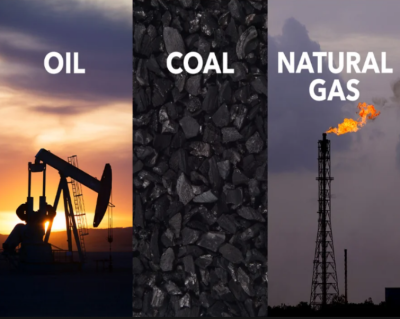
Science clearly shows that the energy resources on which modern civilization depends are not renewable on a human timescale. Petroleum takes between 50 to 300 million years to form, coal requires 30 to 400 million years, and natural gas also forms over millions of years. Resources shaped by Earth’s vast natural processes over millions of years are being destroyed within months due to wars, conflicts, and human greed. This is not only scientifically irrational but also morally unjust.
Ancient Indian thought has long expressed this scientific truth through philosophical and spiritual frameworks. The Earth has been regarded as a mother, and all living beings as her children. This reflects the idea that the gifts of nature are not meant for one society, one nation, or one generation, but for all forms of life equally. In modern terms, this aligns with the concept of “Global Commons,” where resources are not owned by individuals but are meant for collective use.
This is why the idea of monopolizing natural resources is fundamentally inhumane. If Earth’s resources belong to all creation, then humans can only act as caretakers or trustees. They have the right to use resources, but not to own or exploit them. A trustee uses responsibly and ensures conservation, rather than destruction
However, today’s global political and economic systems have drifted away from this fundamental principle. Resources that once belonged to all have been transformed into instruments of property, political power, strategic dominance, and industrial profit. As a result, conflicts over resources—such as attacks on oil facilities in West Asia, disruptions in gas pipelines during wars, or civil conflicts over minerals in Africa—do not just affect one nation, but the entire world.
These disruptions lead to rising oil prices, increased transportation costs, higher electricity tariffs, and deepening food crises. Ultimately, it is the common people—who neither wage wars nor exploit resources—who suffer the most. This represents one of the most distorted forms of global injustice.
The loss of natural resources does not only trigger economic crises but also disturbs ecological balance. When a forest is destroyed, it is not just trees that are lost—rainfall patterns, soil fertility, water conservation systems, and biodiversity are all affected. Oil spills in oceans damage marine ecosystems and contribute to global warming and climate disasters. Water pollution impacts not just rivers, but millions of humans, animals, and agricultural systems.
Therefore, it is incomplete to say that the loss of natural resources is a loss for one nation. The reality is that natural resources belong to the entire planet, and their destruction is a loss for all of creation.
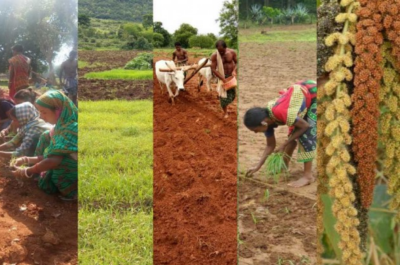
The broader philosophical vision behind this idea is that the world is one interconnected family. This is not just a slogan, but a principle that emphasizes equality, restraint, and collective well-being in the use of resources. Modern environmental philosophy echoes this through the concept of environmental justice, which advocates for equitable access, sustainable use, and shared responsibility.
Yet, the current global order does not follow this path. Resource-rich nations often use them as tools of power and influence, while resource-dependent countries remain vulnerable and unstable. This inequality is not just economic, but moral and civilizational. If a region is endowed with abundant resources, its primary responsibility should be to protect and share them, not to exploit them for profit.
This is where the Indian philosophical perspective offers a meaningful alternative. It teaches that nature must be treated with respect, and resources should be used with balance and sustainability. It promotes responsible consumption rather than excessive exploitation.
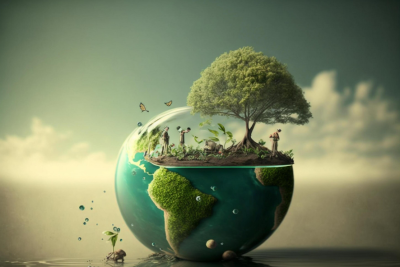
To end conflicts over natural resources, humanity must embrace the principle of trusteeship—the idea that humans are not owners, but guardians of Earth’s wealth. This concept, also emphasized in socio-economic thought, suggests that wealth and resources should be used for the greater good, not for individual greed.
Today, the world urgently needs this trusteeship approach. It is the only framework capable of breaking the cycle of wars, resource exploitation, and environmental degradation. If oil exists in one region, it serves the needs of the entire world. Forests in one country regulate the planet’s climate. Rivers originating in one land sustain entire ecosystems beyond borders.

Thus, the idea of exclusive ownership of natural resources is limited, selfish, and unsustainable. In contrast, a shared and responsible approach ensures the survival of humanity and the planet.
The need of the hour is for the global community to recognize this scientific and ethical truth—that protecting, conserving, and fairly distributing Earth’s resources is a collective responsibility. This is the path that can secure a balanced and harmonious future for generations to come.
Natural resources belong to the Earth.
We are only their custodians.
And the duty of a custodian is not exploitation—but protection.
BY KAILASH CHANDRA
INDIAFIRST.ONLINE