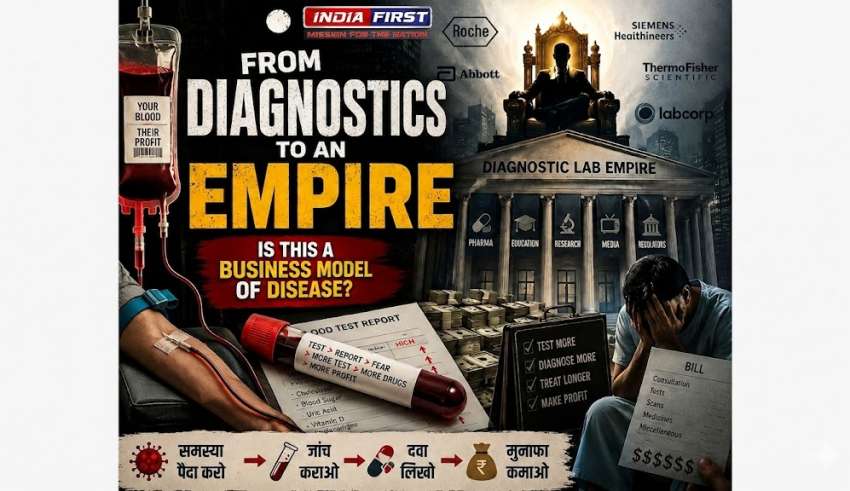
INDIA FIRST . SATYA DARSHAN . ASHUTOSH
HIGHLIGHTS FIRST:
The Empire of Blood Testing:
A 2,500-Year History
The Modern Medical System and a Multi-Billion Dollar Data Market
Is this a medical service, or a global ecosystem built upon fear and dependency?
— A Factual Investigative Report | 1799–2026
Legal and Factual Disclaimer:
This article is an analytical piece based on public research papers, medical history, economic reports, sources such as the WHO, ICMR, NIH, BMJ, JACC, and NEJM, as well as documented medical controversies. Its objective is not to categorically label any doctor, hospital, laboratory, or the entirety of modern medicine as “fraudulent.” Many blood tests are, in reality, life-saving and scientifically essential.
At the same time, it is an undeniable fact that the modern healthcare system has evolved into the world’s largest corporate market—one in which pharmaceutical companies, diagnostic chains, insurance providers, medical education institutions, and regulatory lobbying groups play a pivotal role.
Therefore, please read this article as a “balanced investigative analysis”—avoiding both blind faith and blind skepticism.
Part 1
The Origins of Blood and Medicine: When Illness Was Attributed to “Contaminated Blood”
Throughout human history, blood was regarded as far more than merely a biological fluid.
It was revered as the very essence of “life,” “vital force,” “energy,” and “divine power.”
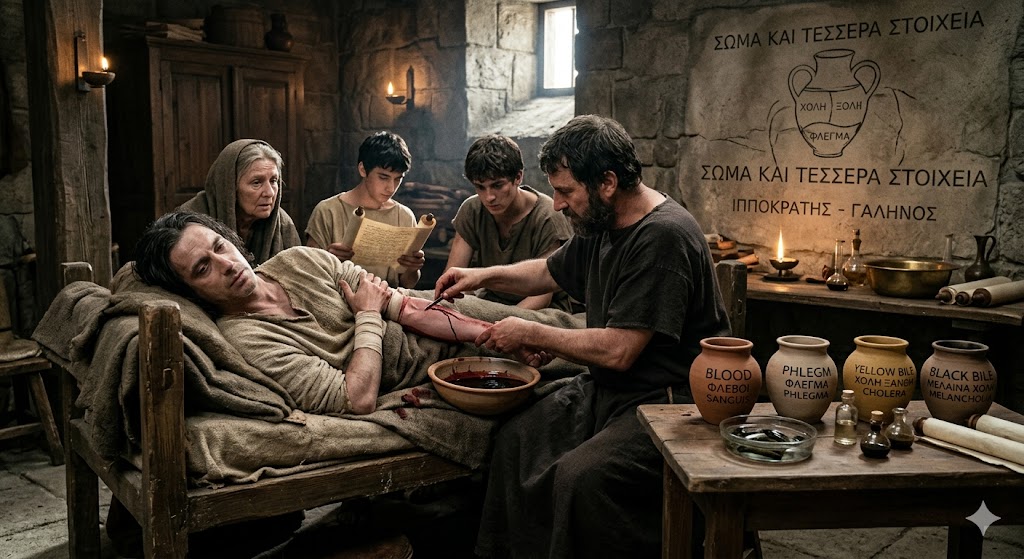
Ancient Greece and the “Four Humors Theory”
Around 400 BCE, the Greek physician Hippocrates—and later Galen—theorized that the human body is composed of four fluids:
Blood
Phlegm
Yellow bile
Black bile
An imbalance in these fluids was believed to result in illness.
What was the treatment?
Bloodletting
Leeching
Venesection
Hot cupping
This very “treatment” persisted in Europe and America for nearly 2,000 years.
1799 — When a President Was Killed by His Treatment
On December 14, 1799, George Washington contracted a throat infection.
The doctors of that era:
Extracted approximately 2.5 liters of blood within 24 hours—
Roughly 35–40% of the body’s total blood volume.
According to modern analysis (NEJM, 1999):
His death was caused by shock from blood loss rather than by infection.
This event is considered a turning point in the history of modern medicine.
Part 2
The Dawn of Blood Testing: From Blood Extraction to “Reading” Blood
The Microscope Transformed Medicine
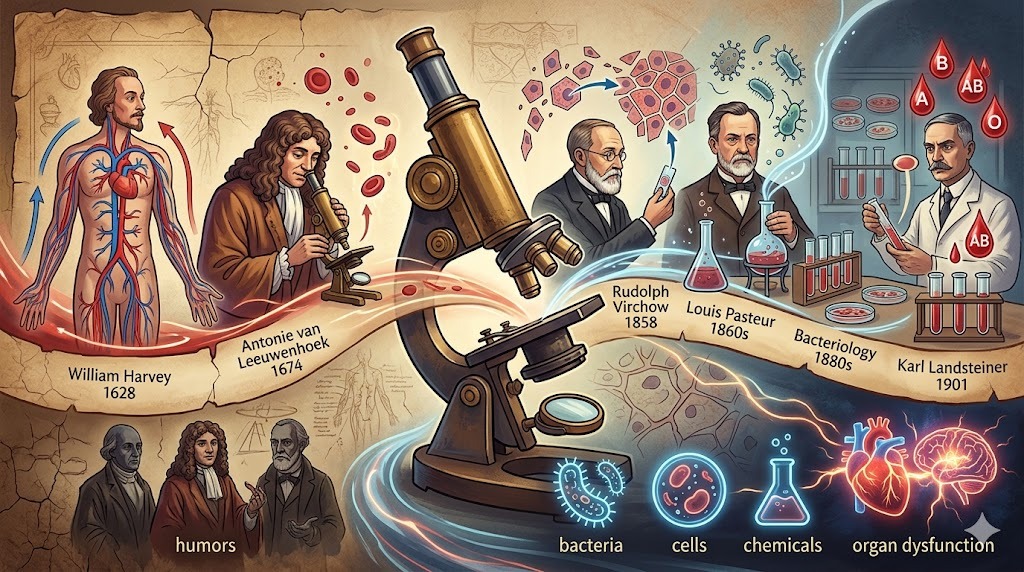
Microscope technology developed between the 17th and 19th centuries.

Timeline
Year Search
1628 William Harvey — Blood circulation
1674 Antonie van Leeuwenhoek — Saw blood cells
1858 Rudolf Virchow — Cellular pathology
1860s Louis Pasteur — Germ theory
1880s Laboratory bacteriology
1901 Karl Landsteiner — Blood groups
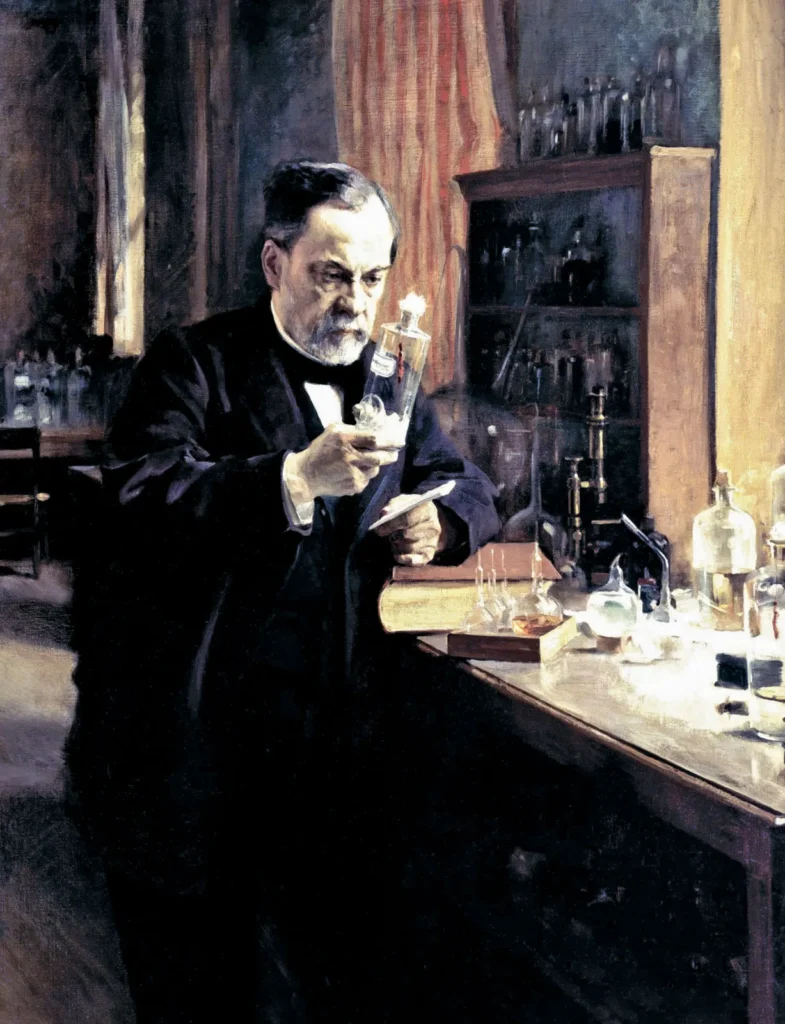
Now, illness began to be viewed not as “bodily imbalances,” but rather in association with:
bacteria
cells
chemicals
organ dysfunction
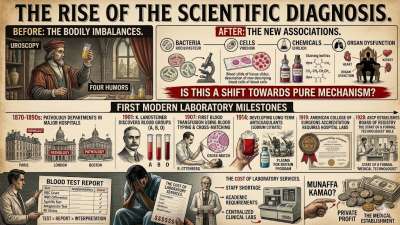
When was the first modern blood-testing laboratory established?
In the late 19th and early 20th centuries, pathology departments were established in major hospitals across Europe and America.
Early institutions:
Johns Hopkins Hospital
Mayo Clinic
Massachusetts General Hospital

These institutions standardized laboratory medicine.
It was here that:
The foundation was laid for tests such as:
CBC
Blood sugar
Electrolytes
Liver/Kidney tests
Part 3
1910 — The Flexner Report and the Birth of the Modern Medical Empire

It is at this very juncture that the narrative ceases to be solely about “science” and becomes, instead, a story of “the system.”
What was the Flexner Report?
In 1910, Abraham Flexner released a report on medical colleges across the United States and Canada.
Funding influence:
The Carnegie Foundation
Rockefeller-linked philanthropic networks
What did the report accomplish?
It established laboratory-based medicine as the standard.
It implemented hospital-centered medical education.
It led to the closure of numerous schools based on herbal medicine and naturopathy.

It was from this very point that:
The institutional model of “Modern Scientific Medicine”
was established.
The Rockefeller and Petrochemical Model
John D. Rockefeller’s wealth was derived primarily from:
the oil industry
and the petrochemical economy.
In the 20th century:
Modern pharmaceuticals evolved from
synthetic dyes,
chemical compounds,
and petroleum derivatives.

That is why critics say:
“The petrochemical economy gave birth to petrochemical medicine.”
However, the claim that:
“All of modern medicine is merely a Rockefeller conspiracy”
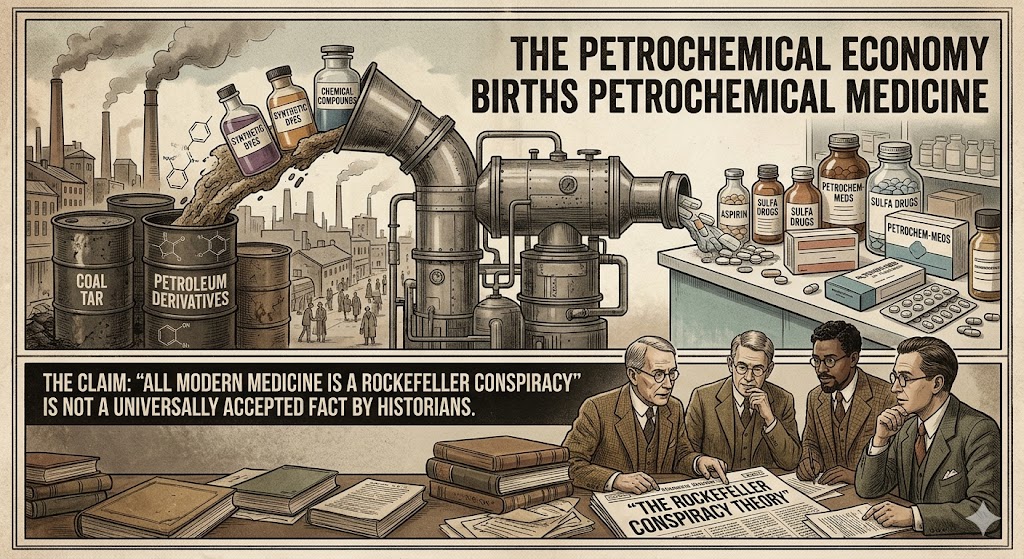
It is not considered a universally accepted fact by historians.
However:
Pharma influence
Lobbying
Funding power
—the documented impact of these factors is real.
Part 4
How did blood testing become the global standard?

Reason 1 — Industrial Diseases
After the 1900s:
Factories
Polluted cities
Chemical exposure
Contaminated water
—increased rapidly.
As a result:
Infections
Kidney disease
Lead poisoning
Lung disease
—increased.
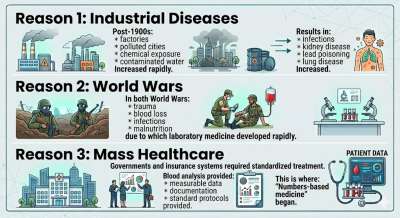
Reason 2 — World Wars
During both World Wars:
Laboratory medicine evolved rapidly due to:
trauma
blood loss
infections
malnutrition
Reason 3 — Mass Healthcare
Governments and insurance systems required standardized treatments.
Blood testing provided:
measurable data
documentation
standard protocols
It was from this point that:
“Numbers-based medicine”
began.
Part 5
Did blood testing prove beneficial?
Yes — and in many cases, immensely so.
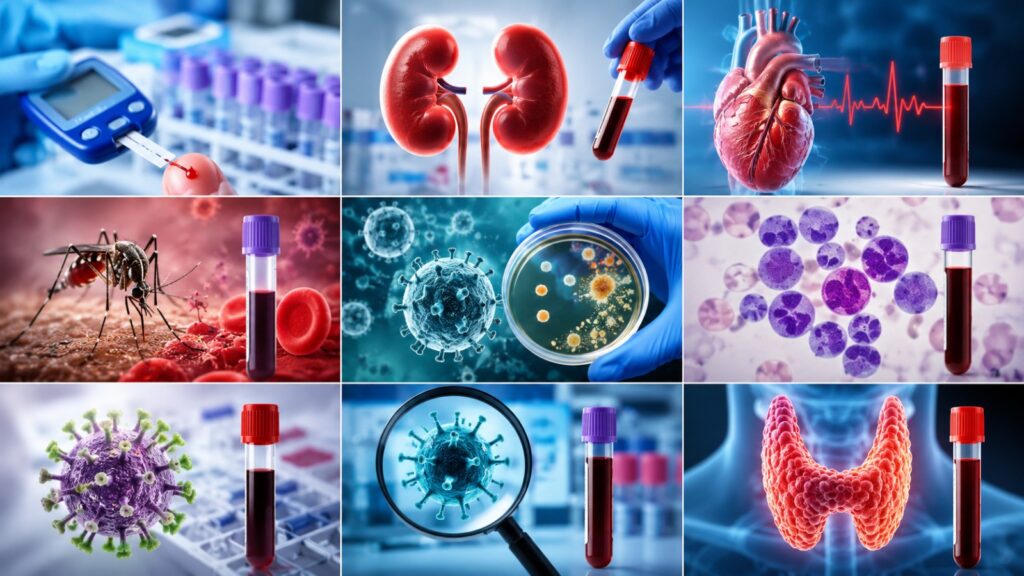
Diseases where blood tests have proven life-saving:
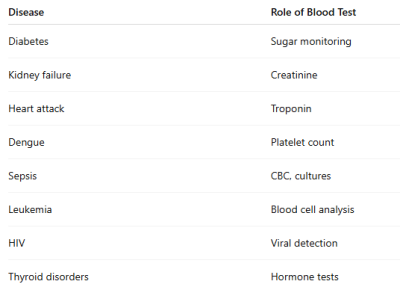
In these cases, an accurate diagnosis based solely on symptoms is often not possible.
However, another question arises:
Why have these diseases increased?
What does modern public health research say?
According to the WHO, *The Lancet*, and public health research:
Air pollution
Ultra-processed foods
Industrial chemicals
Stress
Sedentary lifestyles
Contaminated water
…are major causes of modern chronic diseases.
In other words:
The link between the Industrial Economy → Chronic Disease Burden → Expansion of Diagnostics/Pharmaceuticals
…is well-documented.
Part 6
How did the “Market for Patients” expand by altering diagnostic parameters?
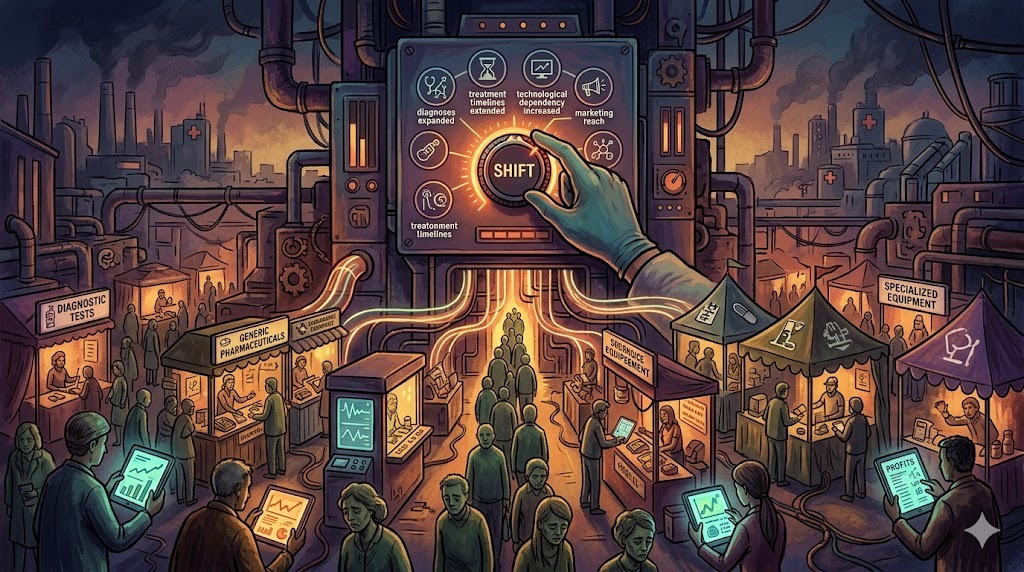
This is not a conspiracy theory—it is a documented controversy.
Cholesterol — 2004
The National Cholesterol Education Program lowered LDL targets.
Previously:
130 mg/dL acceptable
Subsequently:
70 mg/dL optimal
Result:
Approximately 36 million more Americans fell into the “high risk” category.
Controversy:
8 out of the 9 experts on the panel had documented financial ties to the pharmaceutical industry.
Source:
BMJ — Conflict of Interest in Cholesterol Guidelines, 2013.
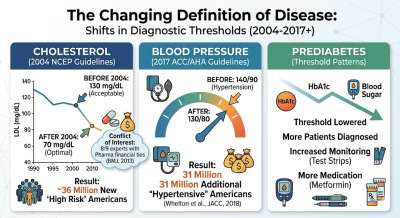
Blood Pressure — 2017

ACC/AHA Guidelines:
Previously:
140/90 (Hypertension)
Subsequently:
130/80
Result:
An additional 31 million Americans were classified as hypertensive.
Source:
Whelton et al. — JACC, 2018.
Blood Sugar and HbA1c

Prediabetes thresholds also lowered over time.
Pattern:
Threshold lower
More patients
More monitoring
More medication
Part 7
Over-testing: a documented problem
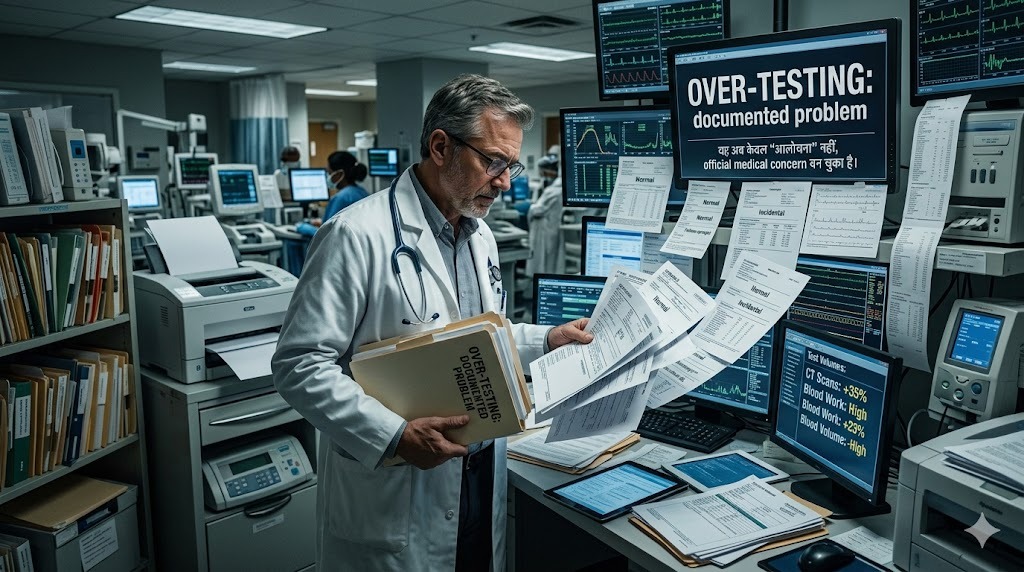
This is no longer merely “criticism”; it has become an official medical concern.
Choosing Wisely Campaign — 2012
The American Board of Internal Medicine Foundation launched the campaign.
80+ medical societies participated.
Conclusion:
In America, approximately:
$200 billion may be spent annually on unnecessary medical testing.
India — ICMR 2019
Indian Council of Medical Research Report:
In urban hospitals, approximately 40% of tests may be unnecessary.
Cascade Effect
Source:
NEJM — Cascade Effects of Medical Technology, 2011.
Process:
Unnecessary test →
minor abnormality →
more tests →
anxiety →
more procedures →
financial burden
Psychological Impact
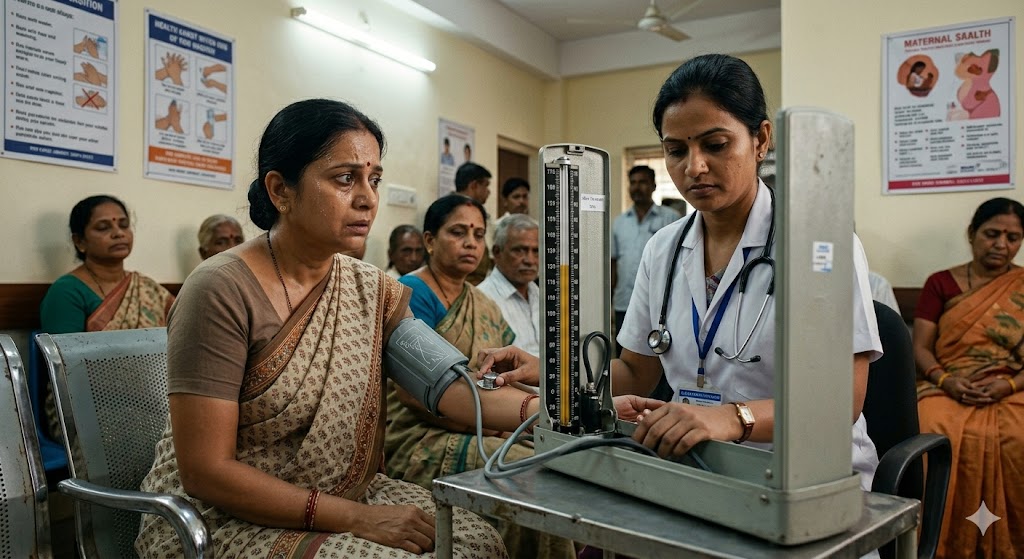
White Coat Hypertension
Documented phenomenon:
Blood pressure rises in the presence of a doctor.
Many people:
They get trapped in a cycle of:
fear-based diagnosis
anxiety
and repeat testing.
Part 8
The Path Lab Industry — How Big is the Market?
Global Diagnostics Market

Year Value
2023 $243 billion
2030 (Expected) $400+ billion
India
2023:
₹85,000+ crore industry
Growth:
12–15% annually
Who determines the fees?
There is no single global authority.
Fees are influenced by:
corporate pricing
reagent costs
machine imports
NABL accreditation
hospital tie-ups
the insurance ecosystem
and, quite often:
referral commission models
as well.
Who controls the industry?
Globally, the healthcare ecosystem comprises:
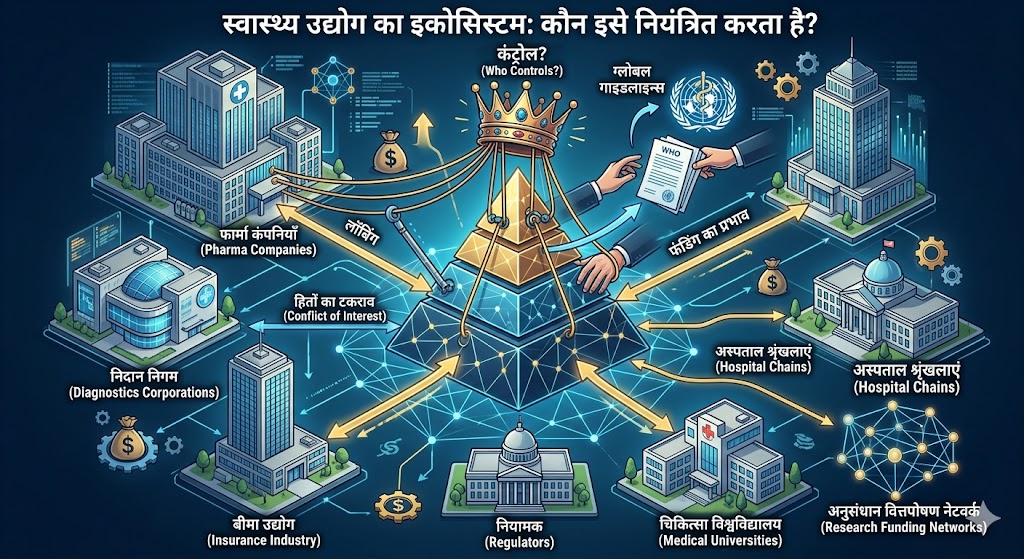
Pharmaceutical companies
Diagnostics corporations
The insurance industry
Regulators
Medical universities
Hospital chains
Research funding networks
Organizations such as the WHO formulate guidelines; however:
Funding influence
Lobbying
Conflicts of interest
—these remain subjects of ongoing debate.
Part 9
Medical Education: From “Healer” to “Data Manager”?

Why Are Fees So High?
Modern medical education:
is based on:
high-tech infrastructure
hospitals
labs
accreditation systems
However:
In many countries, private medical education has evolved into a multi-crore business.
What is the criticism?
Critics argue:
“The system teaches doctors to follow protocols, not to heal.”
The Result:
report-driven medicine
defensive medicine
less patient interaction
burnout
The Lancet Study — Consultation Time
In many countries, the average doctor consultation time:
was found to be between 2 and 5 minutes.
The Result:
reduced understanding of symptoms
increased dependency on diagnostic tests
“No Bill, No Body”
This is an extremely sensitive and well-documented ethical issue.
In many countries:
disputes regarding the release of deceased bodies have arisen due to:
private hospitals
insurance disputes
unpaid bills
This has become a major catalyst for severe criticism regarding the commercialization of modern healthcare.
Part 10

Insurance: Protection or a Dependency Model?
As healthcare costs soared:
The insurance industry expanded rapidly.
The current model:
Has become centered on—
Testing
Diagnosis
Protocols
Insurance billing
And long-term medication.
Critics argue:
“This is no longer healthcare; it is evolving into a managed dependency system.”
However, proponents counter:
Insurance safeguards against catastrophic financial ruin.
Part 11
Has Modern Medicine Become Devoid of Compassion?
This question is being raised all over the world.
Patients feel:
They are viewed like a “case number”
Human interaction is diminishing
Reports have become more important than the human being
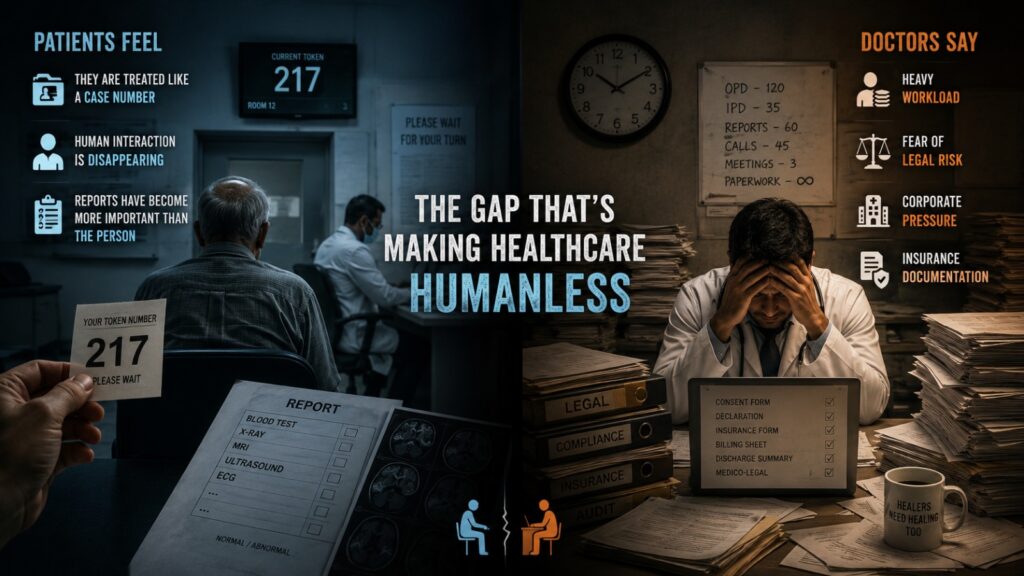
Doctors say:
Workload
Legal risks
Corporate pressure
Insurance documentation
—have turned the system robotic.
Part 12
What does Ayurveda say?

Ayurveda:
places greater emphasis on
prevention
digestion
sleep
stress balance
and lifestyle.
Diagnosis:
is conducted through the examination of
the pulse
the tongue
the eyes
stool and urine
and body constitution.
It claims to detect “disease before disease.”
However:
the role of modern diagnostics is still considered crucial in acute emergencies and critical care.
What should an informed patient do?
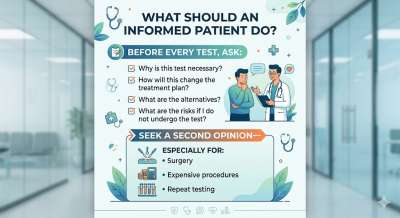
Before every test, ask:
Why is this test necessary?
How will this change the treatment plan?
What are the alternatives?
What are the risks if I do not undergo the test?
Seek a second opinion—
Especially for:
Surgery
Expensive procedures
Repeat testing
Lifestyle first
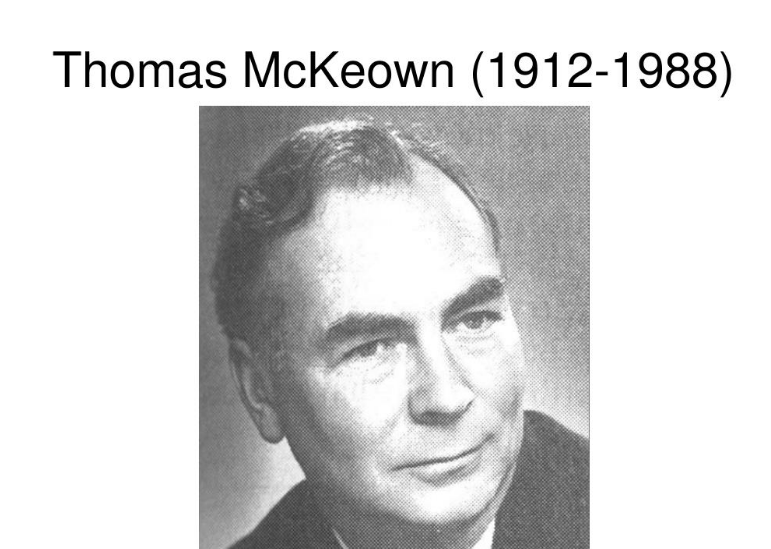
Thomas McKeown’s famous conclusion:
Modern health improvements stemmed largely from:
clean water
sanitation
nutrition
—and not solely from drugs.
Conclusion
Blood Testing:
It is a science.
It is a business.
It is a necessity.
And, quite often, it is a fear-driven market.
The truth is:
✔ Over-testing is real.
✔ Parameter manipulation is documented.
✔ Pharma influence is real.
✔ The expansion of corporate healthcare is real.
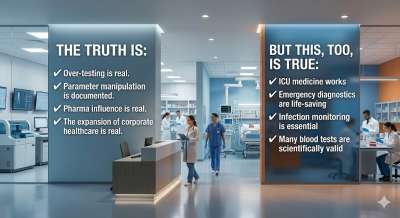
But this, too, is true:
✔ ICU medicine works
✔ Emergency diagnostics are life-saving
✔ Infection monitoring is essential
✔ Many blood tests are scientifically valid
Perhaps the biggest question is this:
Is the goal of healthcare a “healthy society”?
Or a “permanent market of patients”?
According to the research of Thomas McKeown, the true medicine consists of clean water, nutrition, and exercise. Blood tests should be required only in critical situations, not for data mining every common cold or flu.
— Public First | Truth. Freedom. Self-Respect.
Sources (References):
ABIM Foundation — Choosing Wisely, 2012.
ICMR — Rational Use of Diagnostics, 2019.
BMJ — Conflict of Interest in Cholesterol Guidelines, 2013.
Whelton et al. — ACC/AHA Guidelines, JACC, 2018.
David Morens — Death of a President, NEJM, 1999.
NEJM — Cascade Effects of Medical Technology, 2011.
Lancet — Consultation Time Study, 2017.
Thomas McKeown — The Role of Medicine, Princeton, 1979.
Key References
NEJM — Death of George Washington, 1999
BMJ — Conflict of Interest in Cholesterol Guidelines, 2013
Whelton et al. — ACC/AHA Guidelines, JACC, 2018
ABIM Foundation — Choosing Wisely, 2012
ICMR — Rational Use of Diagnostics, 2019
NEJM — Cascade Effects of Medical Technology, 2011
Lancet — Consultation Time Study, 2017
Thomas McKeown — The Role of Medicine, Princeton, 1979
WHO Pollution and Health Reports
NIH — History of Laboratory Medicine