
INDIA FIRST . SATYA DARSHAN . ASHUTOSH
HIGHLIGHTS FIRST:
Do you truly need 8 hours of sleep, or is this an artificial standard imposed by the Industrial Revolution and the pharmaceutical syndicate?
Discover why Ayurveda—and the science of the Yogis—completely rejects this 8-hour ‘sleep trap’!
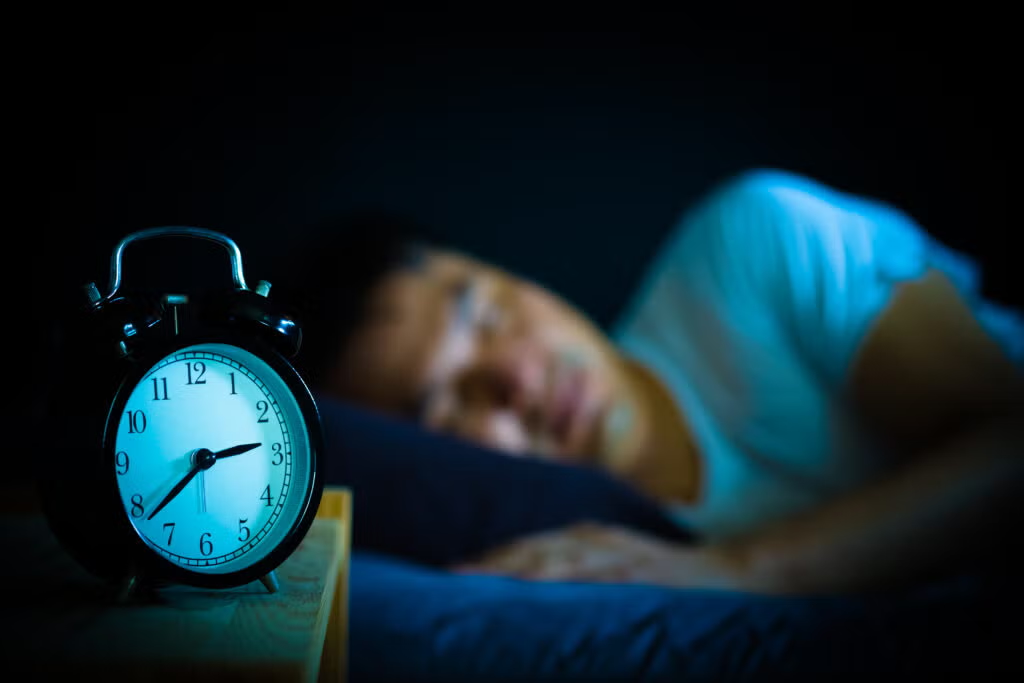
8-Hour Artificial Net:

Just as the parameters for blood pressure and blood sugar were altered overnight—thereby turning millions of healthy individuals into ‘patients’—in precisely the same manner, a multi-billion-dollar market for ‘sleep aids’ was created by imposing a rigid standard of 7 to 9 hours of sleep.
The Truth of History (Pre-Industrial Era):
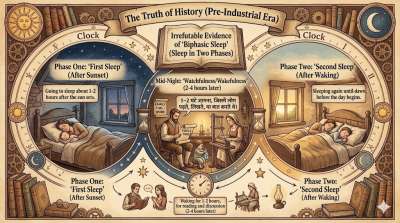
Prior to the Industrial Revolution, humans never slept continuously for eight hours. Historical records provide irrefutable evidence of ‘biphasic sleep’ (sleep in two phases).
Ayurveda’s ‘Tryupastambha’ and the Theory of Nature:
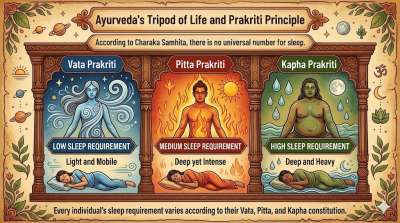
According to the *Charaka Samhita*, there is no universal standard for the amount of sleep required. Each individual’s sleep requirement varies based on their specific *Prakriti* (constitution)—Vata, Pitta, or Kapha.
The Secret Behind Yogis’ Minimal Sleep:
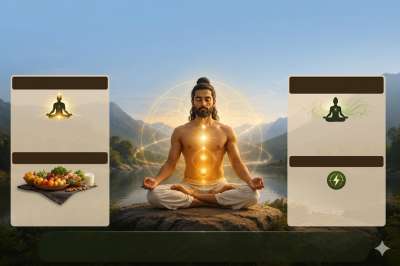
How, through the mediums of higher consciousness, a *sattvic* diet, and meditation, Yogis recharge their ‘Pranic energy’—a state where the body requires not to be put to sleep, but merely to be calmed.
Editorial & Legal Disclaimer
Disclaimer: This article is an analytical and fact-based presentation grounded in ancient *Sanatan* Ayurvedic texts (the *Charaka* and *Sushruta Samhitas*), historical sleep-related research (Virginia Tech University), modern sleep science (DSM-5), and global pharmaceutical market data. Its objective is not to blindly oppose modern medical practices, but rather to sensitize readers to the *quality* of sleep—as opposed to its *quantity*—and to the concept of *bio-individuality* (one’s unique physical constitution). In the event of any severe insomnia, it is imperative to consult a qualified *Vaidya* (Ayurvedic practitioner) or physician.
Introduction: Do You Really Need 8 Hours of Sleep?
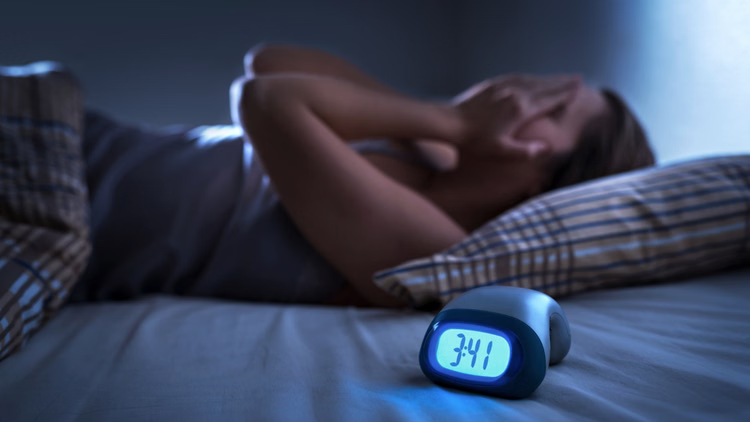
For the past few decades, every health magazine, doctor, and smartwatch manufacturer has been relentlessly hammering one idea into your mind: “If you aren’t sleeping for 8 hours a day, you are sick, your heart is weakening, and you are suffering from insomnia.” The result of this fear is that, today, millions of people worldwide spend more time lying awake in bed worrying about whether they will complete their ‘8-hour quota’ than they do actually sleeping!
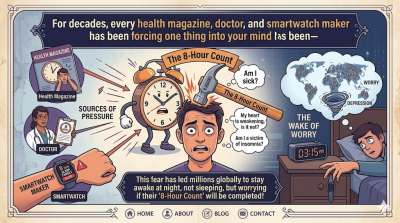
However, today, from this very platform, ‘Public First’ is about to reveal a profound truth. Just as the medical syndicate—by lowering the standard parameters for blood pressure (120/80 mmHg) and diabetes (100 mg/dL)—categorized half of the world’s healthy population as patients overnight, an identical game has been played with sleep. For a healthy individual, the benchmark for sleep is determined not by the hours on a clock, but by the vital energy flowing within the body and one’s unique ‘Prakriti’ (constitution). Come, let us turn the pages of history and Ayurveda to conduct an ‘X-ray’ of this entire charade.
Part 1: When and How Did Modern Medical Science Establish the ‘8-Hour’ Standard for Sleep?

The question arises: when did modern science acquire this divine insight that every human being should sleep for precisely 7 to 9 hours? Behind this lies no eternal truth, but rather the economic agenda of the Industrial Revolution.
What existed before the Industrial Revolution?
(The Myth of 8-Hour Sleep)
Professor A. Roger Ekirch, a renowned historian at Virginia Tech University, scoured ancient court records, diaries, and literature from around the world for his historical research (*At Day’s Close: Night in Times Past*). He demonstrated that, prior to the Industrial Revolution, humans across the globe never slept for a continuous eight hours.
During that era, humanity practiced “biphasic sleep” (sleep in two phases):
First Sleep:
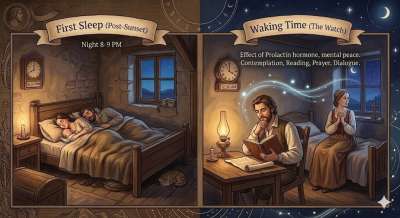
People used to go to sleep shortly after sunset (between 8 and 9 PM) and would wake up spontaneously around midnight (between 12 and 1 AM).
The Watch:
Upon waking at midnight, people would spend 1 to 2 hours meditating, reading books, praying, or conversing with one another. During this time, the hormone known as Prolactin would be at its peak in the brain, inducing a profound sense of mental tranquility.
Second Sleep:
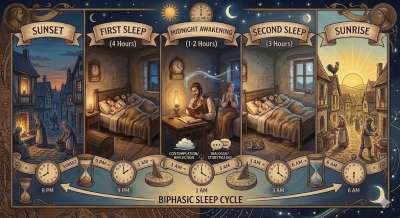
After this, people would go back to sleep until sunrise.
Pre-Industrial Revolution Sleep Pattern (Biphasic Sleep):
[Sunset] ──> First Sleep (4 hours) ──> Midnight Awakening (1–2 hours of meditation/reflection) ──> Second Sleep (3 hours) ──> [Sunrise]
Factories Changed the Dynamics of Sleep:
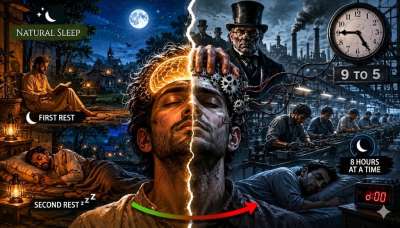
In the 19th century, when large-scale factories opened and the ‘9-to-5’ shift culture emerged, Rockefeller and corporate syndicates required workers who could labor continuously for eight hours on the factory assembly line without interruption. Factory owners came to view the human body itself as a factory machine. They destroyed the natural biphasic sleep pattern of humans, forcibly replacing it with ‘monophasic sleep’ (sleeping continuously for eight hours at a stretch) to ensure that their working schedules remained undisturbed.
Part 2: When and Why Was Insomnia Elevated to the Status of a ‘Global Disease’?
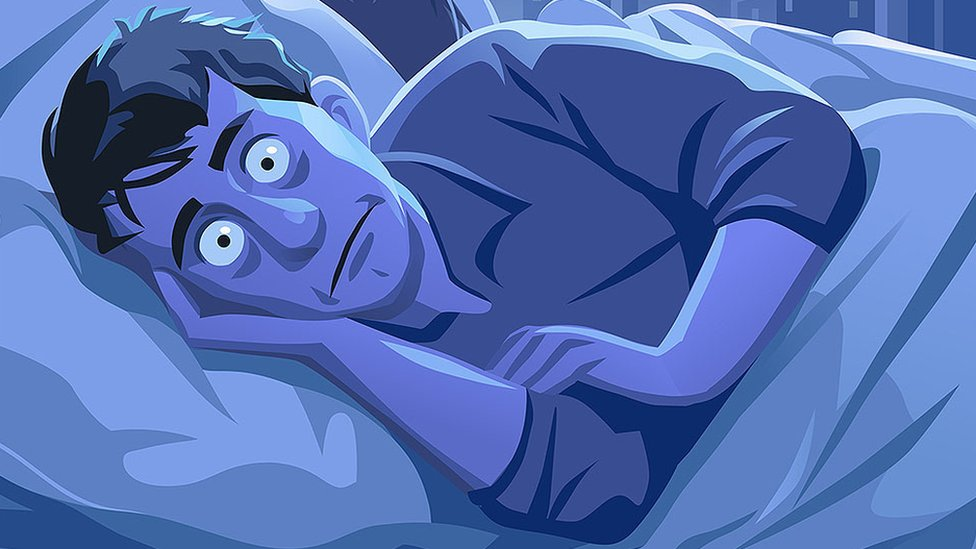
When humans were artificially molded into the pattern of sleeping continuously for eight hours, the bodies of millions naturally began to resist this imposed rule. Those whose biological clocks (circadian rhythms) differed started experiencing anxiety whenever their sleep was interrupted during the night.
To capitalize on this very fear, the American Sleep Disorders Association was established in 1979. Shortly thereafter, ‘insomnia’ was formally codified as a mental and physical illness in the DSM-III (Diagnostic and Statistical Manual of Mental Disorders, 1980)—the veritable bible of modern psychiatry.

The Cost of Setting Parameters:
In 2015, the National Sleep Foundation issued a strict recommendation for adults to get 7–9 hours of sleep. What happened next? Even individuals who, due to their natural biological makeup, felt completely refreshed on a mere five hours of sleep began to view themselves as ‘patients.’
The Profit Figures:
The result of this manufactured fear is that, by 2023, the global sleep aids market—encompassing sleep medications, sleep-tracking gadgets, mattresses, and sound machines—has exceeded $80 billion (approximately ₹660,000 crore) and is growing rapidly. The pharmaceutical syndicate first created the problem by imposing the “8-hour rule,” then instilled fear in you, and is now selling you the solution—sleeping pills—to help you get to sleep.

Part 3: What is the actual criterion for sleep in a healthy person according to Ayurveda?
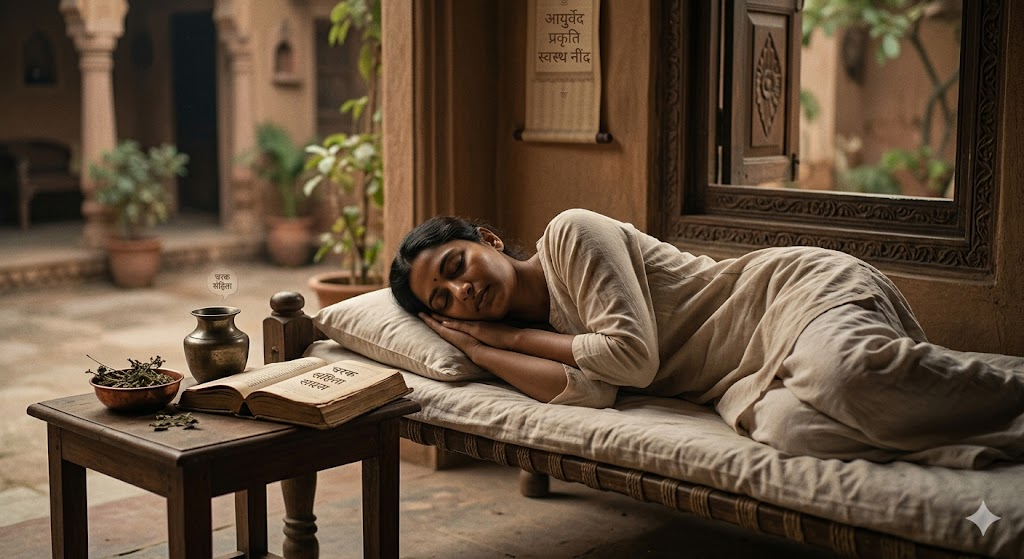
Now, step out of this modern scientific illusion of a ‘one-size-fits-all’ approach and grasp the eternal truth of Sanatan Ayurveda.
In the *Charaka Samhita*—the supreme treatise of Ayurveda (Sutrasthana, Chapter 21)—three fundamental pillars are outlined for sustaining the body; these are collectively known as *Tryupastambha*.
According to the *Charaka Samhita*, there can be no single, universal standard (in terms of hours) for sleep. The entire science of Ayurveda is grounded in the concept of *Prakriti* (Bio-individuality). The balance of *Vata*, *Pitta*, and *Kapha* varies uniquely within every individual’s body, and it is upon this very basis that their sleep requirements are determined:
| Physical Constitution (Prakriti) | Sleep Duration | Sleep Quality | Physical Symptoms |
|---|---|---|---|
| Vata Prakriti (Vata) | Short sleep (4–6 hours) | Light, fragmented (broken sleep), dream-filled | Due to the influence of Vata, the mind remains restless. If such people feel fresh even after sleeping for 5 hours, they are considered normal. However, they tend to be more prone to health imbalances and illnesses. |
| Physical Constitution (Prakriti) | Sleep Duration | Sleep Quality | Physical Characteristics / Symptoms |
|---|---|---|---|
| Pitta Constitution | Moderate sleep (6–7 hours) | Deep but sensitive, regulated | Pitta-dominant individuals have a fast metabolism. They require moderate sleep. |
| Physical Constitution (Prakriti) | Sleep Duration | Sleep Quality | Physical Characteristics / Symptoms |
|---|---|---|---|
| Kapha Constitution | More sleep (7–9 hours) | Heavy, deep, stable | Due to Kapha body constitution, there is a natural tendency for deep and longer sleep. It generally requires more sleep than others. |
According to Ayurveda, what is the definition of healthy sleep?
The sages did not devise a ‘clock’ to measure sleep. According to the *Charaka Samhita*, if you rise during the *Brahma Muhurta* (approximately 1.5 hours before sunrise)—and upon waking, you experience no heaviness in the body, your mind is cheerful, your senses are alert, and your bowels are moving freely—then your sleep is complete, even if it lasted for only four hours!
Part 4: How do Yogis and Munis manage to live long lives on such minimal sleep?
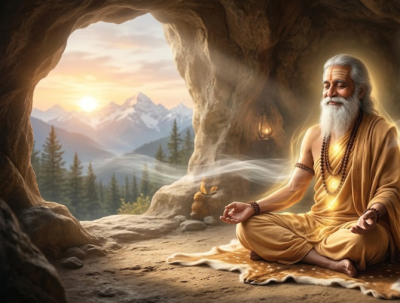
Modern medical science asserts that insufficient sleep shortens one’s lifespan and increases susceptibility to illness. Yet, we have before us the living examples of India’s yogis, sages, and saints, who sleep for a mere 2 to 3 hours yet remain supremely energetic—and entirely free of disease—for a hundred years or more. What is the science behind this?
The secret behind this lies in—‘Prana Energy Management.’
1. Why is ‘sleep’ necessary?
When we are awake, our brain and mind remain constantly entangled in a labyrinth of thoughts. The mind of modern man burns around the clock in the fires of stress, anxiety, and desires, causing the body’s ‘metabolic energy’ to deplete very rapidly. To repair this worn-out system, the body must render consciousness completely ‘inert’ (unconscious)—a state we call sleep.
2. Why do Yogis transcend the need for sleep?
Yogis—or those who practice meditation—learn to control their thoughts. They remain ‘detached’ (in a meditative state) even while awake. Their minds do not dissipate energy.
Yoga Nidra (Yogic Sleep):
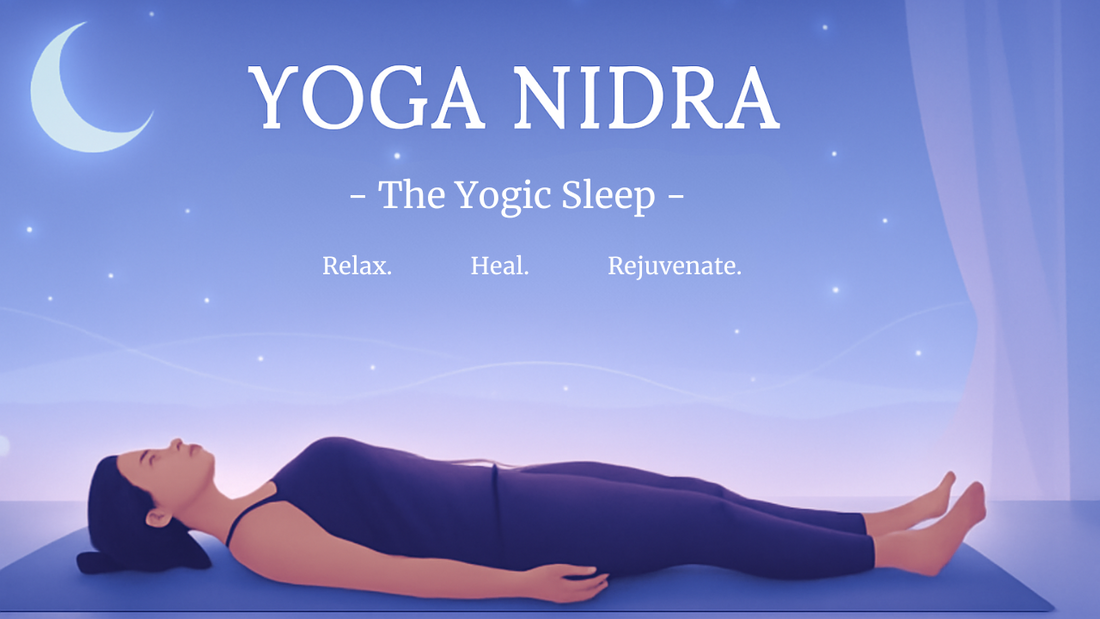
Research conducted in laboratories on Swami Rama and several accomplished yogis has proven that when a yogi sits in meditation or *Yoga Nidra* for a mere 20 minutes, his brain begins to emit ‘Delta Waves’—the very same brainwaves that an average person experiences during two hours of the deepest sleep at night.
A Sattvic Diet and the *Agnilinga* Body:

Since a Yogi consumes minimal and extremely *sattvic* (pure) food, their digestive system does not need to expend extra energy to process meals. Their human body—akin to an *Agnilinga* (a pillar of cosmic fire)—continuously recharges itself directly from cosmic energy. Consequently, their bodily organs do not require an 8-hour period of near-dormancy (sleep) in order to undergo repair.
Part 5: The Labyrinth of Recession and Lethargy—Awaken Through Experience, Not Numbers!
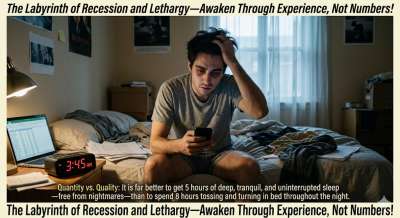
In this current era of AI and economic recession—where the maxim “He who shies away from hard work shall inevitably be ensnared by the downturn” holds true—an insistence on sleeping for 8 hours is merely rendering you more lethargic.
Evaluate yourself not by the numbers on a clock, but through your own lived experience:
Quantity vs. Quality:
It is far better to get 5 hours of deep, tranquil, and uninterrupted sleep—free from nightmares—than to spend 8 hours tossing and turning in bed throughout the night.
Natural Light Cycle:
Align yourself with the laws of nature (your Circadian Rhythm). Going to bed early at night and rising before the first rays of the sun dawn activates your body’s internal pharmacy.
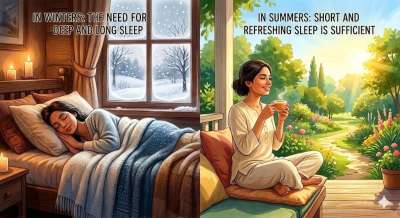
*Ritucharya* (Seasonal Variations):

According to Ayurveda, the body requires more rest (longer sleep) during the winter months, whereas less sleep suffices during the summer.
Conclusion: Reclaim Your Biological Sovereignty
This parameter regarding the hours of sleep is yet another tool of the Rockefeller-Macaulayan system—one designed to wean you off trusting your own innate bodily intuition. It is only when you cease to heed your pulse and interpret your body’s signals that you become enslaved to corporate “sleep-tracking apps.”

Awaken your consciousness. Your body is not a machine belonging to a corporate firm that requires a mandatory 8-hour charging slot. If your diet is pure, your thoughts are *sattvic* (pure and harmonious), and you do not shy away from physical labor, then your very nature will automatically determine the optimal hours of sleep for you.
India First’s Clear Message:
Stop deeming yourself ill—or a victim of insomnia—simply by obsessively watching the hands of the clock. Recognize the ‘Agniling’ (the fiery essence) that resides within you. If you wake up in the morning feeling a surge of energy coursing through you, then you are in perfect health. Banish the fear propagated by this $80 billion ‘Sleep Syndicate’ from your mind, and return to the eternal laws of nature.
India First | Truth. Freedom. Self-Respect.
Authoritative References (Core Factual References):
1. Charaka Samhita: Sutrasthana, Chapter 21 (*Ashtauninditiya Adhyaya* – A Discourse on Sleep and the Three Pillars of Health).
2. A. Roger Ekirch (Virginia Tech): *At Day’s Close: Night in Times Past* (Historical Proof of the Biphasic Sleep System).
3. American Psychiatric Association: *Diagnostic and Statistical Manual of Mental Disorders* (DSM-III, 1980 & DSM-5, 2013) – Evolution of Insomnia Parameters.
4. National Sleep Foundation (2015 Guidelines): Sleep Duration Recommendations and its Economic Impact on the Sleep Aids Market.
5. Matthew Walker (Neuroscientist): *Why We Sleep: Unlocking the Power of Sleep and Dreams* (Analysis on Quality vs. Quantity)
INDIAFIRST.ONLINE